

























































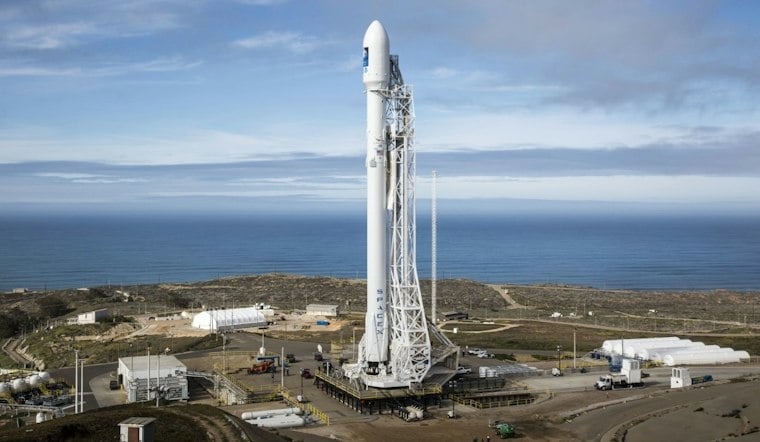
A Falcon 9 rocket thundered off the pad at Vandenberg Space Force Base at 3:48 p.m. Pacific time on Friday, Oct. 23, carrying 27 Starlink satellites into orbit and tying California's annual rocket launch record in the process. It was the state's 71st launch of 2026, matching the total set the year before, and it came only after engineers scrubbed three earlier attempts.
The mission lifted off from Space Launch Complex 4-East at the Santa Barbara County base, according to vvdailypress.com, which reported the flight had originally been targeted for Oct. 20 before technical issues and rough weather pushed it back three times in as many days. Spaceflight Now similarly confirmed the delays stemmed from scrubs tied to technical problems and poor weather.
The booster that flew Friday, tail number B1063, was making its 36th trip to space, per Spaceflight Now's live coverage of the launch. Where exactly the booster touched back down afterward is murkier than usual: Spaceflight Now reported it landed on the droneship A Shortfall of Gravitas roughly 8.5 minutes after liftoff, while Space.com reported the same booster touched down on a different droneship, Of Course I Still Love You, in the Pacific Ocean.
California Poised to Break Its Own Record
With the record already tied, California didn't have to wait long for a shot at breaking it. The vvdailypress.com report noted a 72nd launch of the year was scheduled for no earlier than Monday, Oct. 26, with a late-night window opening at 9:45 p.m. Pacific time and closing at 1:45 a.m. the following morning — a flight expected to carry another 27 Starlink satellites. A further Starlink mission was also planned for later in the week, according to the Sacramento Bee's seed reporting on the schedule, continuing the state's pace toward a new annual high.
The frequency of Falcon 9 flights out of Vandenberg hasn't always been this steady. Space.com's reporting noted that the Starlink launch preceding Friday's mission had flown 11 days earlier, and that launch itself followed a gap of more than three weeks — a reminder that scrubs and spacing between missions are common even for a rocket as frequently flown as the Falcon 9.
Starlink's Growing Customer Base Fuels the Pace
The launch tempo traces back to demand for SpaceX's satellite internet service. SpaceX Chief Operating Officer Gwynne Shotwell said Starlink added 1.6 million customers over a recent three-month stretch and that the service is now active in 174 markets worldwide, Spaceflight Now reported. The company also reported $5.2 billion in quarterly connectivity revenue, a 22 percent jump from the prior quarter, according to the same outlet's coverage.
That growth helps explain why 2025 was the Falcon 9's busiest year on record, with 165 completed launches, per Space.com's reporting — and why SpaceX was expected to fly just under 150 missions in 2026 at its current pace. Nasaspaceflight.com, in its weekly launch preview, reported that SpaceX had three Falcon 9 flights on the schedule for the week, including two Starlink batches and a separate rideshare mission.
More Rockets, More Operators Headed to the Coast
Vandenberg itself isn't standing still either. The base, managed by Space Launch Delta 30, a unit of the Space Force, has plans to expand with additional launch complexes, according to vvdailypress.com's reporting. That same report noted Blue Origin intends to launch its 320-foot New Glenn rocket from the base, while United Launch Alliance is planning a West Coast debut of its Vulcan rocket there as well.
For now, the spotlight stays on SpaceX's Starlink buildout along the Central Coast, with California's rocket launch tally climbing week by week. Whether the state closes out 2026 well clear of its old record or simply edges past it, Vandenberg's launch pads are shaping up to be busier than ever.





