

























































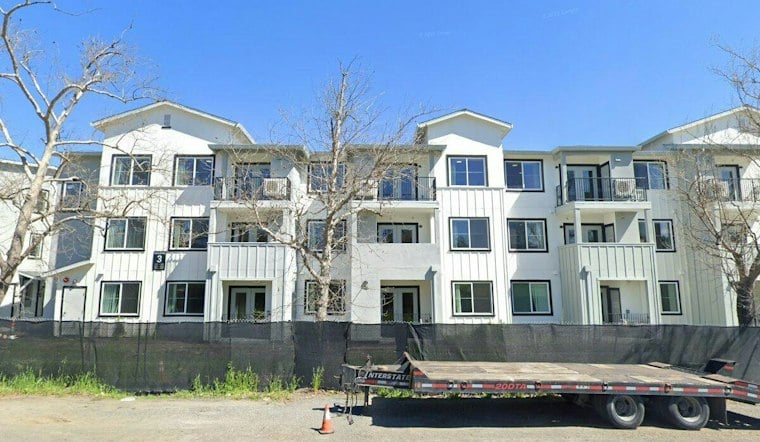
Calistoga will start picking up the tab on water and sewer connection fees for new backyard cottages, after the City Council voted 5-0 on Oct. 6 to cover roughly $28,500 per unit for up to six accessory dwelling units a year. In exchange, owners who take the deal must rent those units at capped rates for 15 years.
The vote comes as new ADU construction in Calistoga has nearly stalled out. According to Calistoga Currents, the city saw six new units built annually in 2022 and 2023, but that number has dropped to just one a year in both 2025 and 2026. The city has permitted 55 ADUs total since 2017, including smaller junior units carved out of existing homes, with the typical unit running about 607 square feet — well under Calistoga's 1,000-square-foot cap.
As reported by The Press Democrat, the fee waiver applies only to the first six ADUs each year with approved building permit applications, with assistance capped at one unit per parcel and handed out first-come, first-served. Accessory dwelling units have been promoted statewide as a lower-cost way to chip away at California's housing crisis, and state law has required cities to ease ADU approval rules since 2017.
How the Program Is Funded
The money behind the waivers comes from Measure D, a 2018 ballot measure that raised Calistoga's hotel bed tax from 12% to 13%. The same report notes that the measure has generated about $1 million a year since taking effect in January 2019, building a city balance of roughly $2.8 million as of August last year. Calistoga has already tapped those funds for a $2 million loan toward the 78-unit Lincoln Avenue Apartments and $100,000 routed to UpValley Family Centers to help offset local utility bills.
The timing matters for another reason: the city's water and sewer rates began climbing last year and are scheduled to keep rising annually through 2028, the same report notes, making upfront connection costs an increasingly steep barrier for anyone considering building an ADU.
Council Scaled Up Staff's Original Plan
City staff had recommended a more modest version of the program. Senior Planner Andrew Amelung's report called for covering three units a year with a 10-year affordability deed restriction, but council members expanded that to six units annually and stretched the restriction to 15 years, per the same account. Councilmember Lisa Gift was the one who pushed to extend the deed restriction from 10 to 15 years.
An earlier version of the proposal would have gone further still, waiving housing impact fees for ADUs larger than 750 square feet — the threshold below which state law already bars impact fees entirely. Most council members ultimately opposed waiving those impact fees, narrowing the final program to utility connection costs alone.
'An Inexpensive Way' to Add Workforce Housing
Councilmember Kevin Eisenberg framed the program as a targeted fix for a specific problem, calling it an inexpensive way to boost workforce housing and describing the need as acute. He said the goal should be housing people who actually work in Calistoga rather than subsidizing what he called granny units.
Calistoga isn't alone in leaning on incentives to get more ADUs built. Napa County launched its own Affordable Accessory Dwelling Unit Forgivable Loan Program in 2023, and the Napa Valley Community Foundation partnered with Redwood Credit Union on a construction loan program aimed specifically at ADUs, according to the Napa Valley Register. Napa approved 60 ADU applications in 2021 alone, up from 45 the year before, while St. Helena and American Canyon also posted year-over-year increases, the paper reported, even as Calistoga continued approving just a handful of units annually.





