

























































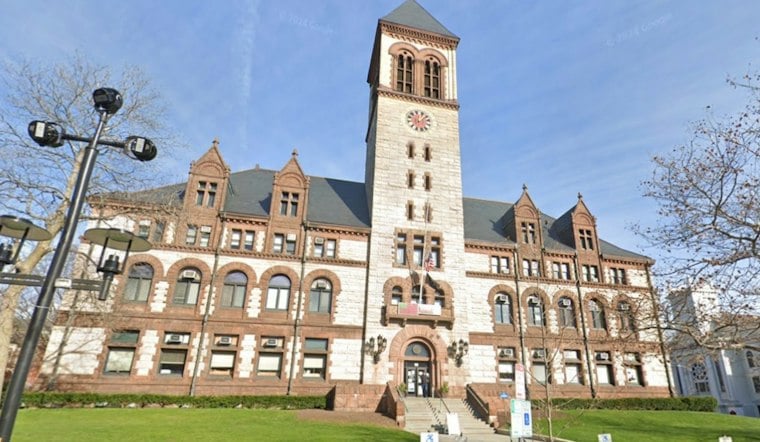
The Cambridge City Council voted 8-0 this week to push local police toward deprioritizing arrests of sex workers, directing officials to set up a crisis hotline and pursue anti-poverty measures instead of prosecution. Councilor Timothy Flaherty voted present. The policy order stops well short of decriminalizing sex work outright, leaving the underlying conduct illegal under Massachusetts law even as City Hall tells police to treat it as one of their lowest enforcement priorities.
According to Boston.com, the order was introduced by Councilor Jivan Sobrinho-Wheeler and co-sponsored by the Boston Sex Workers in Cambridge group. It directs Cambridge's Community Assistance Response and Engagement Team, known as CARE, to establish a hotline to help sex workers navigate legal options and connect with social services. Shameka Gregory said people in the sex industry may be reluctant to call 911 during emergencies despite relatively few arrests in Cambridge, and she said the hotline will improve trust between sex workers and police, per the same report. The Cambridge Police Department has reportedly maintained an informal policy against arresting sex workers in most circumstances, but the new order formalizes that posture as official city guidance.
A Week's Delay Over Decriminalization Language
The vote almost happened a week earlier. Councilor Patty Nolan delayed the measure over concerns about language in the original draft, which the author maintained still encourages non-prosecution of both workers and clients even after the final text dropped a clause calling on state lawmakers to pass full decriminalization, according to Cambridge Day. The original order had not actually proposed decriminalizing sex work outright if passed, but the dispute over how far the city should go in shielding buyers as well as providers delayed the initial vote by a week.
That buyer-versus-provider divide has particular resonance in Cambridge. In 2026, advocates raised concerns that fear of arrest can deter sex workers from reporting crimes, Cambridge Day reported in earlier coverage. During public comment, sex workers advocated for full decriminalization, while at least one commenter argued that consensual, safe sex work will never be fully possible because there is no way to screen out a rapist.
The Toner Case Looms Over the Debate
Cambridge councilors have debated criminalizing sex work several times in recent years, including in 2025, but the issue gained new local weight after former City Councilor Paul Toner was charged with a misdemeanor stemming from an allegation that he paid for sex through a high-end brothel network operating across Greater Boston. Toner resolved that case in April through a nine-month pretrial probation agreement requiring 24 hours of community service and a $2,000 contribution to a survivor support nonprofit, Hoodline previously reported. Federal and state prosecutors in that 2023-2024 investigation reportedly selected roughly 28 male clients out of an estimated database of 2,800 alleged customers for misdemeanor charges, based on high phone contact frequency with booking lines, according to Reason Magazine.
Under Massachusetts General Law Chapter 272 Section 53A, paying or offering to pay for sex carries up to 2.5 years in jail and fines between $1,000 and $5,000, while engaging or offering to engage in sexual conduct for a fee carries a maximum penalty of just one year in jail and a $500 fine, according to Justia. That asymmetry — buyers facing far steeper penalties than sellers — sits at the center of the fight over whether Cambridge's new protections should extend to clients at all.
No Power to Rewrite State Law
Because city councils cannot alter state statutes, the policy order functions mainly as an operational directive to local police and a formal appeal to Middlesex County District Attorney Marian Ryan, whose office retains ultimate prosecutorial discretion across the county. Ryan's office, which oversees prosecutions across 54 municipalities, announced a campaign to raise awareness about child trafficking that runs through January, according to the Middlesex County District Attorney's Office. The policy order separately asks the city manager to prioritize efforts to prevent trafficking among LGBTQ+ youth, who advocates say are disproportionately vulnerable.
A similar push at the state level has already stalled. A 2024 legislative proposal, S.1046/H.175, sought to grant immunity to sex workers reporting violent crimes and establish a study on decriminalization, but it died in committee in the Massachusetts General Court, according to Decriminalize Sex Work. That failure underscores why Cambridge's order leans so heavily on persuasion rather than legal force — it can ask the DA to stand down, but it cannot change what remains a crime on the books.
A Regional Pattern Takes Shape
Cambridge is not the first Middlesex County city to go this route. Somerville's city council voted in 2019 to request that police refrain from arresting consensual sex workers, then passed a follow-up resolution in April 2024 supporting statewide sex worker safety legislation, per Patch. Cambridge has now approved a similar non-enforcement measure.
The CARE Team now tasked with running the new hotline has grown rapidly since its 2024 launch. It answered 1,015 emergency calls in 2025, a fivefold increase over 2024, and resolved 96% of those incidents without involving police, according to a City of Cambridge impact report. Under the new order, the civilian CARE unit, rather than police dispatch, will be the front door for sex workers seeking help.





