

























































Nearly five years after Canton police officer Robert Huber fired through a six-foot wooden fence and killed 46-year-old James Williams on New Year's Day, the city has proposed a $3.5 million settlement to resolve the federal civil-rights lawsuit his widow filed over his death. The agreement would close out one of the most contentious police-involved shootings in recent Canton history, though it still awaits sign-off from a judge before anything is final.
According to court records cited by the Centre Daily Times, the proposed settlement would send $1.96 million to James Williams' family, with widow Marquetta Williams receiving $396,709 and the couple's four daughters splitting the rest, each getting $390,000. Plaintiffs' attorneys are slated to receive $1.4 million in fees plus $143,290 in expenses, according to the same court filing. The application outlining those figures was filed in Stark County Probate Court and still requires approval from Judge Curt Werren.
As Yahoo News reported, Williams' legal counsel informed the court on Sept. 18 that the parties had reached a tentative settlement, reportedly to avoid a scheduled trial.
What Happened on New Year's Day 2022
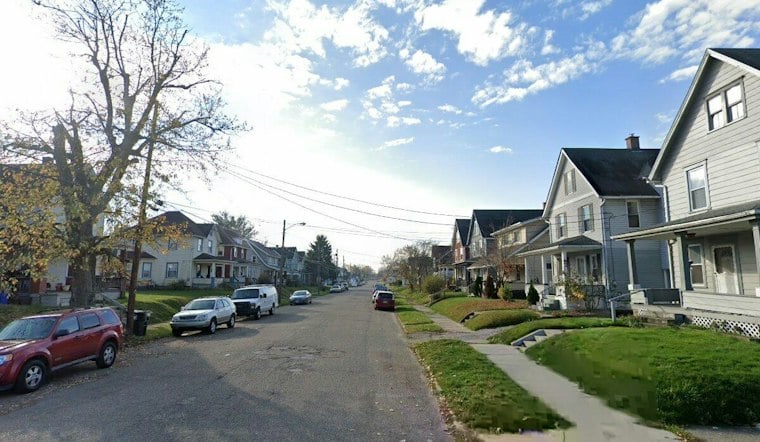
Williams was fatally shot in the 2300 block of 10th Street SW while firing a Ruger AR-556 rifle into the air to celebrate the new year, the same report states. The Canton Police Department said at the time that Williams was armed when the shooting occurred, according to The Repository. The civil lawsuit, however, contended that Williams was not posing a threat to Huber or anybody else when the officer fired.
The lawsuit alleged that Huber shot at Williams through the family's enclosed wooden security fence without warning or announcing his presence. Huber has said he feared for his own safety and the safety of others. A Stark County grand jury later declined to criminally charge him, and the report notes he remains with the Canton Police Department as a patrolman.
Court Fights Over Qualified Immunity
The case has wound through years of legal wrangling. Current and former police supervisors, including John Gabbard and Jack Angelo, were eventually dismissed from the lawsuit, leaving Huber and the city as the remaining defendants. A separate allegation that Canton maintained an unwritten policy or custom of civil-rights violations was dismissed by both sides in April 2024.
The U.S. Court of Appeals for the Sixth Circuit weighed in on whether Huber could claim qualified immunity, ruling that disputed facts about whether Williams moved his rifle toward the officer had to be resolved by a jury and could not simply be dismissed, per the Sixth Circuit's published opinion. The underlying federal case, Williams et al. v. City of Canton et al., is docketed in the Northern District of Ohio, according to records filed with the U.S. Government Publishing Office.
Marquetta Williams' attorneys claimed the city failed to train its officers to de-escalate situations involving celebratory gunfire, and the lawsuit sought at least $1 million in compensatory and punitive damages. Canton Law Director Jason P. Reese said the city is responsible for a $125,000 insurance deductible that has already been paid, with the remainder of any settlement covered by the Ohio Plan.
A Shooting That Sparked Protests
Williams' death and the grand jury's decision not to charge Huber set off protests across Canton, with three City Council members walking out of a meeting at the time to stand with demonstrators. The Stark NAACP has also called for increased transparency and police reform in the years since.
Protesters gathered outside the Stark County office building after the grand jury's September 2022 decision, with chants for justice and police accountability echoing through the streets, according to Ideastream Public Media. The case is one of several fatal police shootings in Ohio to end in large civil settlements in recent years; the family of Casey Goodson Jr., killed by a Franklin County deputy in December 2020, reached a $7 million settlement over his death, as the Associated Press reported in 2024.
For now, the Williams family's case sits with the probate court awaiting Judge Werren's approval. Whether the settlement will be finalized, and whether the underlying federal case will be formally dismissed, remains unresolved in the public record.




