

























































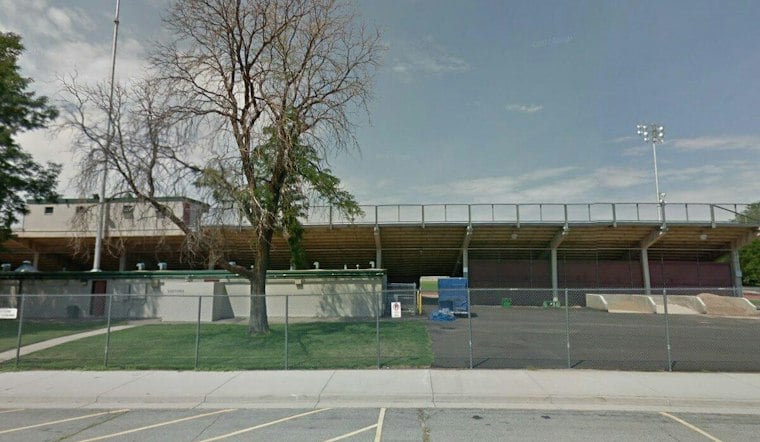
Kent Clark was getting ready to practice putting chains on a bus for winter driving during a routine training session at Jeffco Stadium on October 1 when he suddenly went into cardiac arrest. What happened in the next several minutes — a scramble for an AED, chest compressions from colleagues, and a shock that brought back his pulse — is now being credited with saving his life.
According to West Metro Fire Rescue, Jefferson County Public Schools training supervisor Autum Archuleta immediately began CPR on Clark once he collapsed. She directed one student to call 911 and sent another student running to retrieve an AED from her office, according to the same account. Training specialist Jerry Linenberger also helped with CPR on Clark during the emergency, the fire department said.
Once the AED arrived, it advised that a shock be delivered, and the device administered that shock to Clark. He regained a pulse shortly after, per the fire department's account. By the time West Metro's Engine 3, Medic 2 and SAM1 arrived on scene, Clark was breathing independently, awake and talking.
CPR Timing
A registry study published by ahajournals.org examined the association between delays in bystander CPR and survival.
Specifically, that study found CPR started two to three minutes after collapse was associated with 9% lower odds of survival compared with CPR begun within the first minute, while CPR delayed four to five minutes carried 27% lower odds. Separate findings from the American Heart Association, drawn from a study of 198,869 witnessed cardiac arrests between 2013 and 2022, found that bystander CPR started within two minutes was linked to an 81% greater chance of surviving to hospital discharge compared with no bystander CPR at all.
The American Heart Association notes that roughly 350,000 cardiac arrests happen outside hospitals each year in the United States, with a survival rate under 10%. A basic response is to call 911 or have someone else make the call, then push hard and fast in the center of the person's chest.
Recognition Three Weeks Later
West Metro Fire Rescue said Archuleta and Linenberger saved Clark's life that day.
The Buffalo News reported that sheriff's deputies performed chest compressions and used an AED on a man who went into cardiac arrest outside Highmark Stadium, successfully restoring his pulse, according to that outlet's account from this past August.


