

























































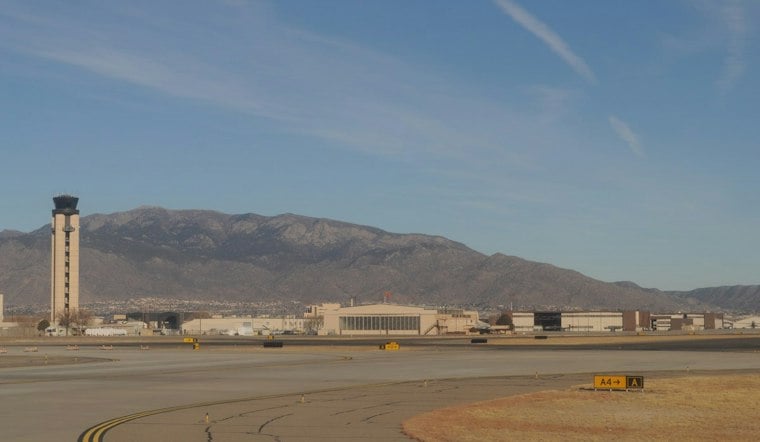
An automated Cessna 208B Grand Caravan took off, taxied, and landed itself at Albuquerque International Sunport last week, with the pilot in command sitting more than 700 miles away in Mountain View, California, while an onboard safety pilot rode along. Reliable Robotics announced it completed its first autonomous flights at the Sunport as part of a two-day flight campaign, marking a milestone for New Mexico's largest commercial airport.
The flights were conducted under the U.S. Department of Transportation and FAA's Advanced Air Mobility Integration Pilot Program, known as eIPP, according to The Daily Reflector. The City of Albuquerque Aviation Department was one of eight nationwide designees selected for the program, which was launched in March 2026 when Transportation Secretary Sean P. Duffy announced eight project teams across 28 states tasked with gathering real-world flight data for future FAA rulemaking, as reported by Avi-Go. New Mexico became the sixth location in the country to run a demonstration flight under the program, following earlier tests in North Carolina, per the same outlet.
During the Caravan's flights at Sunport, the aircraft performed auto-taxi, auto-takeoff and auto-landing operations using the Reliable Autonomy System, which the company says enables full gate-to-gate automated operations, the Reflector's report states. A remote pilot at Reliable's Mountain View headquarters commanded the aircraft in real time, while an onboard safety pilot rode along and both communicated with air traffic control throughout the flights, according to the same report. Sunport's airspace adds complexity to the test: the airport handles joint-use military and civilian traffic within Class C airspace, per the Reflector.
Federal and City Officials Weigh In
FAA Administrator Bryan Bedford said the Albuquerque demonstrations help prioritize safe and efficient advanced air mobility integration, according to the Reflector's account. Albuquerque Mayor Tim Keller said the city is committed to new technology and opportunities and aims to use the Sunport as an aviation testing ground, the outlet reported. Manny Manriquez said the Sunport's partnership with Reliable and the FAA will help shape the future of flight and inform the safe integration of autonomous aircraft, per the same report.
Reliable Robotics CEO and co-founder Robert Rose said the company's work with the FAA and Albuquerque is building a roadmap for autonomy integration in high-density airspace and progress toward commercial operations, according to the Reflector. The company says it will collect operational data throughout the program across increasingly complex operations and share insights to support regulations and guidance for integrating autonomous aircraft into the national airspace system, the outlet reported.
Not Reliable's First Time Flying Without a Pilot Aboard
This is not Reliable Robotics' first brush with uncrewed flight. In November 2023, the company flew an uncrewed Cessna 208B Grand Caravan for 12 minutes at Hollister Municipal Airport in California under remote pilot supervision from Mountain View 50 miles away, under a special airworthiness certificate the FAA granted, according to DroneXL. That flight marked the first FAA-approved uncrewed flight of a large cargo aircraft in U.S. history, per the same outlet.
Reliable's commercial operator arm, Reliable Airlines, isn't new to the Sunport either. The carrier has conducted crewed Cessna Caravan cargo feeder flights out of Albuquerque since 2023 and maintains a fleet of six Caravans based in the city, according to testimony submitted to the House Committee on Transportation and Infrastructure. Reliable Airlines operates as an FAA Part 135 air carrier providing daily regional cargo feeder service, the testimony states.
Eyeing Daily Cargo Runs to Santa Fe and Durango
Looking ahead, Reliable Robotics plans to conduct pre-certification commercial operations through daily regional cargo deliveries from Sunport to Durango-La Plata County Airport in Colorado and Santa Fe Regional Airport in New Mexico, with Reliable Airlines running the flights, per the Reflector's report. The eIPP project is meant to demonstrate how automated air cargo service could improve connections across the Four Corners region, including smaller and rural markets, the outlet noted.
That regional vision is backed by a multi-agency partnership that includes the New Mexico Department of Transportation, the New Mexico Economic Development Department, the New Mexico State University UAS Test Site, and regional airports in Durango and Santa Fe, according to Albuquerque International Sunport. The initiative aims to connect small and rural communities through automated air cargo corridors originating from the Sunport, per the same source. Exactly when those pre-certification cargo flights will begin routine daily operations without onboard safety pilots, and when Reliable will secure full FAA type certification, remain open questions.
A Cabinet Visit and a Growing War Chest
The flight campaign followed a June 2026 visit from Transportation Secretary Duffy to Reliable Robotics' facility. The Federal Aviation Administration announced the demonstration campaign. Reliable has also been building its financial runway: the company closed a $160 million financing round in April 2026 led by Nimble Partners with participation from RTX Ventures, bringing its total raised capital to $300 million at a valuation approaching $1 billion, DroneXL reported. That funding was raised specifically to expand engineering headcount and compile the flight data the FAA requires for commercial uncrewed aircraft certification, per the outlet.
The military has also taken notice. The U.S. Air Force awarded Reliable Robotics a $17.4 million contract in October 2025 to purchase, integrate, and test the Reliable Autonomy System on a Cessna 208B for military logistics and Agile Combat Employment missions, according to FLYING Magazine. The contract builds on previous Air Force exercises evaluating autonomous cargo transport to dispersed military hubs, the publication noted.
How the Technology Works
Per the Reflector's report, the Reliable Autonomy System is aircraft agnostic and integrates with existing aviation infrastructure and certified aircraft, requiring no changes to the national airspace system for commercial airport operations across the country. The Reliable Detect and Avoid System includes radar and the FAA's Advanced Collision Avoidance System X, and it is designed to mitigate traffic conflicts autonomously, the outlet reported. The company says it holds the only FAA-accepted certification plan and means of compliance for continuous autopilot engagement as it works toward certifying its autonomy technology for commercial operations with the FAA.
The Cessna 208B Grand Caravan itself is described as the world's most popular utility turboprop aircraft, capable of transporting 1,000 pounds of cargo across more than 1,000 nautical miles, according to the Reflector. Reliable Robotics is headquartered in Mountain View, California, and maintains a distributed global workforce, the outlet reported.
Sunport's Role in a Bigger Local and National Picture
Albuquerque International Sunport is owned and operated by the City of Albuquerque's Aviation Department and welcomes more than 5 million passengers each year, served by six major carriers, three cargo carriers and two commuter airlines offering nonstop service to 32 destinations, per the Reflector's report. The airport also leans on Double Eagle II Airport on the West Mesa as its primary general aviation reliever facility to absorb non-commercial traffic, a role Hoodline detailed in its coverage of the tower's $3.2M overhaul, which noted the facility's two converging runways and instrument landing system.
Albuquerque's test joins a growing list of eIPP demonstration sites nationwide. The push for automated regional aircraft also sits within a broader environmental context: aviation emissions totaled around 1 billion tonnes in 2019. Autonomous regional cargo is seen by proponents as a way to optimize flight paths and lower operating costs across short-haul freight networks, per that same report.



