

























































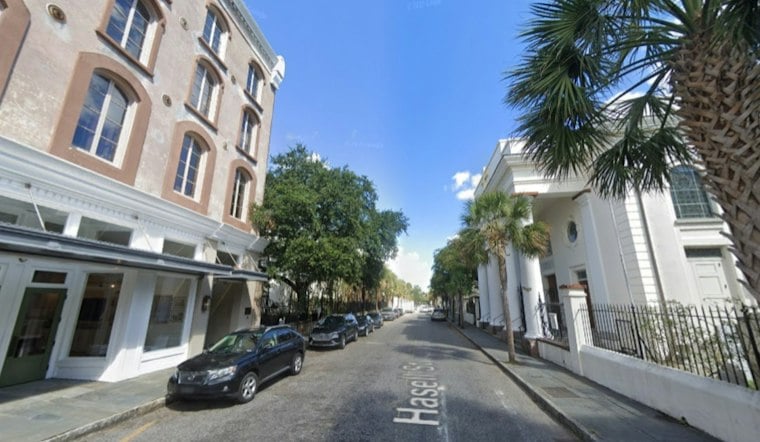
Charleston's oldest synagogue is about to smell like a New York deli counter. Kahal Kadosh Beth Elohim is bringing in corned beef and pastrami from the newly reopened Carnegie Deli for its 14th annual Lowcountry Nosh, a free festival expected to draw about 5,000 visitors to Hasell Street on November 8 from 11 a.m. to 4 p.m.
The timing lines up with Carnegie Deli's own comeback story. The famed New York deli closed its original flagship in 2016 after 79 years in business, then reopened in September 2026, according to the Charleston City Paper. The new restaurant occupies a 2,500-square-foot space at 834 Seventh Avenue in Manhattan, the former home of its old rival Stage Deli, as reported by Secret NYC. Even while shuttered as a standalone restaurant, Carnegie Deli kept its name alive nationally through mail-order pastrami kits, wholesale licensing, and stadium concessions, per the deli's own wholesale page.
Hoodline reported in August that the brand's 2016 closure followed rocky years for the original flagship, including a $2.65 million wage-theft settlement in 2014 and a nine-month gas line shutoff by Con Edison in 2015 — the kind of operational turbulence that makes this year's reopening, and its reach down to the Lowcountry, feel like a genuine second act for the Carnegie name.
Pre-Orders, Pickup, and a Festival Built Around Them
Pre-orders for the Carnegie Deli corned beef and pastrami open October 11 and close October 23, with pickup set for November 5 and 6 at KKBE's synagogue at 90 Hasell Street, according to the Charleston City Paper's reporting. Jeff Weinman, chair of the Lowcountry Nosh, has been busy well before the festival itself: he delivered 500 pounds of cabbage to the KKBE kitchen, where volunteers are working toward roughly 1,600 stuffed cabbages for the event.
Beyond the headline deli meats, the Nosh menu stretches into familiar deli territory — corned beef and pastrami sandwiches, knishes, hot dogs, bagels, lox and cream cheese, chopped liver, baked goods, challah, matzo ball soup, and Dr. Brown's sodas. Kugel and stuffed cabbage are made by volunteers, while a caterer prepares knishes, chopped liver, and chicken soup using KKBE congregants' own family recipes. Brooklyn's Green's Bakery, which was established in 1980 using 1930s Hungarian family recipes and turns out more than a million babkas a year from its 12,500-square-foot facility, supplies babka, black-and-white cookies, hamantaschen, and rugelach for the festival. Charleston's own Bagel Nation handles the bagels. The whole spread is served cafeteria-style, with cashless payment only.
A Festival Rooted in One of America's Oldest Congregations
The Lowcountry Nosh takes place in conjunction with Second Sunday, the monthly closure of King Street to vehicle traffic for outdoor dining and vendors, according to 2nd Sunday on King Street. Hasell Street itself will close for the day of the celebration, turning the block around KKBE into an open-air food hall complete with traditional Jewish music, tours of the historic sanctuary, and a Kid Zone built around a Noah's Ark theme with games, activities, and cotton candy.
KKBE was founded in 1749 and ranks among the oldest Jewish congregations in the United States. Its sanctuary, built in 1840 by congregant David Lopez Jr. to a design by New York architect Cyrus L. Warner, replaced an 1794 Georgian house of worship destroyed in an 1838 city fire, according to the National Park Service. The building was designated a National Historic Landmark in 1980 and is considered the oldest Jewish sanctuary in continuous use in the country. The congregation is also recognized as the birthplace of American Reform Judaism, a movement that traces to 1824 when 47 KKBE members petitioned to swap traditional Hebrew recitations for English prayers and shortened rituals, a push that led to a temporary split before the reformers rejoined the congregation by 1833.
That history reflects a broader chapter of early American Jewish life. Between 1800 and 1820, Charleston held the largest Jewish population of any city in the country, representing roughly one-fifth of all American Jews before northern maritime and industrial hubs grew, according to the Jewish Historical Society of South Carolina. Nearby, KKBE's Coming Street Cemetery — established as a family plot in 1754 and deeded to the congregation a decade later — is the oldest surviving Jewish burial ground in the American South, holding more than 800 graves including Revolutionary War patriots, per Preservation South Carolina. The organization awarded the cemetery its Stewardship Award this year for a 15-year restoration effort that repaired pre-Revolutionary brick walls, ironwork, and hundreds of historic markers.
More Than a Meal for the Congregation
For KKBE, the Nosh is also woven into a broader calendar of community service. The congregation hosts an annual Mitzvah Day each May, with past activities including baking for local firehouses and blood donation drives, and participants regularly donate time and money to groups including Fresh Future Farm, the Lowcountry Blessing Box Project, and Neighbors Together.
Weinman, the festival's chair, described the Nosh as an amazing, happy time that provides Jewish food, music, culture, and history while creating volunteer opportunities for the congregation. The festival's stated goals track with that description: giving the broader community access to Jewish food, music, culture, and KKBE's history, while giving congregants meaningful ways to get involved.





