

























































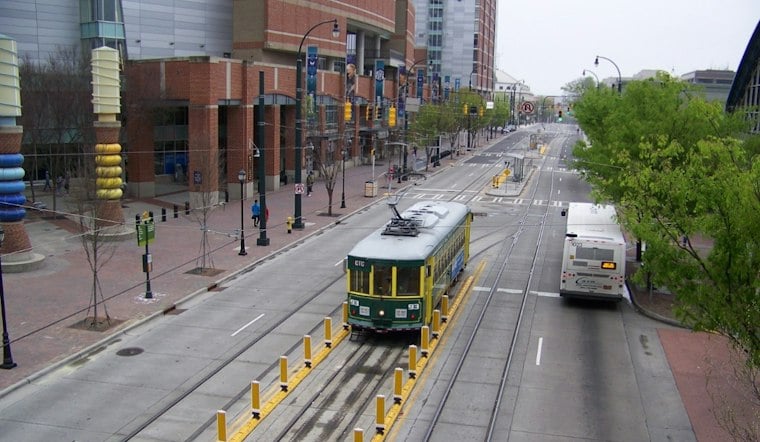
Charlotte transit riders hit a wall Tuesday evening when the Charlotte Area Transit System's digital platform went down across the entire network, just one day after the agency rolled out a major overhaul of bus and microtransit service. CATS confirmed the shutdown and its resolution in a brief social media reply, telling a rider that “our platform experienced a systemwide shutdown. It is back online now.”
The outage, reported by Charlotte Area Transit System
on Tuesday evening, came at an especially inconvenient moment. CATS had just implemented its Fall systemwide service change on October 5, introducing 15-minute frequencies on key bus routes and expanding CATS Micro transit service into West Charlotte, according to the
Charlotte Area Transit System
. That rollout leaned heavily on digital tools for routing and fare processing, the same systems that briefly went dark less than 24 hours later.
CATS did not specify in its post whether the shutdown involved the CATS-Pass ticketing app, real-time vehicle tracking, or internal dispatch software. The agency's statement offered no further detail beyond confirming the platform was restored.
Not CATS' First Digital Breakdown
This is not the first time Charlotte riders have been left scrambling because of a CATS tech failure. In March 2024, a citywide outage on the CATS-Pass app and website blocked riders from purchasing new fares, forcing light rail and streetcar passengers to buy tickets at station kiosks while bus riders paid with exact cash, per WCNC. CATS also took its real-time bus arrival tracking offline in December 2024 during a planned four-hour maintenance window, according to the Charlotte Area Transit System.
The CATS-Pass app itself dates back to August 2021, when it replaced the agency's legacy software and introduced Apple Pay, Google Pay, real-time tracking, and digital fare capping, WCNC reported at the time. That app has since become the primary way many riders pay fares and track buses and trains across the system.
A System Already Under Heavy Scrutiny
Tuesday's glitch lands amid a stretch of intense oversight for CATS. An August 2026 report from the North Carolina State Auditor found that nonpaying ridership across CATS services reached roughly 45% in late 2025, with fare evasion on the LYNX Blue Line light rail climbing to 60% and costing the agency an estimated $5 million to $6.5 million in lost revenue annually, according to Carolina Public Press. Federal transit data analyzed in August 2026 also showed major security incidents on the Blue Line rising from three in 2024 to seven in 2025, even as overall light rail ridership dropped by about 129,000 boardings, per WCNC.
Following a fatal light rail incident in August 2025, a Federal Transit Administration audit identified 18 areas of safety and compliance noncompliance within CATS, requiring the agency to submit a formal corrective action plan, Carolina Public Press reported — a development Hoodline covered in Charlotte leaders face questions over the audit findings earlier this year.
Changes Piling Up Across the Network
CATS has been layering operational changes on top of each other for more than a year. On August 31, the agency modified its CityLYNX Gold Line streetcars to require riders to press a Stop Request button instead of making automatic stops at every station, a move aimed at improving speed and reliability, according to the Charlotte Area Transit System. In May 2025, CATS ordered all food, beverage, and retail vendors inside the Uptown Charlotte Transportation Center to shut down within 90 days as part of a broader facility safety overhaul.
The transit system recorded roughly 15.68 million total passenger boardings in 2025, operating at about 64% of pre-pandemic passenger levels and serving around 50,700 riders per weekday by mid-2026, per Carolina Public Press. With ridership still recovering and riders increasingly steered toward mobile apps for fares and schedules, even a brief systemwide outage like Tuesday's carries outsized weight for a network already navigating fare evasion concerns, federal safety scrutiny, and a fresh round of service changes rolled out just a day earlier.





