

























































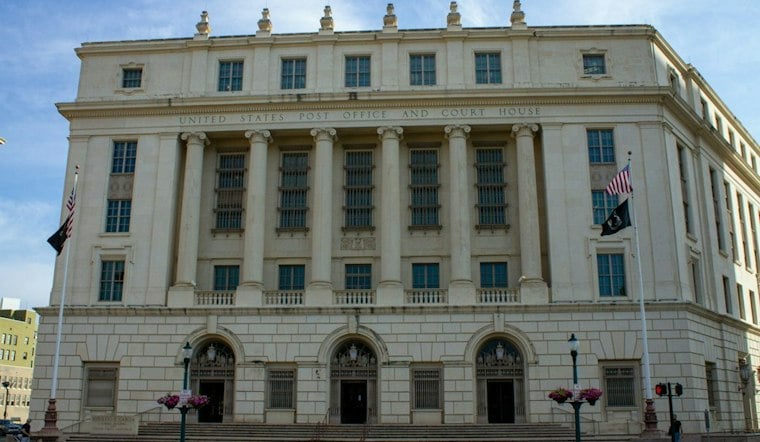
A federal indictment accuses April Watson, a 50-year-old Cedar Hill woman also known as April Watson Horton and April Shawnette Watson, of obtaining more than $680,000 in pandemic relief loans using fabricated payroll records and directing some of the money toward construction of her home. Watson made her initial court appearance Friday, October 23. The 10-count indictment charges her with four counts of wire fraud, two counts of bank fraud and four counts of money laundering.
Fake Payroll Records Allegedly Fueled Three Loan Applications
Prosecutors allege Watson applied for Paycheck Protection Program and Economic Injury Disaster Loan funds between April 2020 and October 2021 on behalf of three businesses she ran: Exotic Bliss Beauty LLC, Brain Evolution LLC and Southern Home Ventures LLC. According to CBS News, court filings say she submitted payroll summaries and IRS documents that she represented as having been prepared by an outside payroll company. The filings state that the payroll forms were never generated and that the companies filed no tax returns reporting wages or gross revenues for 2019 or 2020.
The indictment puts the total at $680,492 across three disbursements: $210,698 in PPP funds from Kabbage, Inc.; $299,800 in EIDL funds paid directly by the Small Business Administration; and $169,994 in PPP funds from JPMorgan Chase, according to the Dallas Express.
Money Allegedly Went Toward Building Her Cedar Hill House
The indictment alleges that $114,850 was moved in three transfers for construction of Watson’s Cedar Hill residence. It also lists a separate $40,000 transfer to an associate, according to the Dallas Express.
Federal prosecutors are seeking forfeiture of the residence and a money judgment for the full value of the loans, the Dallas Express reports. The allegations concern the use of relief funds for personal purposes rather than the businesses’ payroll or operations.
What Watson Could Face If Convicted
If convicted, Watson could face up to 20 years in federal prison on each wire fraud count, up to 30 years on each bank fraud count, and up to 10 years on each money laundering count. She is presumed innocent unless prosecutors prove her guilt in court, an allegation that remains unresolved pending trial.
U.S. Attorney Ryan Raybould, whose office for the Northern District of Texas announced the indictment, said, “This office and our law enforcement partners remain steadfast in hunting down pandemic-era fraud and holding these bad actors accountable.” The case was investigated by IRS Criminal Investigation and Homeland Security Investigations through the Dallas El Dorado Task Force, and is being prosecuted by Assistant U.S. Attorney Elise Aldendifer.
Part Of A Much Larger Federal Crackdown
Watson's case lands amid a sweeping nationwide push against COVID-era loan fraud. The Trump administration recently announced that roughly 870,000 people suspected of defrauding pandemic-era small-business programs will be barred from receiving future federal loans, according to CBS News. A Justice Department enforcement surge running from June 12 through September 1 involved more than 160 defendants and roughly $245 million in intended taxpayer losses, drawing on prosecutors from 44 U.S. Attorney's Offices and more than 20 federal and state investigative partners.
The SBA has said suspended borrowers are connected to an estimated $39 billion in suspected fraud across 45 states and territories, bringing the total associated with suspensions to roughly $49 billion nationwide.
What the Relief Rules and Fraud Estimates Show
SBA guidance described COVID-19 EIDL funds as available for normal operating expenses and working capital, including payroll, equipment purchases and debt payments. That guidance does not establish whether any particular expenditure alleged in Watson’s case was permitted, and it does not by itself provide a full comparison with PPP rules. The Small Business Administration’s guidance addresses EIDL uses. Separately, the SBA Office of Inspector General estimated that more than $200 billion in COVID-19 EIDL and PPP funds went to potentially fraudulent actors. The estimate describes funds disbursed to potentially fraudulent actors; it is not a finding that all of that money was proven fraudulent.
North Texas has seen several similar prosecutions in recent years. A Mansfield businesswoman was sentenced to more than seven years in federal prison over an approximately $8.5 million PPP fraud scheme, and a former bank vice president in Wichita Falls was sentenced to four years in federal prison in a separate fraudulent PPP and EIDL case. A North Texas couple was also previously charged after allegedly submitting applications for $1.85 million in Paycheck Protection Program loans on behalf of businesses that did not qualify.





