

























































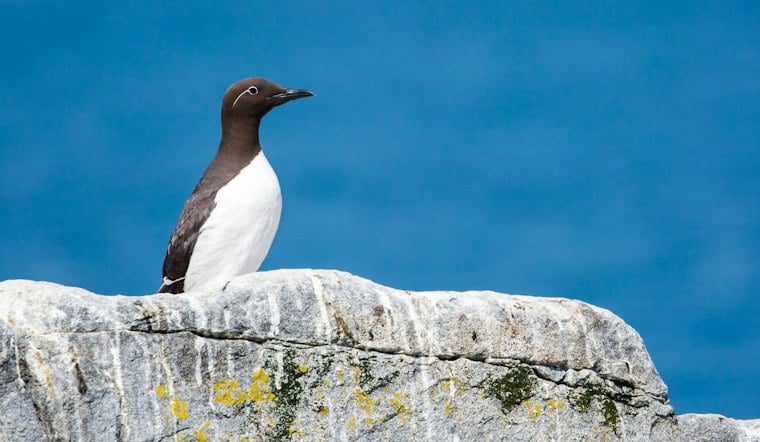
A seabird that looks like a miniature penguin is washing up along California’s Central Coast by the hundreds, too weak to feed itself, and the nonprofit clinic absorbing the crisis says it has never seen anything like it. Pacific Wildlife Care has admitted 867 common murres for care since Sept. 1, more than the organization has ever taken in before, with most arriving severely emaciated.
The scale of the intake, tallied from Sept. 1 through Oct. 19, marks what clinic staff describe as the clinic’s largest-ever influx of the species, according to sanluisobispo.com. Most of the birds have arrived starved down to almost nothing, part of what the outlet reports seems to be a mass starvation event unfolding off the Central Coast. One common murre patient, described on Oct. 12 as recovered and “very fat,” weighed 1 kilogram, according to the Sacramento Bee.
Common murres resemble small penguins, with dense, waterproof tuxedo-like feathers that trap air to keep them warm and dry, per the Sacramento Bee’s reporting. They spend most of their lives at sea and breed in colonies on the Farallon Islands off San Francisco and the Channel Islands off Santa Barbara County. Despite the penguin comparison, murres can fly, and they rely on diving deep underwater to catch the small fish that make up their diet.
Warm Water Is Pushing Fish Out of Reach
The suspected culprit is heat. El Niño conditions have increased sea surface temperatures on California’s Central Coast, and that warming has pushed prey fish deeper into the ocean, according to the station's report. Murres can dive as deep as 600 feet to chase their food, but reaching those depths burns through enormous amounts of energy, and the birds lose body reserves very quickly once there isn’t enough prey available.
The timing compounds the problem. Common murres molt their feathers at the end of summer, and growing a fresh set of feathers is, as the clinic puts it, energetically expensive — leaving already hungry birds with even fewer reserves to draw on. Juvenile murres face a particular disadvantage in these conditions because they’re still learning how to dive, and food scarcity may even cause some young birds to be abandoned by adults, the outlet notes. Normally, common murre fathers stick with their fledglings as they learn to dive and fish on their own.
The pattern fits into a bigger, troubling picture along the West Coast. A marine heat wave has persisted off parts of the coast for about a year, only the third time on record such a large stretch of coastal water has stayed warm that long, according to the Associated Press. The National Oceanic and Atmospheric Administration confirmed in June that an El Niño had formed and was expected to grow to historic strength, and scientists fear the broader seabird die-off could worsen as a result.
Fish That Thrive Near Shore Are Disappearing
Record-setting ocean temperatures have shrunk the band of cold, nutrient-rich surface water where krill, anchovies and sardines normally thrive close to shore, the AP reports. Scripps Institution of Oceanography notes that El Niño often reduces coastal upwelling in the eastern Pacific, cutting into the biological productivity that feeds the region’s food web, and that seabirds and marine mammals may shift their migration timing when those food sources diminish. Scripps describes warm-water species moving in as temperate krill decline.
Pacific Wildlife Care isn’t alone in logging the surge. International Bird Rescue has been responding to a widespread seabird starvation event along the California coast since March, and had logged 287 common murre admissions since Aug. 15, according to International Bird Rescue. Many of the murres arriving at that organization were severely emaciated, with worn, broken or excessively weathered feathers. California wildlife officials reported that many of the dead or debilitated seabirds examined this year have been young and emaciated, and most have tested negative for avian flu, the AP notes.
Round-the-Clock Feedings and a Path Back to Sea
At Pacific Wildlife Care, treating a starved murre is a slow, intensive process. Every two hours, staff tube-feed the birds 30 cubic centimeters of a fish slurry, and the rehabilitation typically takes two to three weeks from intake to release, according to New Times SLO. Birds in treatment rotate between warm-air drying pens and pools kept around 80 degrees for roughly five days, since murres can develop secondary problems from spending too much time out of the water, per the Sacramento Bee.
Once a bird recovers enough, it moves to an outdoor pool kept near 50 degrees and starts receiving whole fish instead of slurry. Pacific Wildlife Care rehabilitation technicians Sophie Swan and Veronica Trosper are among the staff working directly with the birds, the Sacramento Bee reports. A murre receiving blood work on Oct. 12 had been in treatment for more than a week; the birds Trosper handled that day had arrived the day before.
When birds are ready to go, the clinic releases them a few miles offshore near a flock of wild murres, relying on an agreement with the Morro Bay Harbor Department, which provides boats for the offshore trips. Photographer David Middlecamp has documented the rehabilitation work underway at the clinic, images that capture a staff stretched thin by a historic caseload.
How This Compares to Past Die-Offs
Large as this year’s numbers are for Pacific Wildlife Care, history shows marine heat events have driven far bigger common murre die-offs elsewhere. About 62,000 dead or dying common murres washed ashore from California to Alaska between the summer of 2015 and spring of 2016, according to data from the U.S. Geological Survey. During the 2013-2015 marine heat event known as “the blob,” emaciated murre carcasses turning up on beaches marked what biologists called the largest seabird die-off ever recorded in the world’s oceans, the AP reports. A 2024 study estimated that more than half of Alaska’s common murre population, roughly 4 million birds, died during that earlier event.
Whether this year’s Central Coast crisis approaches that scale remains to be seen. For now, the work at Pacific Wildlife Care continues one slurry feeding at a time, as staff try to get as many of the 867 birds as possible back out to sea before the next wave arrives.



