

























































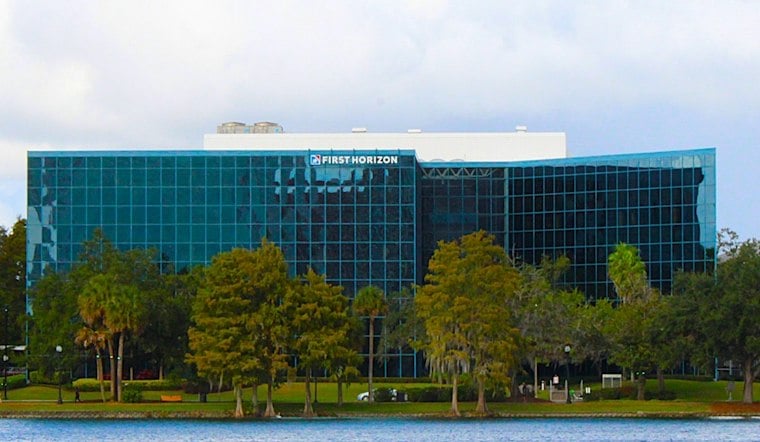
A caller told First Horizon's support staff on March 3 that he had a new phone and needed a new security token — and within about 80 minutes, six wire transfers totaling $4.85 million had already been requested from one of the accounts tied to Central Florida businessman Misael Rosario. By March 5, a dozen wires totaling $6.5 million had left the accounts, and more than $4.5 million of it has still not been recovered.
Rosario, 68, founded Century Metals and Supplies 38 years ago with $10,000, building a company that now processes metal used in elevators and roofs across Central and South Florida. He is now suing First Horizon Bank, alleging the bank's security failures let impostors drain accounts belonging to his companies, K&A Rosario Holdings and MJR Fund, according to WFTV. The federal lawsuit was filed in Orlando in May, according to American Banker.
Per the lawsuit, the caller claimed to be Rosario and said he had gotten a new iPhone 14 — the detail that reportedly convinced First Horizon's help desk to reissue a security token to someone who was not actually Rosario. Rosario's wife received an email from First Horizon early on the third day after the transfers began, after which Rosario says he was locked out of his other accounts, according to WFTV.
A Scheme That Hit Another First Horizon Customer Weeks Earlier
Rosario's attorney, Victor Velarde, said scammers allegedly claimed to First Horizon that they were the account holder with a new phone, then requested a one-time passcode and verified their identity using publicly available information. Velarde said the same scheme had targeted another First Horizon customer two months earlier.
That earlier case involves a law firm that sued in Palm Beach County over more than $17 million missing from its trust account in January, per WFTV's reporting. The same American Banker report notes that five weeks before the Rosario companies' incident, a caller used an identical new-iPhone story to get a token reissued for the law firm, Rabideau Klein, after which 13 wires totaling $17.3 million left its escrow account — $6.55 million of which remains missing, the firm's complaint states. The law firm's trust account in Palm Beach County still has $6.5 million missing, according to WFTV.
Plaintiffs in both cases claim the caller's voice did not sound like the actual account holders, and the wires in both lawsuits included payments to the same company, Shaoxing Fanshun Import and Export, per American Banker's review of court filings.
Conflicting Numbers in the Case
Accounts of the fraud's scale differ slightly depending on the source. WFTV reports scammers made 15 fraudulent wire transfers and that more than $4 million remains missing, while American Banker's review of the lawsuit puts the figure at 12 wires totaling $6.5 million, with more than $4.5 million still unaccounted for.
Rosario said the loss shocked him, telling WFTV that he and his wife had never issued that volume of wire transfers and that First Horizon offered no explanation for what happened. He said the missing money was intended for his grandchildren and their future. Rosario's legal team believes First Horizon failed to implement commercially reasonable security procedures and that he should get his money back.
What Florida Law Requires of Banks
Florida's wire-transfer statute generally places responsibility for an unauthorized wire on the bank unless it acted in good faith and followed a commercially reasonable security procedure agreed to with the customer, per American Banker's review of the relevant provisions. Under Florida Statute 670.202, determining whether a procedure is commercially reasonable involves weighing the customer's expressed wishes, circumstances known to the bank — including the size, type and frequency of payment orders — alternative security options offered, and procedures used by similarly situated customers and receiving banks.
First Horizon has filed a motion for partial dismissal in the case, seeking to dismiss the claim that it breached its contract with Rosario and to remove references to similar cases, while arguing the matter should be governed only by state wire-transfer law. A bank spokesperson said First Horizon intends to vigorously defend the case. All three lawsuits — Rosario's, the Rabideau Klein matter, and a third — are proceeding in federal court.
Bank Oversight and Reporting Scams
The episode comes as regulators have scrutinized First Horizon's internal controls on other fronts. The Federal Reserve banned two former First Horizon and M&T bankers from the industry, including former First Horizon wire-transfer administrator Jermal McGlown, whom the Fed alleged obtained confidential customer information between November 2023 and January 2024 that led to a $42,000 loss for the bank, according to Banking Dive.
The FBI describes business email compromise as one of the most financially damaging online crimes, exploiting how heavily people rely on email and phone verification for both personal and professional transactions, per the FBI. The bureau advises people to report such incidents promptly through the FBI Internet Crime Complaint Center, noting that earlier reporting improves the chance that fraudulent transactions can be reversed.



