

























































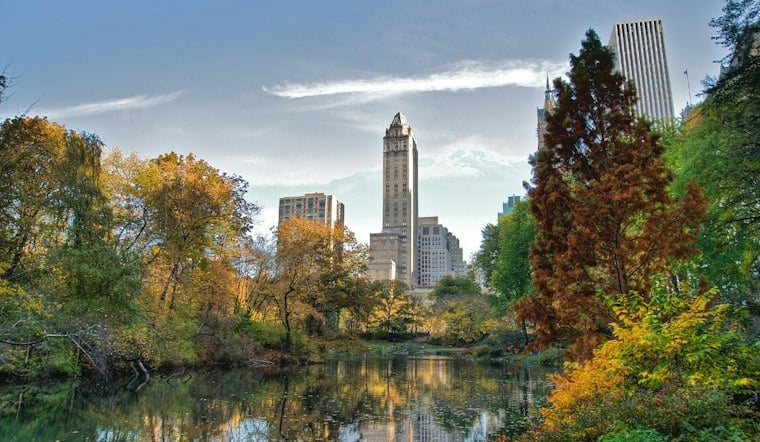
Shovels hit the dirt at the north end of Central Park this week as city and state leaders launched a $35.7 million effort to keep Harlem and East Harlem drier during storms while saving millions of gallons of drinking water every year. The North End Recirculation Project will link three park water bodies into a single system designed to pump, filter and recycle water instead of letting it drain straight into the sewers.
New York officials and the Central Park Conservancy broke ground on the project, according to amNewYork, which reports the system will connect the Harlem Meer, the Loch and the 100th Street Pool so water can circulate and be filtered among the three. The outlet notes the project is expected to wrap up in fall 2028.
Mayor Zohran Mamdani said the project will conserve drinking water on dry days and protect neighborhoods from flooding during storms, per the same amNewYork report. He also pointed to a stark climate statistic, saying New York City had spent one in three days under a flash flood activation so far that year, and said climate change is bringing more frequent and severe rainfall to the city.
How the System Will Actually Work
During dry weather, the project will divert water from the Harlem Meer and pump it south of the Pool, with water flowing back through the connected water bodies by gravity. Right now, those same water bodies are fed continuously by City water that empties into a sewer system on Fifth Avenue, according to the Central Park Conservancy.
Ahead of a forecast major storm, the system will lower the Meer's water level to create additional space for capturing rainfall, and the water bodies will then refill naturally as rain falls. Once a storm passes and conditions return to normal, the system goes back to regular circulation, the conservancy's project page explains. The project scope also includes modifying the Harlem Meer's existing outflow structure, installing automated outflow controls, and adding pumping, filtration and pressurized piping between the Meer and the Pool, according to a June 2024 project summary from Manhattan Community Board 8.
Funding and Officials Behind the Project
The project received $19.6 million in city capital funding and a $10 million grant from the New York State Environmental Facilities Corporation, amNewYork reports. City Council Speaker Julie Menin gave $2 million, while Manhattan Borough President Brad Hoylman-Sigal contributed $500,000 and Council Member Gale Brewer added $100,000.
DEP Commissioner Lisa Garcia said the project will conserve the water supply, reduce stormwater reaching sewers during heavy rain and improve storm preparedness. Governor Kathy Hochul said the effort reflects the state's broader push to prepare communities for severe weather through infrastructure investments, and highlighted protecting Central Park and nearby neighborhoods while improving water quality. Central Park Conservancy President Betsy Smith joined Mamdani and Hochul in announcing the project's start.
Projected Impact on Flooding and Water Use
Officials project the system will keep approximately 132 million gallons of water out of local sewers annually and reduce stormwater flows to city sewers by 90% across a 204-acre watershed. The same officials project the recirculation setup will save around 175 million gallons of drinking water each year by reusing water already inside the park. The conservancy's project materials add that the system is designed to capture stormwater from 205 acres of the park's north end, nearly a third of the park's total footprint.
The recirculation concept isn't new to planners. The Community Board 8 summary notes the idea reemerged in 2016 as part of an earlier push to cut potable water use, and the conservancy says it has coordinated with the city's Department of Environmental Protection and NYC Parks on the plan since 2019. Construction on the system itself started in September.
Part of a Bigger Flooding Problem Citywide
The stakes extend well beyond the park's borders. New York City still relies on a nearly 200-year-old network of 7,500 miles of sewer pipes serving 14 wastewater treatment plants, and around 60 percent of those sewers combine stormwater and sewage in the same pipes, according to Inside Climate News. A 2024 report from the New York City Panel on Climate Change projected that flooding from short extreme-rainfall events in some inland areas could grow 19 to 24 percent more intense because of climate change, and a separate 2024 Springer Nature journal report found nearly a third of the city's roads could potentially flood during cloudbursts.
Citywide parks carry real exposure to that risk. Rebuild by Design reports that 38% of New York City's 2,385 parks are currently in flood zones, a share it projects will surge to nearly 70% by 2100, while the number of residents living in the city's floodplain is projected to climb from 1.4 million today to more than six million by century's end. The nonprofit also points to Hoboken's Hurricane Sandy rebuild, which used green and gray infrastructure to cut flooding by 88% and gave the city's parks the capacity to hold a combined 4.2 million gallons of heavy rain in a single event.
Back in Central Park, the recirculation project isn't working alone. The Harlem Meer Shoreline and Boardwalk Restoration project includes elements the Community Board 8 summary calls critical to implementing the recirculation system, and that shoreline work is expected to further contribute to potable-water savings, combined-sewer-overflow reductions and water-quality improvements once complete.





