

























































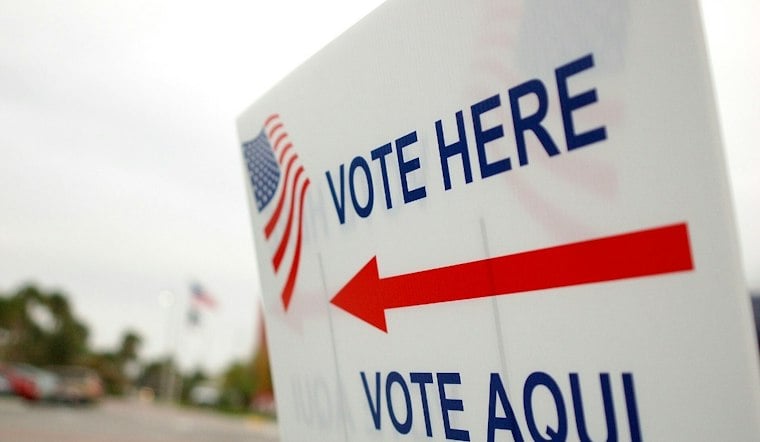
Champaign County voters will decide for a second time this year whether to fund developmental disability services in the county, after rejecting an identical levy proposal by a wide margin in May. The five-year, 1.5-mill property tax levy returns to the ballot on Nov. 3, and board officials say the outcome could determine whether hundreds of local residents keep the services they currently rely on.
In the May 5 primary, Champaign County voters defeated the 1.5-mill levy 60.89% to 39.11%, with 3,571 votes against and 2,294 in favor, amid turnout of just 22.90%, according to Peak of Ohio. The measure now back before voters is similar to the one rejected five months ago, and as reported by the Springfield News-Sun, the new levy would cost about $52.50 per year for a home valued at $100,000.
Leigh Anne Wenning, superintendent of the Champaign County Board of Developmental Disabilities, told the paper that levy funding has remained flat while costs have continued to climb. The board serves more than 420 people with developmental disabilities in Champaign County, including young children receiving early intervention and adults who need help accessing services and support, and it works with local providers such as Champaign Residential Services and Downsize Farm.
A State-Declared Fiscal Emergency
The stakes go beyond a routine funding request. The Ohio Department of Developmental Disabilities has officially designated the Champaign County board as being in a state of fiscal emergency, requiring new tax revenue just to maintain existing services, the Urbana Daily Citizen reported. That designation came even after the board identified and executed more than $360,000 in internal budget cuts.
Much of the pressure traces back to a quirk of Ohio tax law. The board holds three continuing levies totaling 5.5 paper mills, the oldest dating to 1982 and the newest to 2001, while current collections total roughly 2.15 mills, according to the same Urbana Daily Citizen report. Continuing levy revenue has not kept pace with rising expenses, and the board has used cash reserves to cover operating deficits, Wenning said — a stopgap that cannot continue indefinitely.
Driving much of the cost growth is the board's mandatory share of Medicaid waiver services, which help eligible people receive support in their own homes and communities rather than in institutions. The board pays about 35% of the cost of Medicaid waiver services for eligible individuals, an obligation that has expanded rapidly as participant needs grow and the state raises provider reimbursement rates, per the Urbana Daily Citizen.
Cuts Already Made, More on the Table
Board leadership says it has already trimmed administrative costs before asking voters for more money. The board has previously shared employees with the neighboring Shelby County Board of DD, according to the Sidney Daily News. The Springfield News-Sun reports the board also reduced rented space on Patrick Avenue and left positions unfilled, with Wenning saying the goal of those earlier reductions was to cut expenses without affecting service quality.
If the levy fails again, the board says it would consider cuts to services not required by state regulations. Programs not required by state regulations — including early intervention for children from birth through age 3, behavioral support, and community integration and recreation programs — are subject to board discretion and available local funding.
Recreation programs help people with developmental disabilities participate in activities and engage with others in their communities. The board has just two staff members responsible for recreation services, and Wenning said that without those two positions, the entire recreation calendar would disappear. Wenning said the levy could affect the board's ability to maintain quality services, adding that without levy resources, the board would no longer be able to provide the services.
Early in-person voting for the Nov. 3 general election is underway.





