

























































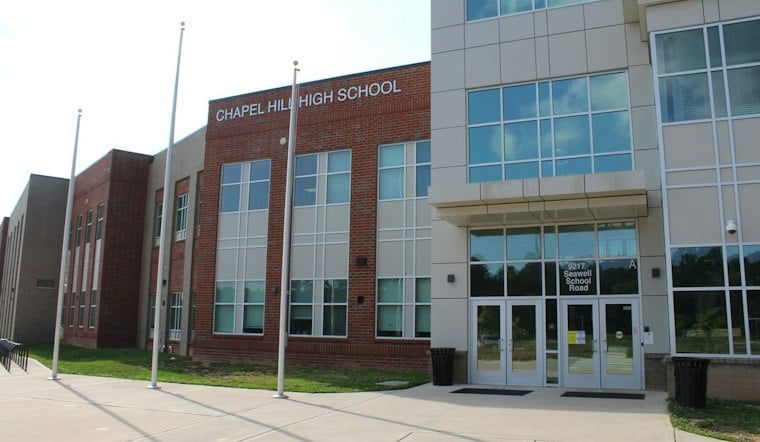
Keith Cooper put out a fire in a boys' bathroom at Chapel Hill High School last November, and within minutes he was in an ambulance with chest pains that turned out to be a heart attack. What followed was nearly a year of fighting with the state's workers' compensation system — a fight Cooper says only ended after a television investigation put pressure on the insurance administrator handling his case.
Cooper was teaching at Chapel Hill High School on November 14, 2025, when a colleague told him there was a fire in the boys' bathroom, according to ABC11 News. He grabbed a fire extinguisher and put the fire out himself, but shortly afterward he began feeling tightness in his chest. An ambulance took him from the school to the emergency room, where doctors determined he had suffered a heart attack.
Cooper's workers' compensation claim was initially approved, he said, but that decision was reversed in January and the claim was denied. The denial form stated there was no injury by accident in the course or scope of employment, leaving Cooper responsible for thousands of dollars in medical bills — a cost he previously said ran approximately $5,000 to $6,000 out of pocket.
A Cardiologist's Letter Said the Fire Was the Trigger
Cooper hired attorney Michael Bertics to appeal the denial. Bertics said this type of heart attack is supposed to be covered by workers' compensation, and he shared Cooper's medical records along with a letter from his cardiologist with Sedgwick, the third-party claims administrator for North Carolina state employee workers' compensation claims.
Per the cardiologist's letter, the heart attack was precipitated by acute stress related to the fire at Chapel Hill High School and would not likely have occurred without the extraordinary stress that day. The letter also stated that the heart attack caused permanent damage and that Cooper will require lifelong medical therapy under a cardiologist's supervision. Despite that documentation, the claim remained denied, and a hearing was scheduled before the North Carolina Industrial Commission.
North Carolina law generally allows a heart attack to be compensable when it results from an accident, including unusual or extraordinary exertion or strain, according to a North Carolina Court of Appeals opinion referenced by the North Carolina Industrial Commission. A North Carolina workers' compensation law firm similarly notes that a heart attack is broadly covered when it is caused by a workplace accident or an unusual work-related event, per riccilawnc.com.
Cooper Turns to a TV Investigation
With his claim still denied, Cooper turned to ABC11 Troubleshooter Diane Wilson for help bringing attention to his case. Wilson first reported on Cooper's situation last month, and the station's Troubleshooter team reached out to Sedgwick for comment, but the administrator provided no response.
Then, on October 1, Bertics received a call that the claim was being approved. He told the station that the news story was the only change between the expected denial and the claim's sudden approval — and Cooper and Bertics believe Wilson's reporting helped bring about the reversal. Cooper said he would be reimbursed for costs paid so far and should incur no further costs.
Cooper expressed appreciation for the community support and Wilson's reporting throughout the process. He had been teaching at Chapel Hill High School when the ordeal began, and his case became a test of how a single workplace emergency can spiral into a monthslong bureaucratic battle over who pays for its medical aftermath.
School District Says It Doesn't Decide Coverage
Chapel Hill-Carrboro City Schools said it could not comment on what it described as a confidential personnel matter. The district said the State Board of Education provides workers' compensation coverage for public school employees, including CHCCS employees, and that the school system does not make decisions about which injuries or conditions are covered.
The district added that it assists employees in accessing workers' compensation coverage and will continue supporting employees in accessing available benefits. The North Carolina Industrial Commission describes the broader goal of the state's workers' compensation system as ensuring injured workers receive care that restores them, as nearly as possible, to the health and ability to work they had before their injury, according to the commission's own materials for claimants.





