

























































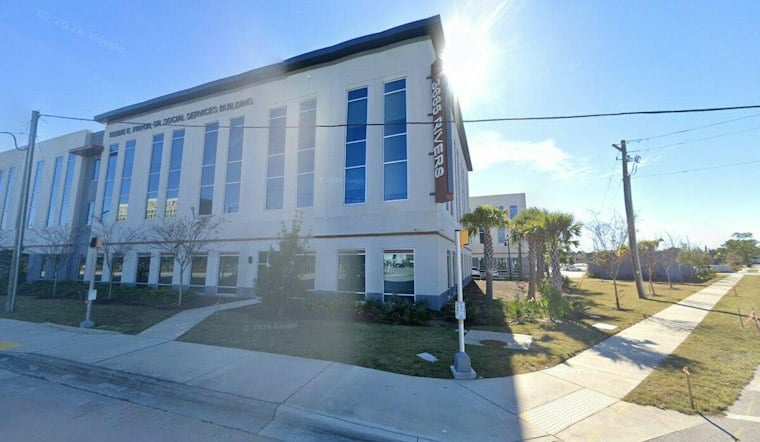
Six new rooms have opened inside the Charleston County Department of Social Services office in North Charleston, giving children entering foster care somewhere other than a desk or a hallway chair to wait while caseworkers search for a placement. The project includes an infant nursery, a toddler room, an elementary room, a teen lounge, a signature Lily Pad room and a family dining room where parents and children can share meals during visits.
The rooms are the work of Lily Pad, a South Carolina nonprofit that converts institutional office space into what it calls trauma-informed environments, and they mark the organization's largest project to date, as reported by Live 5 News. Soft lighting, weighted blankets, sensory toys, comfortable furnishings, sleeping accommodations and age-appropriate activities fill the space, according to the outlet. The toddler room includes a Lego Duplo wall, while rooms for older children feature their own Lego walls, and one space holds a previously donated College of Charleston jersey.
Charleston County DSS Director Darrell Morris had initially offered Lily Pad a hallway of rooms organized by age, with the original plan calling for completing just one or possibly two of them. Lily Pad delayed the installation until later in the year so it could raise more money from community partners, and the finished project grew to all six rooms rather than the one or two first anticipated, per Live 5 News.
Why Kids End Up Waiting at DSS Offices
Children entering foster care may spend time at a DSS office while caseworkers search for a placement, and the rooms are meant to give them somewhere to wait while placement teams determine next steps, as well as a setting for family visits that can include shared meals in the dining room. South Carolina DSS State Director Tony Catone said children should experience a warm, inviting environment and a sense of community belonging, adding that communities working together can help care for children and families, Live 5 News reported.
The wait is a real and documented problem statewide. More than 200 children spent the night at a social services office between April and September 2023, according to newsfromthestates.com. Lily Pad co-founder and executive director Jennifer Tice has described children in DSS offices sometimes waiting for hours and at times overnight, telling the Greenville Business Magazine that some were “sleeping under case managers' desks, on air mattresses.”
Founders Who Lived the Problem Firsthand
Tice and her husband, co-founder Benjamin Tice, fostered more than 40 children over about 14 years, and it was during that time that they listened to children describe their experiences at DSS offices during placement, caseworker visits, and meetings with attorneys or guardians. Benjamin Tice, who worked in law enforcement, said he personally removed children from homes and transferred them to DSS. He said the Lily Pad environment can lessen but not completely remove the effects of trauma.
Jennifer Tice said the goal was for children entering care to encounter a prepared, beautiful space that affirms their worth and value, and that the organization wants kids to know they have worth, are loved, and are safe. She reported that the rooms were put to use soon after installation. In one instance, a DSS director brought a crying infant to the new nursery and rocked the baby with the lights dimmed until the infant fell asleep on her chest — an experience Tice said exemplified exactly why the rooms were created.
Volunteers and Donors Behind the Build
Charleston County maintenance staff prepared all six rooms before Lily Pad's installation team arrived, and the team was led by Brandon Comps, a trades technician with Charleston County government. The crew coordinated material deliveries, painted, installed electrical outlets and replaced carpet tiles with luxury vinyl plank flooring. Sherwin-Williams donated 20 gallons of paint, while volunteers from Modern Woodmen of America and City Life Church pitched in on the installation.
Financial support for the project came from Jackson Marketing, Modern Woodmen of America and the Daryl and Alicia Jackson Foundation. Lily Pad describes itself as a faith-based nonprofit funded by individuals, foundations and community partners, and its own account on lilypadinc.org says it is supported through community partnerships, grants, business sponsorships and private donors, with renovations that come at no cost to the state.
A Statewide Foster Home Shortage
Lily Pad launched as a 501(c)(3) nonprofit in March 2022 and began in the Upstate region before expanding into the Midlands, Pee Dee and Lowcountry, per its FAQ page. The organization has since created 92 rooms across 49 offices statewide, and five county DSS offices along with two permanency offices still remain to receive Lily Pad spaces, with a goal of reaching every county office by the end of 2027.
Catone reported that about 3,500 children are currently in foster care in South Carolina, a figure that sits between other recent counts: a 2025 report from the Post and Courier put the number at 3,317 against 2,151 licensed foster homes, while Lily Pad's own FAQ cites approximately 3,800. That same Post and Courier report found Richland County alone had 416 foster children, just 275 licensed foster homes, and an average of 7.9 placement moves per child over a 1,000-day period — a snapshot of the instability Lily Pad's rooms are meant to soften, even if they cannot fix the underlying home shortage.
Similar rooms have opened elsewhere in the state in recent months. A Lily Pad space opened at the Beaufort County DSS office, described by WJCL as the organization's 40th transformed space in South Carolina, while a separate project at the Williamsburg County DSS office — featuring a pullout sofa bed, a washable rug, a desk, sensory toys, books, blankets, art supplies and soft lighting — was marked as its 42nd. A second space was also added at the Anderson County DSS office, which serves almost 200 children in foster care, after officials said another room was still needed there.
Catone encouraged the public to support Lily Pad, volunteer, or apply for openings with the state agency, and Tice said the organization is always looking for volunteers to help with future installations.





