

























































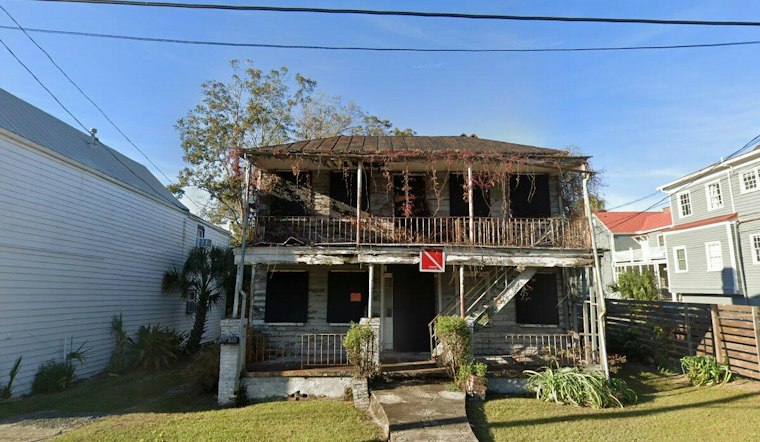
A broken tree limb punctured the roof of the Philip Simmons House Museum last month, sending rainwater into a bathroom at the cottage where the celebrated Charleston blacksmith once lived. The damage arrives at an awkward moment: the same property at 30½ Blake St. was just added to the National Register of Historic Places this month, even as its caretakers scramble to cover repair costs they estimate at under $15,000.
The Philip Simmons Foundation, which serves as the museum's steward according to Charleston City Paper, says the roof damage is only part of a longer repair list that includes the bathroom, an access ramp and exterior painting. Foundation chair Elmer Gilliam Jr., an engineer based in Raleigh, North Carolina, called the roof damage a major concern, per the same report. Complicating matters, the limb that caused the damage fell from a tree in a neighbor's yard, and the foundation has had difficulty getting that neighbor to take responsibility for it, Gilliam said, even after the foundation approached the neighbor about trimming the tree.
A Cottage and Workshop With a 77-Year Legacy
The two-bedroom cottage, which Simmons purchased in 1959, sits adjacent to his blacksmith shop and now functions as a small museum and gift shop showcasing his 77-year career in ironworks. Charleston City Paper reports the property's original iron pieces, including window grills and gates, lean against the wall near the museum entrance, likely forged in that same adjacent workshop. Rossie Colter, the foundation's project administrator, has proposed auctioning some of those original pieces to raise money, though Gilliam noted they would need cleaning and repainting first.
Gilliam told the outlet the foundation could launch a broader fundraising campaign as early as spring 2027. In the meantime, the American College of the Building Arts has already found use for the shuttered workshop: students used it temporarily as a classroom in 2025 to train the next generation of artisans. ACBA Provost Christina Rae Butler, who prepared the property's National Register nomination letter, hopes the college can keep using the site as a learning laboratory going forward.
National Register Listing Ties to Civil Rights History
Butler said the National Park Service accepted the nomination letter this month, though the agency has not yet posted the final edited version on its website, she told Charleston City Paper. The listing recognizes the property's significance not just for Philip Simmons but for civil rights leader Rosetta Simmons, who was active during the 1969 Charleston hospital workers strike. A National Register listing also makes a building eligible for state historic tax credits during restoration, a detail that could matter as the foundation weighs its funding options.
Broader preservation funding in South Carolina remains uneven. The state's South Carolina Department of Archives and History runs a State Grant Fund meant to support the physical repair and rehabilitation of the state's historic buildings, while the SC Preservation Toolkit lists grants, tax credits and revolving loan funds as potential sources. That same toolkit notes that federal grants are now subject to new rules, with a funding pause in effect tied to the current administration's interpretation of diversity, equity and inclusion.
A New Advocate Steps Up
Help may also be coming from an unexpected corner. Ken Battle, a North Charleston resident who founded the Black Heritage Trail of the Lowcountry, was recently elected president of the Exchange Club of Charleston for a one-year term, and he plans to raise money for the Philip Simmons House Museum during his tenure. Battle said the museum, which he described as being in poor condition, is important to the Black community. He has not yet discussed his fundraiser idea with Gilliam, but the foundation chair said he would welcome working with Battle and the Exchange Club.
Elsewhere in the Lowcountry, similar preservation fights have found resolution. The Long Point Schoolhouse in Mount Pleasant recently secured a $250,000 state grant to finish a years-long restoration, according to Live 5 News. Nationally, the African American Cultural Heritage Action Fund has awarded $13.5 million in grants so far this year to support historically Black churches, per the National Trust for Historic Preservation. For now, the Philip Simmons Foundation's path forward rests on a patchwork of community advocacy, prospective grants and whatever support a newly minted National Register listing can attract.




