

























































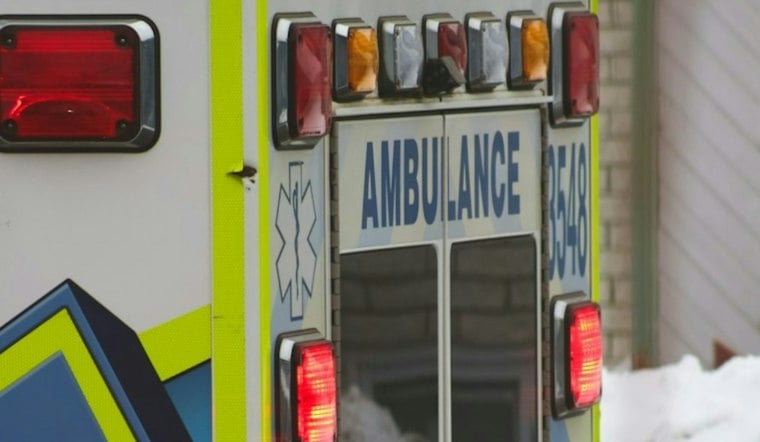
Johnnie Davis's heart stopped beating while he was at home, and the only thing standing between him and a very different outcome was his wife's willingness to start chest compressions before anyone else arrived. She began CPR immediately, keeping blood moving through his body until first responders showed up and used an automated external defibrillator to restore his heartbeat.
Davis shared his story on World Restart a Heart Day, the global October 16 campaign established by the European Resuscitation Council in 2012 to expand public CPR training and sudden cardiac arrest awareness, according to the American Heart Association. As reported by WCCB Charlotte, Davis appeared on the station's Rising program to recount the ordeal and urge others to learn CPR themselves.
Davis is now part of a local pattern. Just this past February, Hoodline reported on a Charlotte-area mom who performed 8 minutes of CPR on her husband after his own sudden cardiac arrest at home, and in September a Cornelius high school coach survived an at-home cardiac arrest after his partner started chest compressions before he was rushed to the ICU.
Why Home Is Where Cardiac Arrest Strikes Most
Davis's experience lines up with national data showing that sudden cardiac arrest is overwhelmingly a household emergency. The Cardiac Arrest Registry to Enhance Survival's 2024 and 2025 reports found that roughly 71% of adult out-of-hospital cardiac arrests happen in residential settings, while more than 17.5% occur in public places, according to the American Red Cross. That makes spouses and family members, not strangers or bystanders in public, the most likely first responders when someone's heart suddenly stops.
The stakes of those first few minutes are enormous. An American Heart Association analysis of nearly 199,000 witnessed out-of-hospital cardiac arrests found that starting bystander CPR within the first two minutes was linked to an 81% higher chance of surviving to hospital discharge and a 95% higher chance of favorable neurological recovery compared with no CPR at all, per the organization's research. Even CPR started between two and 10 minutes after collapse still provided a 19% survival boost, the same analysis found.
Cardiac Arrest Survivors in Charlotte
Local EMS agency Medic reported reaching 1,000 cardiac-arrest survivors discharged from hospitals since January 1, 2010.
The local response also includes technology. Mecklenburg County launched the free PulsePoint mobile app in 2019 in partnership with Medic and local healthcare systems, allowing the 911 dispatch center to send push alerts to CPR-trained bystanders within a quarter-mile of a public cardiac arrest, per CPR Educators. The app also pinpoints the nearest registered automated external defibrillator, giving rescuers a faster path to the equipment first responders used on Davis.
What the Numbers Say About Bystander Action
Nationally, the picture is improving but still leaves room to grow. The CARES 2025 report found that 42.5% of out-of-hospital cardiac arrest victims received bystander CPR, a record high since tracking began in 2016, while bystanders deployed an AED in 13.9% of public cardiac arrest events, per the American Red Cross. More than 350,000 out-of-hospital cardiac arrests occur annually in the United States, with nearly 90% proving fatal and an overall survival-to-discharge rate of about 10.5% for cases treated by EMS, according to the Sudden Cardiac Arrest Foundation.
WCCB Charlotte reports that CPR can double or triple a person's chance of survival when performed immediately, a point Davis stressed in encouraging viewers to learn the skill. People who want to act like Davis's wife did can learn hands-only CPR through the American Heart Association.
Davis's message on Rising was that learning hands-only CPR could save the life of someone in your own home.





