

























































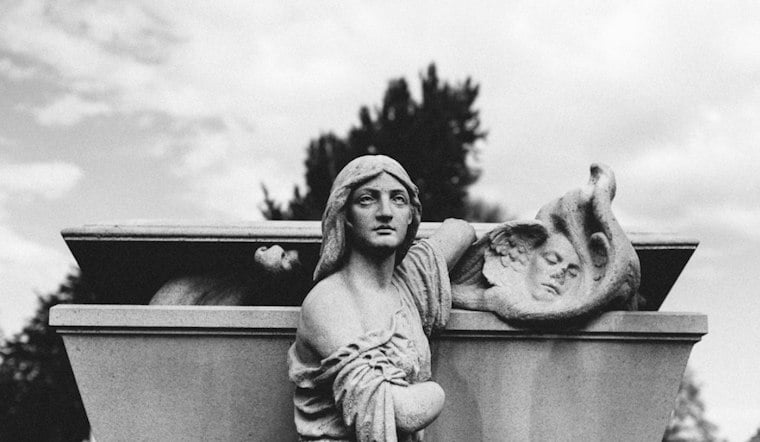
A property-tax fight between Cheltenham Township and the Archdiocese of Philadelphia over Holy Sepulchre Cemetery has now stretched past the decade mark, with no resolution in sight and roughly $683,000 in disputed 2026 taxes hanging in the balance. The case traces back to a 2014 corporate restructuring that moved the 200-acre cemetery out of the Archdiocese's direct hands and into a church-controlled limited liability company — a shift that triggered Montgomery County to strip the property of its longstanding tax exemption.
A Church Financial Fix That Sparked a Decade of Litigation
According to the Philadelphia Inquirer, the Archdiocese transferred Holy Sepulchre Cemetery to Philadelphia Catholic Cemeteries LLC in 2014 as part of an effort to improve the church's financial situation. That move followed a 2013 decision by the Archdiocese to sign a 60-year, $89 million lease with a for-profit death-services corporation to operate 13 Delaware Valley cemeteries, Holy Sepulchre among them. The operator behind that lease today is the Florida-based Everstory Partners, which runs the cemeteries under the arrangement.
Church graveyards are typically exempt from property taxes, but once Holy Sepulchre moved into the LLC structure, Montgomery County revoked the exemption and notified the cemetery, per court filings, that it would begin collecting taxes for 2015. The county also pulled the tax exemption for Calvary Cemetery in Lower Merion around the same period, the report notes. Holy Sepulchre's owners pushed back, appealing the decision and arguing that because the church still controls the LLC, the cemetery remains functionally under the nonprofit Archdiocese and should keep its religious exemption.
Dueling Appraisals and a Rising Assessment
The cemetery's owners appealed Montgomery County's $9.1 million assessment of the property, submitting their own appraisal that valued it at just $4.67 million. The gap didn't shrink with time — the county's assessment actually rose, pegging Holy Sepulchre's value at $9.3 million in 2025 according to public records cited by the newspaper. That higher valuation underpins the roughly $683,000 the cemetery would owe in total property taxes this year, more than $500,000 of which is earmarked for local schools.
Montgomery County confirmed to the Inquirer that Holy Sepulchre began actually paying property taxes in 2025, marking a shift from a purely legal standoff to real money changing hands. It remains unclear, however, whether those payments cover the entire cemetery or only the smaller portion of land tied up in the parcel dispute — a detail the case has not resolved. Cheltenham Township, the Cheltenham School District, and the Lower Merion School District are all parties in the litigation, each with a financial stake in how the dispute shakes out.
Legal Fights Over the Judge, and Over Who's Even Being Sued
The case has grown testier in recent years over issues well beyond the core tax question. A judge ordered Cheltenham to pay more than $43,000 of the cemetery's legal fees after a dispute over which parcels were actually included in the suit — a claim Cheltenham raised years after the case began. Cheltenham, for its part, filed a motion last year to remove the judge, accusing the judge's office of communicating inappropriately with the cemetery side, according to the article.
That motion appears to have stalled the case's momentum: the docket has seen no new filings since 2025, though a Cheltenham School District spokesperson told the Inquirer the case is still active. Villanova law professor Marie Reilly, who was not quoted directly on this case's status but described the broader legal question at play, called the issue of whether such an LLC is truly separate from its parent Archdiocese a controversial question — the kind, she said, that lawyers love to argue over.
A Precedent From a Neighboring District
Cheltenham isn't the first Pennsylvania school district to tangle with a leased Catholic cemetery over taxes. The Marple Newtown School District settled with the cemetery in its district in 2017, receiving $587,690 for five years' worth of property taxes through 2021, and that cemetery has continued paying taxes in the years since, according to public records referenced by the Inquirer. Whether Cheltenham's case ends in a similar settlement or a courtroom ruling remains an open question.
Underlying the dispute is a constitutional question about what counts as a tax-exempt burial ground. The Pennsylvania Constitution permits the General Assembly to exempt actual places of burial from taxation, but only when they are used or held by a person or organization that derives no private or corporate profit, according to the Pennsylvania General Assembly. The same constitutional chapter requires that taxes be uniform across the same class of properties within a taxing authority's territory — a standard that sits at the heart of arguments over whether Holy Sepulchre's corporate restructuring changes its tax status.
For now, the fight remains unresolved. Cheltenham School District, Cheltenham Township, the Archdiocese, and Everstory did not comment further for the story, leaving the decade-long standoff over a quiet corner of Montgomery County cemetery land to play out in the courts.



