

























































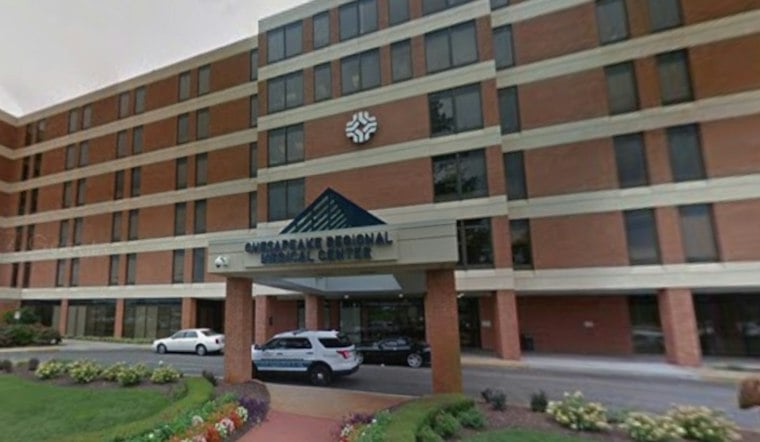
A former registered nurse at Chesapeake Regional Hospital has sued the hospital system, claiming it shorted employees on pay by automatically deducting meal breaks they never actually got to take, rounding their time punches against them, and leaving certain bonuses out of overtime calculations. Tabatha Gutierrez worked as a registered nurse at the hospital from December 2023 to July 2026 before filing her federal lawsuit last Tuesday.
Gutierrez is suing Chesapeake Regional Healthcare and alleges the hospital violated the Fair Labor Standards Act and the Virginia Overtime Wage Act through its meal-break, timekeeping and overtime pay practices, according to 13News Now. She's seeking unpaid wages and other damages from Chesapeake Hospital Authority, and 13News Now reports that it reached out to both sides for comment but received no response from either.
Meal Breaks Deducted Even When Nurses Stayed on Duty
At the center of the suit is a claim that the hospital automatically subtracts 30 minutes from employees' time sheets each day for meal breaks, even when workers never actually stepped away from their jobs. The lawsuit alleges Chesapeake Regional employees were required to remain on duty and perform compensable work during those breaks. Per the report, Gutierrez and her attorneys attribute the practice to understaffing, suggesting nurses simply didn't have the coverage to leave the floor.
Federal wage-and-hour rules draw a sharp line here. A bona fide meal period, typically 30 minutes or longer, generally doesn't have to be paid, but only if the employee is completely relieved from duty to eat, according to the U.S. Department of Labor. If Gutierrez's allegation that nurses kept working through those windows holds up, that distinction could matter a great deal to her case.
Rounded Time Punches and Bonus Pay Also at Issue
The lawsuit also alleges Chesapeake Regional rounds employees' time punches to the nearest quarter hour, a practice Gutierrez says often results in lost pay for workers. The Department of Labor's own guidance for the health care industry notes that rounding can trigger overtime obligations when it shaves time backward by a quarter hour, per the agency's fact sheet on hours worked.
Beyond the clock, the suit challenges how the hospital pays out bonuses. It alleges Chesapeake Regional fails to include certain bonuses in employees' regular rates of pay, which in turn lowers the overtime wages calculated from that rate. Attorneys for Gutierrez argue that under the Fair Labor Standards Act, certain nondiscretionary bonuses, including sign-on bonuses, are supposed to be folded into regular pay rates when calculating overtime for the weeks they were earned. Federal regulations back up that general principle, stating that bonuses which don't qualify for exclusion from the regular rate must be totaled in with other earnings to determine the rate overtime pay is based on, per the Electronic Code of Federal Regulations. Virginia law separately requires employers to pay at least one and a half times an employee's regular rate for hours worked beyond 40 in a week, according to the Virginia Legislative Information System.
Gutierrez Wants Other Employees to Join the Case
Gutierrez is asking the court to designate her lawsuit as a collective action, a step that would let other current or former Chesapeake Regional employees join the case if they believe they were affected by the same practices. None of the allegations have been proven in court, and the hospital's response to the claims has not been reported.
Wage disputes like this one aren't unique to Chesapeake. A Seattle jury determined in April 2024 that Providence Health & Services had to pay nearly $100 million over time-clock rounding and meal-period violations, ordering $98.3 million in compensatory damages spread across two classes covering more than 33,000 Washington employees, according to a blog post from law firm Ogletree. More recently, a North Carolina nursing-home operator agreed this past July to pay more than $500,000 to resolve a collective action over interrupted meal breaks and overtime pay, a settlement that included $283,700 in back wages for 158 workers and a $7,500 award for the employee who filed the original complaint, per McKnight's Long-Term Care News. That operator disputed the allegations and did not admit fault as part of the deal.



