

























































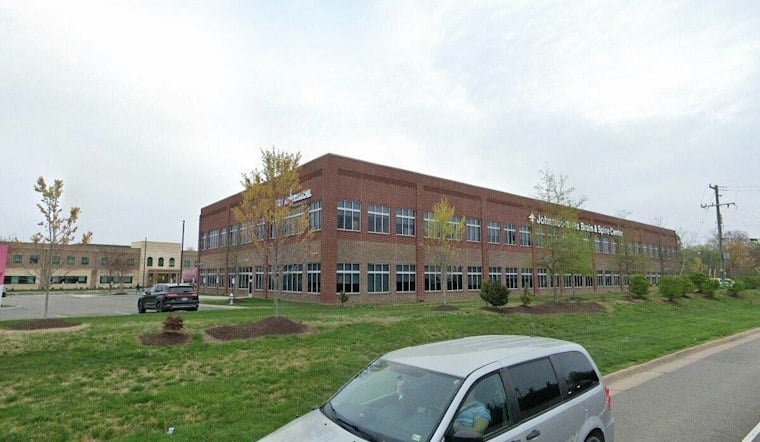
Johnston-Willis Hospital has broken ground on a nearly $25 million neuroscience center expansion in Chesterfield. The project is intended to bring gamma knife radiosurgery and focused ultrasound therapy into one building, alongside expanded MRI capacity, so patients may be able to complete imaging and treatment in a single visit.
According to 12 On Your Side, the hospital aims to offer same-day MRI and treatment when appropriate. The expansion will also increase MRI capacity to support future treatment options, with construction expected to wrap up next summer. WTVR CBS 6 News reports the hospital is investing more than $24 million to expand its brain and spine center, add a specialized MRI machine, and replace and upgrade equipment used for gamma knife treatment and focused ultrasound therapy.
Two Technologies, One Building
Hospital leaders say the project will bring two minimally invasive technologies into an integrated setting. In the station's report, Dr. Sahni described it as the first program in the world to combine gamma knife and focused ultrasound technologies in one such setting. The hospital says the expansion is intended to increase access to treatment for neurological conditions and reduce wait times.
Dr. Sahni said advances in brain treatment have changed the outlook for people with neurological diagnoses that were once considered hopeless.
A Decade of Shaking, Gone in an Instant
For Chesterfield resident Bobby Young, the technologies already available at Johnston-Willis have had a personal impact. Young said he had experienced tremors for 10 years, eventually struggling to eat and hold a glass. He received focused ultrasound treatment at the hospital in September.
Young told 12 On Your Side: “Before surgery, I was shaking all the time and now, there's no shake at all.” He said the change was immediate and that he cried when he realized his tremors were gone.
Two Decades of Gamma Knife at Johnston-Willis
Johnston-Willis Hospital has offered gamma knife technology since 2004, when it became one of the few nonacademic private facilities in the country to provide the treatment, per the same account. The hospital surpassed 6,000 gamma knife procedures in 2025, building on growth documented by WRIC, which reported the center had performed more than 5,000 procedures as of 2022. As of 2022, Riverside Regional Medical Center and the University of Virginia's Gamma Knife Center were the only other sites in the state offering the surgery, according to Richmond.com.
The hospital added focused ultrasound to its offerings in 2020, becoming the first private institution to use MRI-guided focused ultrasound for tremors, the article notes. HCA Virginia describes the treatment as an option for patients with essential tremor or tremor-dominant Parkinson's disease.
What the Research Shows
Clinical data support the durability of the treatment Young received. A five-year follow-up study found that MR-guided focused ultrasound produced sustained and significant improvement in essential tremor symptoms, according to NeurologyLive. Among 85 patients tracked in that research, postural tremor scores remained 73.1% better than baseline a full 60 months after treatment.
A separate seven-center prospective trial of staged bilateral focused ultrasound found a 66% improvement in mean tremor and motor scores just three months after treatment, as reported by the Focused Ultrasound Foundation. The FDA approved bilateral focused ultrasound treatment for medication-refractory essential tremor in January 2023, expanding the pool of patients eligible for the procedure nationally.
Who May Be Eligible—and How the Treatments Differ
The FDA’s summary says the device’s original indication is for unilateral treatment of idiopathic essential tremor in patients whose tremor has not responded to medication and who are at least 22 years old. That indication does not make every person with tremor a candidate. The bilateral approval described above is distinct from the device’s original unilateral indication, according to the FDA summary. Gamma knife radiosurgery and MR-guided focused ultrasound are not a single treatment pathway simply because they will be offered in one center. A systematic review indexed by PubMed says focused ultrasound, Gamma Knife radiosurgery and deep brain stimulation work on different principles and require an appropriate diagnosis to guide patient selection. The American Academy of Neurology says its essential-tremor treatment guideline was reaffirmed on July 19, 2025.
Part of a Broader Investment
The neuroscience expansion follows an earlier round of growth at the hospital. In 2023, HCA planned to spend about $9.5 million on a separate expansion and renovation project at Johnston-Willis to add a linear accelerator for radiation oncology treatment, according to Richmond BizSense. That earlier project included a 1,715-square-foot addition and renovations to roughly 2,800 square feet of existing hospital space.
Construction on the current neuroscience center expansion is expected to take approximately 10 months, with Johnston-Willis Hospital planning a grand opening for summer 2027, according to WTVR CBS 6 News. The planned center is intended to bring imaging and these two treatment technologies together in one location.



