

























































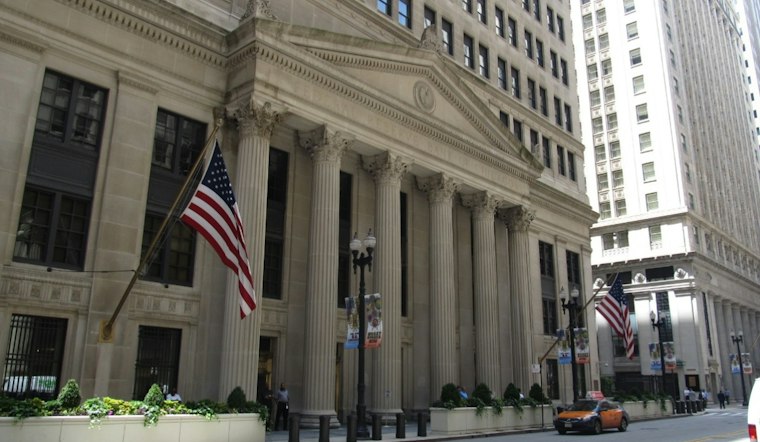
Americans are feeling worse about the economy even as the numbers that measure it keep rising, and the gap between the two has never been wider, according to Federal Reserve Bank of Chicago President Austan Goolsbee. Speaking at an event at Chicago Fed headquarters, Goolsbee said economic data and Americans' views are experiencing a record divergence — a split that has left policymakers wrestling with how much weight to give public sentiment when it no longer tracks with hard numbers.
The event, held in collaboration with NORC at the University of Chicago and described by the Chicago Fed as focused on why consumers and economists see different economies, drew a panel that included economic commentator Kyla Scanlon of Kyla Labs, who moderated the discussion, and Ric Estrada, president and CEO of Metropolitan Family Services. As reported by the Chicago Tribune, consumer sentiment and consumer spending began diverging during the pandemic, and that gap has persisted ever since.
Goolsbee, who serves as an alternate member of the Federal Reserve committee that sets interest rates this year, said the central bank phases back its narrow interest in consumer sentiment measures when sentiment no longer predicts hard economic numbers. He said the Fed would likely track sentiment less closely.
Prices Rose, Spending Grew, But Confidence Still Sank
Per the Federal Reserve's preferred inflation metric, prices were 3.4% higher in August than a year earlier, with the price index increasing 0.3% from July to August and 0.2% when stripping out food and energy — figures reported by the Tribune. Consumer spending grew 0.9% over that same July-to-August stretch, according to the newspaper's account, underscoring why officials have struggled to square strong activity with souring public mood.
That mood has been sliding across multiple national surveys. The University of Michigan's Surveys of Consumers found that sentiment ticked down less than four index points in September, reaching its lowest reading in four months and landing 15% below January 2026 levels. Views of current and year-ahead personal finances both weakened by roughly 10% that same month, the survey found, while concerns over high prices kept climbing.
The Michigan survey also found a partisan split in how sharply confidence has fallen: Republican sentiment sat 20% below January 2026 levels in September, while Democratic sentiment was down 13% over the same period. Year-ahead inflation expectations jumped from 4.0% in August to 4.6% in September, the highest reading since June, and long-run inflation expectations ticked up to 3.4% after holding at 3.3% for three straight months, per the same survey.
Conference Board Finds Confidence at Multiyear Low
The Conference Board released its own consumer-confidence survey results on the Tuesday before the Chicago Fed event, and the Tribune reports the reading fell to its lowest level since 2014. The Conference Board said its Consumer Confidence Index fell by 6.7 points to 81.9 in September, down from 88.6 in August, while its Expectations Index dropped 5.9 points to 63.6 — the third consecutive monthly decline on that measure.
Consumers' assessments of current business conditions turned negative for the first time since September 2024, the board's data showed, and the short-run outlook for business conditions plunged amid renewed worries that elevated fuel prices and re-escalating trade disputes could ripple through the broader economy. Consumers' average and median 12-month inflation expectations rose 0.3 percentage points in September to 6.1% and 5.1%, respectively, according to the board's survey.
'Vibecession' and the Price of Gas
Panelists offered their own explanations for why the public mood has soured despite the data. Scanlon described the divergence between spending and economic sentiment as a “vibecession,” while Brian Fabes, a senior fellow at NORC at the University of Chicago, said people know the price level when they see a gas station — a nod to how visible, everyday costs can shape perception more than aggregate statistics. Estrada, of Metropolitan Family Services, also joined the panel.
The backdrop to the discussion includes a Federal Reserve that raised its benchmark interest rate on September 16 for the first time since 2023, lifting it by a quarter point to a range of 3.75% to 4%, according to the Tribune's reporting. The hike came amid fears of persistent inflation.
Markets Pared Back Bets on Another Hike
CME Group's FedWatch tool tracks rate-change probabilities implied by 30-Day Fed Funds futures prices.
Americans' views of the economy have grown increasingly negative. Goolsbee described a record divergence between economic data and public sentiment.



