

























































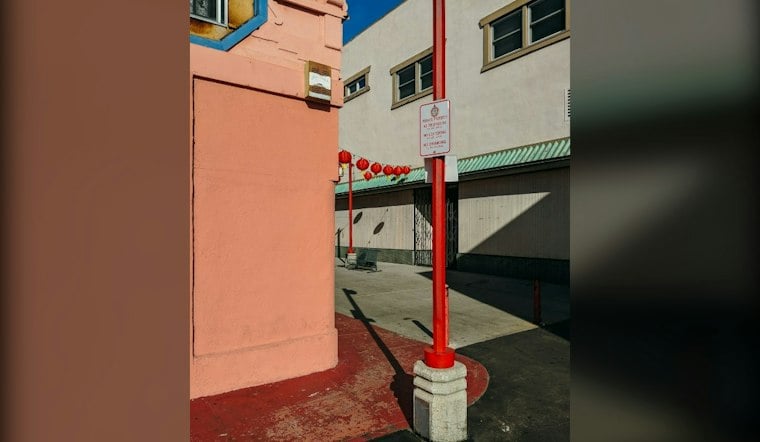
A bus storage lot near Chinatown Station is on track to become a five-story office complex after the Los Angeles City Planning Commission approved the proposal for 130 W. College Street. The project would bring roughly 225,000 square feet of office space and ground-floor retail to a site that has sat underused just north of the Homeboy Industries campus.
The approval was reported by Urbanize LA, which covers the project's design and history in detail. According to the outlet's earlier reporting, the building is planned to include approximately 225,000 square feet of office space, about 8,200 square feet of ground-floor commercial space, and a 440-car garage. The site sits between North Spring and North Main streets in Chinatown.
Notably, a 2023 report from Commercial Observer described the proposal differently at the time, putting the office building at 232,800 square feet with ground-floor restaurant and retail space. Neither account explains the discrepancy between the two figures, and it's unclear whether the project's scope has shifted since the original 2023 filing or whether the numbers simply reflect different stages of planning.
Grimshaw's Design Leans Into Public Space
London-based Grimshaw Architects is designing the building, with massing that steps back from Bruno Street as it rises, per Urbanize LA's earlier coverage. The plans call for a central courtyard mid-block along Bruno Street and a plaza at the intersection of Alameda and College streets, along with landscaped outdoor areas for employees and residents in the surrounding area. Commercial Observer's 2023 report added that the building was designed as all-electric, with street-level outdoor areas including a public plaza garden.
Getting to this point required more than a simple sign-off. The project needed approvals including a general plan amendment and a zone change, and the city's initial study forecast that construction would wrap by 2028 — contingent on those approvals coming through, the same Urbanize LA report noted.
The Riboli Family's Chinatown Footprint
The development is backed by the Riboli family, owners of San Antonio Winery, who filed the original application for the site in 2023. The family has already invested heavily in the neighborhood, having restored and adaptively reused the eight-building Capitol Milling Company complex, a 19th-century flour mill directly across the street, turning it into offices, retail, and restaurant space, according to Commercial Observer. The Riboli family has also proposed a separate, larger mixed-use high-rise complex on land overlooking Los Angeles State Historic Park.
The 130 W. College Street project lands in a Central Los Angeles office market that has seen tepid demand for new office space, a backdrop that makes the Riboli family's commitment to ground-up office construction notable. Even so, the office complex is just one piece of a broader wave of development reshaping this stretch of Chinatown.
A Neighborhood Already Transforming
Urbanize LA has described a handful of large mixed-use developments as either planned or under construction throughout the Chinatown community. Among them is 501 Essense, a residential project under construction at 531 W. College Street, planned as an eight-story building with 455 apartments, 9,000 square feet of ground-floor commercial space, 7,700 square feet of medical facilities, and a 473-car garage. Ninety-one of those apartments are set to be reserved for lower-income renters for 99 years in exchange for Transit Oriented Communities incentives, and the project is intended to open ahead of the 2028 Summer Olympics.
The city also previously approved the adjacent College Station project, which is planned to include more than 700 apartments, Commercial Observer reported in 2023. A nearby affordable housing community broke ground earlier in 2026, while at least one nearby structure has remained unoccupied years after its completion, underscoring the uneven pace at which Chinatown's recent building boom has actually delivered usable space.





