

























































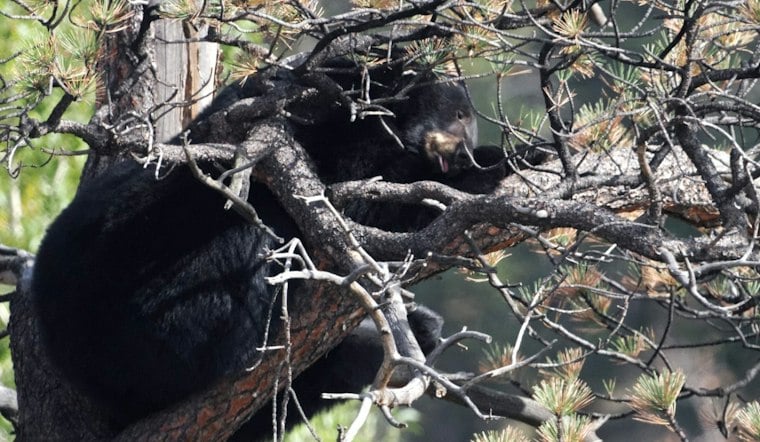
A homeowner on Castlewood Drive in Clear Creek County found himself in a frightening standoff with a bear just after 1 a.m. Thursday, yelling, shoving and eventually kicking the animal in self-defense before it ran off into the dark. He later sought medical treatment for injuries from the encounter, and as of Friday evening, the bear still had not been found.
The man told investigators he heard noises outside his home and discovered the bear near his trash cans, according to KDVR. He reportedly tried to scare it off by yelling, but the bear charged at him. He pushed it away, causing it to retreat temporarily, only for it to charge again — at which point he kicked the bear in self-defense, and it finally fled the scene. CBS Colorado reports the man then sought treatment for the injuries he suffered during the struggle.
Colorado Parks and Wildlife is investigating the incident, which state wildlife officials have identified as the 12th reported bear attack in Colorado so far in 2026. The agency's count underscores just how unusual this year has been for bear activity statewide, though officers responding to the Castlewood Drive address had not located the animal as of Friday evening, per the same KDVR account.
A Record-Breaking Year for Bear Conflicts
This fall's run of close calls fits a pattern that has alarmed wildlife officials all year. Colorado Parks and Wildlife received 6,129 reports of bear sightings and conflicts between January 1 and August 13, compared with just 3,115 during the same stretch in 2025, according to the Colorado Sun. By the end of August, that statewide tally had climbed past 8,600 reports, the agency told the Vail Daily.
Wildlife officials have pointed to the number as proof of just how extreme this year has been: the volume of reported incidents in 2026 is running 3.6 times the five-year average from 2020 through 2025, Colorado Parks and Wildlife said in late August, according to KDVR's report on the preliminary figures. Staff attributed the surge to extreme drought conditions and numerous wildfires that have reshaped where bears go looking for food.
Drought and Hunger Push Bears Toward Homes
Drought has depleted the natural food sources that Colorado's estimated 17,000 to 20,000 black bears rely on, driving them closer to human-populated neighborhoods in search of a meal, the Denver Post reported in mid-September. Low snowpack, a late spring frost and widespread drought together have produced what the Vail Daily described as a record number of black bear conflicts and reports across the state this year.
Compounding the problem is the time of year: bears are now in hyperphagia, the pre-hibernation period when they can consume more than 20,000 calories a day as they scramble to bulk up for winter, CBS News Colorado reported. That frantic feeding drive helps explain why bears keep turning up near trash cans, campsites and even inside homes as the season winds down.
A String of Close Encounters Across the State
The Castlewood Drive incident is the latest in a string of bear encounters that have pushed Colorado's confirmed attack count to a record for the state. As of mid-September, the Denver Post reported, Colorado had recorded 10 confirmed bear attacks for the year. Days earlier, a black bear bit a woman camping in the Rio Grande National Forest near South Fork at about 5:30 a.m. on September 11, biting her through the side of her tent at the Park Creek Campground, according to the newspaper and a separate CBS News Colorado account.
Two days after that, a black bear climbed through a bedroom window of a Durango condominium at about 2 a.m. and scratched a 17-year-old girl inside, the Denver Post reported. CBS News Colorado identified the building as being on Escalante Drive. Earlier in the summer, a female bear knocked down a fisherman and bit his legs near the confluence of the North Fork and South Platte rivers in Jefferson County, sending him to the hospital; Colorado Parks and Wildlife later tracked down and euthanized the 50- to 60-pound subadult bear with dog teams, the Colorado Sun reported.
What Wildlife Officials Want Residents to Do
Colorado Parks and Wildlife has repeatedly urged residents to remove the attractants that draw bears into neighborhoods in the first place. The agency is encouraging people to secure outdoor food sources, including garbage, recycling bins, bird feeders and pet food, and to clean and properly store grills and smokers to cut down on human-bear conflicts.
Guidance from the Colorado Division of Homeland Security and Emergency Management similarly calls for garbage cans, dumpsters and collection containers to be kept closed, locked, bear-resistant and secured. Some municipalities have gone further: bear-management ordinances in Colorado Springs, outlined by the City of Colorado Springs, require residents and businesses within designated bear management areas to secure trash or use bear-resistant containers. Colorado Parks and Wildlife has also asked residents to alert neighbors when they spot a bear or evidence of bear activity nearby, a small step officials hope can prevent the next encounter from turning as tense as the one on Castlewood Drive.




