

























































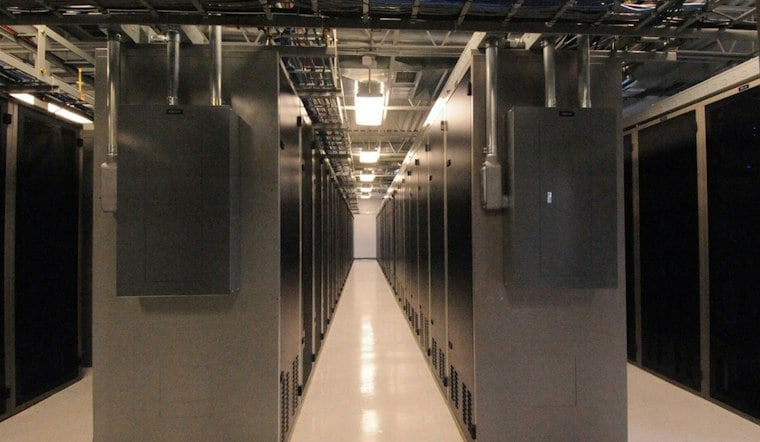
Clinton Township's Board of Trustees approved a 180-day moratorium on siting and building data centers, even though no company has proposed putting one there. The vote is a preemptive strike against a type of development that has already set off fights in neighboring Macomb County communities.
Township leaders wanted to get ahead of the issue rather than react after a developer shows up, according to Macomb Daily. Clinton Township Supervisor Paul Gieleghem, speaking at the township's board of trustees meeting on October 19, said it is important to address the issue before becoming victims of it, per the same report. Gieleghem said he would prefer data center issues be regulated at the state and federal level, but in the meantime wants proposals studied locally — weighing zoning ordinances, infrastructure impacts, master plan considerations, noise complaints, utility implications and environmental factors before the township considers any project.
No Proposal, No Discussions, But a Freeze Anyway
The moratorium covers only the siting and building of data centers in the township. Clinton Township has had no discussions with anyone related to a data center and has no pending proposals in any form, the report notes. Still, trustees opted to put the 180-day pause in place now rather than wait for an application to land.
Not every trustee was on board with the approach. Clinton Township Trustee Dan Kress argued the township lacks the real estate footprint necessary for a data center in the first place, and he described the moratorium as pretty much symbolic. Kress instead proposed a five-year freeze rather than the 180-day version the board ultimately adopted.
Legal Limits on How Long a Moratorium Can Last
Clinton Township Attorney Linda McGrail told the board that four or five local communities have pending freezes of their own, and that courts have upheld moratoriums of six months but not two years, according to the same account. McGrail also said an outright ban on data centers would constitute exclusionary zoning, a warning that appears to explain why the township chose a time-limited pause rather than a permanent prohibition. Michigan's Zoning Enabling Act governs how local units of government may regulate land development, including the adoption of zoning ordinances, according to the Michigan Legislature, and a related provision allows a local legislative body to direct a zoning commission to draft an interim zoning ordinance to protect public health, per the legislature's statute on interim zoning authority.
Clinton Township Trustee Julie Matuzak framed the stakes in blunter terms, saying city councils and township boards need regulatory oversight of data center facilities. Matuzak said townships have no powers under the legislation while cities have some power, and warned that once a data center proposal is actually made, the township has virtually no ability to act.
A County Already Wrestling With Three Potential Projects
Clinton Township's move follows months of turbulence elsewhere in Macomb County, where there are currently three potential AI data center developments in Lenox, Washington and Richmond townships, with Lenox considered closest to development at this time, the outlet reported. Lenox Township passed a four-month data-center moratorium in February 2026 that expired without renewal after a developer threatened a lawsuit in May, according to Macomb Daily's reporting. Washington Township approved its own six-month moratorium on accepting, processing or approving data-center facilities in May 2026, though the company behind that proposal later withdrew it to applause from residents at a township meeting. Richmond Township, meanwhile, passed a one-year moratorium in February 2026 after a company called Clean Cloud Energy inquired about locating a facility there.
The pattern of pushback is not limited to Macomb County. The Ypsilanti Community Utilities Authority approved a 12-month moratorium on supplying water and sewer services to data centers in April 2026, barring service to hyperscale and mid-size facilities, AI computing operations and high-performance computational centers while studies are completed, according to Michigan Public. A University of Michigan official said a planned Ypsilanti Township data center could use up to 500,000 gallons of water a day, the station reported.
Why Townships Are Moving Fast
A Citizens Research Council of Michigan report estimated that roughly 70 commercial data centers are already operating in the state, a figure that could reach into the hundreds once smaller enterprise facilities are counted, according to the Citizens Research Council of Michigan. The same report identifies noise pollution — particularly continuous low-frequency noise near homes — as the most concerning potential negative impact of data centers, and notes that large construction projects may have more than 1,000 workers on site during peak activity even though the finished facilities typically employ fewer than 100 people permanently.
The stakes extend to the power grid as well. DTE Energy has asked Michigan regulators to approve a combined 2.1 gigawatts of new gas plants in 2031 and 2032 to help meet data-center demand, and has already contracted with Google and Oracle to provide a combined 2.4 gigawatts of electricity for hyperscale facilities, according to The Guardian. DTE's grid already demands more than 9.5 gigawatts of power against a capacity of 11 gigawatts, the paper reported, and the Michigan Public Service Commission is expected to issue a preliminary decision on the utility's plan within 300 days of taking stakeholder input.
For now, Clinton Township's pause is about buying time rather than responding to an active threat. With no site, no developer and no formal discussions on record, trustees are betting that six months of breathing room will let them write rules before, rather than after, a proposal arrives.



