

























































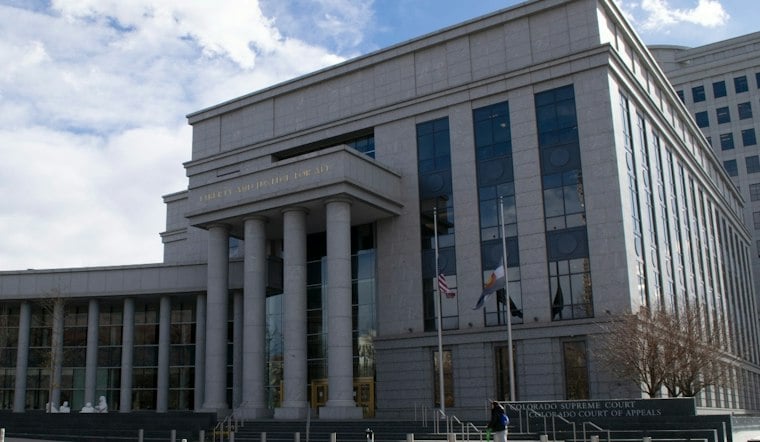
Colorado voters will decide this November whether to make it significantly harder for anyone to redraw the state's congressional map before the next regularly scheduled redistricting in 2031. Amendment 86 would require any off-cycle congressional map to clear both the state's independent redistricting commission and the Colorado Supreme Court, on top of at least three public meetings, before it could take effect.
The measure arrives as Colorado gets pulled into a national fight over mid-decade map-drawing, according to The Coloradoan. Under the current system, created when Colorado voters approved an independent congressional redistricting commission through 2018 ballot measures, new congressional lines are drawn once a decade, with the next cycle not scheduled until 2031. The commission — not state lawmakers — handles that process, and Colorado's current eight-district map was approved in 2021 for the 2022 election, per the Colorado Sun.
What Amendment 86 Would Actually Require
If approved, Amendment 86 would preserve the existing independent commission system while adding new conditions for any map proposed outside that normal cycle. An off-cycle congressional map would need sign-off from both the redistricting commission and the Colorado Supreme Court, the Coloradoan reports. It would also require at least three public meetings before any modifications to a final map, and it would bar changes that divide communities of interest or that are drawn specifically to favor one political party.
Any off-cycle map would still have to rely on population data from the most recent census or another permitted data source, the same outlet notes. Because it's a constitutional amendment, Amendment 86 needs 55% voter approval to pass — a higher bar than a simple majority. The measure was placed on the ballot through a citizen initiative rather than by the Legislature, the Coloradoan reports.
Why the Measure Is on the Ballot Now
Colorado's redistricting fight isn't happening in a vacuum. States including California, Missouri, North Carolina, Ohio, Texas and Utah redrew congressional maps in 2025 and 2026 ahead of the next census, with other states showing interest in doing the same, according to the Congressional Research Service. The Cook Political Report has described that national wave as driven either by court challenges or, in states like Texas, by efforts to consolidate party power.
Those fights have already produced messy outcomes elsewhere. The U.S. Supreme Court blocked a Trump-backed Missouri congressional map, a ruling NPR described as leaving voters facing a different map than the one used in the primaries. A federal court separately blocked a new Texas congressional map for the 2026 midterms, according to the Texas Tribune, while the Arkansas Democrat-Gazette reported that a high-court ruling finally settled congressional districts there roughly 440 days after President Trump spurred the broader mid-decade redrawing push nationally.
Colorado's Own Recent Redistricting Clash
Colorado has already had its own preview of this fight. Competing proposals sought to change the state's congressional boundaries ahead of the 2028 election, but the Colorado Supreme Court blocked those proposals from reaching the ballot, ruling that they violated the state constitution's single-subject requirement.
Backers of Amendment 86 argue the measure would keep that kind of mid-cycle maneuvering in check. Supporters say requiring commission and court review, combined with a ban on partisan maps, protects public participation and keeps politics out of the redistricting process, while ensuring any changes stay fair and transparent. The independent commission itself was overwhelmingly approved by Colorado voters in a 2018 statewide election.
Where Supporters and Opponents Split
Opponents see it differently. They argue the measure would create an unnecessary constitutional barrier to off-cycle redistricting and could make it harder for voters to get new congressional districts if problems with the existing map emerge before 2031. Opponents also contend that voters themselves should have the final word on whether congressional districts reflect the state's needs, rather than layering in additional commission and court approval requirements.
That divide is already playing out along party lines. Amendment 86 is backed by Advance Colorado, according to Colorado Newsline, while the Colorado Democratic Party is urging a no vote on the measure, per Colorado Public Radio.
For now, the practical stakes are straightforward. A yes vote would require the independent commission to approve any new congressional districts proposed outside a scheduled redistricting year, layering the court-review and public-meeting requirements on top. A no vote would leave Colorado's current rules in place, with congressional boundaries revisited only once every ten years as they have been since the commission system began drawing maps after each decennial census.





