

























































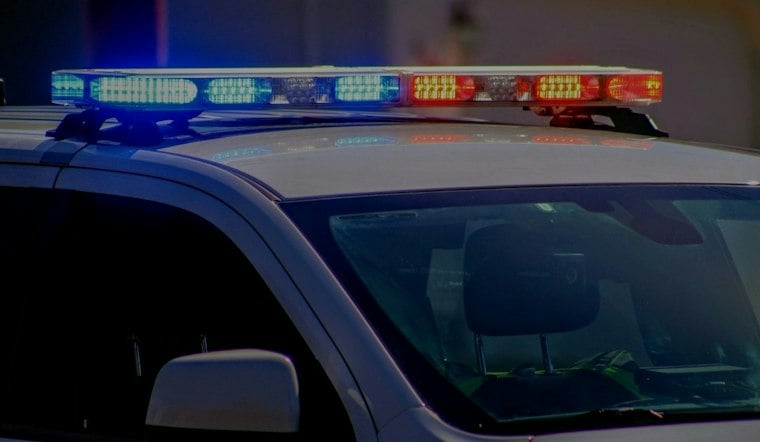
A teenager in crisis on a bridge was helped by police.
A Commerce City Police Department Facebook video shows officers helping a teenager in crisis on a bridge.
A Department Built Around Crisis Response
The department's video shows officers helping a teenager during a crisis on a bridge.
Those interventions are now backed by a dedicated infrastructure. In November 2025, the Commerce City Police Department officially launched a Co-Responder Unit that pairs behavioral health clinicians and a case manager with Crisis Intervention Team-trained officers on 911 calls involving mental health crises, according to the City of Commerce City. The program is funded through a Byrne State Crisis Intervention Program grant administered by the Colorado Division of Criminal Justice, which helps integrate clinical mental health support directly into police responses, per the Colorado Division of Criminal Justice.
What Colorado Law Requires After a Crisis Like This
Colorado law allows an emergency 72-hour evaluation in a mental-health crisis.
The legal framework can shape what happens in the hours after a crisis.
Suicide Trends Across Colorado
The incident lands amid a broader statewide reckoning with suicide risk. Colorado maintained an age-adjusted suicide rate of 20.8 per 100,000 residents in 2024, with men accounting for 77% of all suicide fatalities statewide, according to the Colorado Department of Public Health and Environment.
There is a brighter note in the youth data. Colorado's youth suicide rate for ages 10 to 18 dropped to 5.85 deaths per 100,000 in 2024, its lowest level since 2007, according to the Colorado Office of School Safety, which state health officials attribute to expanded state support programs since a 2020 peak of 12.91.
This is far from the only overpass intervention Colorado has seen this year. Hoodline previously reported on a Denver officer who talked a young man down from an I-25 overpass ledge in August. The man was taken into protective custody and connected with mental-health services. The report explained that state law allows a 72-hour evaluation. It also noted that only about 2% of calls to the 988 Suicide & Crisis Lifeline nationwide result in an emergency dispatch involving law enforcement or emergency medical services, with the vast majority resolved by trained counselors over the phone.
Legislation known as SB25-236 consolidated the 988 Colorado Mental Health Line with Colorado Crisis Services into a single 24/7 point of contact.





