

























































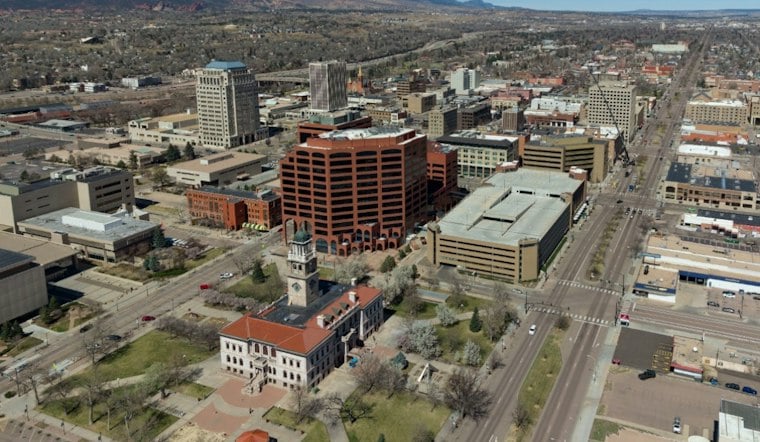
Colorado Springs wants to build its own 911 authority and keep roughly $13.1 million a year in phone fees currently flowing to a regional dispatch agency, but the city's proposed 2027 budget doesn't say how that split will actually get paid for. Four months after Mayor Yemi Mobolade announced plans to leave the decades-old regional authority, the financial roadmap for standing up a city-run alternative remains unresolved, with intergovernmental negotiations ongoing and a 2028 agreement possible.
No Dollar Figures for the New Authority
According to The Gazette, the city's proposed 2027 budget includes more than $190 million for the Colorado Springs Police Department but contains no financial outline for establishing a city 911 authority. When Mobolade and police officials announced the plan in June 2026, they said at least $9 million of the phone-fee money the city already collects would go toward setting up a city-owned 911 authority. Colorado Springs residents currently contribute about $13.1 million a year in phone fees to the regional authority, far more than the roughly $9.3 million it costs the city to run its own dispatch center, per the same report.
City leaders have argued for months that Colorado Springs gets shortchanged under the current arrangement. The city accounts for more than 60% of the population across El Paso and Teller counties and receives over 75% of regional calls, but receives only 45% of the regional authority's funding, according to KRDO. Colorado Springs leaders have said the city gets less benefit from the current authority than it should given its financial contribution and the sheer number of residents it serves, and that folding dispatch into the police department's existing 911 center and real-time crime center could create efficiencies.
Dispatch Staff Say They're Shut Out of the Talks
Renee Henshaw, executive director of the El Paso-Teller County 911 Authority, said authority staff have not been involved in negotiations over the agency's future. She said elected officials are the ones conducting the talks, since local governments — not the authority itself — own the call centers and answering points involved. Henshaw said authority staff are essentially in the dark and have no seat at the table during the negotiations.
Despite the uncertainty, the authority does not expect massive changes to its 2027 budget and says it will keep focusing on serving the region's emergency dispatch centers. The agency, formed through an intergovernmental agreement effective June 1, 1989, and operational since 1990, was built under Colorado's Emergency Telephone Service Act to pool funding and technology and eliminate duplicate dispatch infrastructure, according to the El Paso-Teller County 911 Authority. It doesn't answer 911 calls directly — it provides technology, GIS mapping, and financial backing to six independent Public Safety Answering Points, three in El Paso County and three in Teller County.
Police Chief Points to a Possible 2028 Deal
Colorado Springs Police Chief Adrian Vasquez focused on the ongoing negotiations with El Paso and Teller county governments during a city budget workshop the previous week, telling city council that a 2028 intergovernmental agreement could benefit all the entities involved if it gets finalized. Lynette Crow-Iverson and Brian Risley are leading negotiations on the city's side with other governments in the two counties. The proposed budget does include a $2.3 million increase to the reimbursement the city receives, which Vasquez told council reflects the authority's current budget — passed after the city approved its own 2026 budget the previous fall.
Colorado Springs Police Department spokesperson Ira Cronin said a new agreement would likely be needed no matter how the situation resolves, and that the city is continuing extensive conversations with other members across El Paso and Teller counties. Cronin said the city is keeping all opportunities and eventualities open. Crow-Iverson and Risley did not provide additional comment on the continuing discussions, per a city council spokesperson.
Governance Shuffle Followed the June Announcement
The departure announcement set off its own round of institutional friction. CSPD Deputy Chief John Koch and Fire Deputy Chief Timothy De Leon resigned from the 911 Authority Board. Koch cited a potential conflict of interest during municipal negotiations. City Council appointed Deputy Fire Chief Justin White and Deputy Police Chief Douglas Trainer as their replacements in July. The board has nine appointed members, including three representing Colorado Springs. El Paso County Sheriff's Office Chief Andrew James was elected chairman of the board shortly after the city's exit plans became public. The regional authority serves 10 municipalities, 23 fire protection districts and six call centers, as well as military installations.
Neighboring Teller County has pushed back just as hard. The Teller County Board of County Commissioners held a press conference in July opposing the withdrawal, warning that fracturing the regional model could weaken emergency communication during major inter-jurisdictional disasters like wildfires and floods. The authority serves three PSAPs in Teller County. The authority also operates the Peak Alerts emergency notification system and helps fund dispatch centers for six regional law enforcement entities that coordinate resources during emergencies — the same system Hoodline detailed in its report on a missing-man alert earlier this month.
State Rules Still Apply
Under Colorado Revised Statutes § 29-11-102, 911 surcharges are capped by the state Public Utilities Commission and restricted to eligible emergency communications expenses — meaning any new Colorado Springs authority would still be subject to the same statutory limits as the one it's trying to leave.
Hoodline has previously reported on emergency alerts, including a missing-man alert earlier this month. For now, how Colorado Springs would pay to build its own 911 authority remains an open question, while a 2028 intergovernmental agreement remains a possibility.





