

























































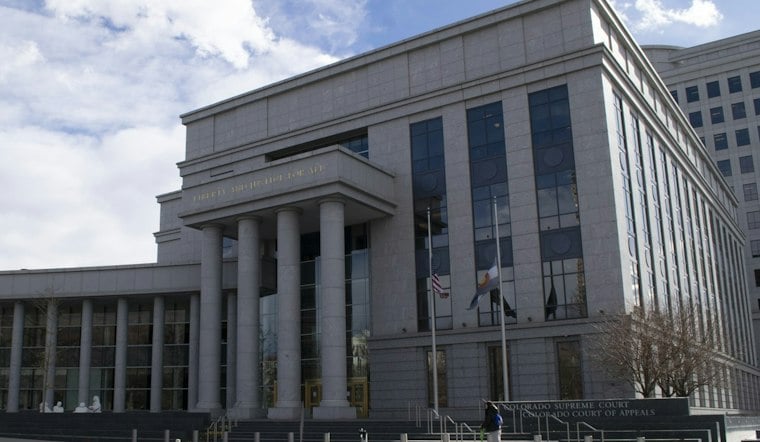
The Colorado Supreme Court announced Monday it will decide whether local governments can charge fees on activities that already bring in more tax revenue than those activities cost to regulate, teeing up a high-stakes review of Breckenridge's $756-per-bedroom short-term rental fee. The case pits a Breckenridge rental owner against a town that says the money funds workforce housing, not general spending.
According to Colorado Politics, the state's highest court agreed on October 19 to hear the case, which centers on the Taxpayer's Bill of Rights, the 1992 constitutional amendment that generally requires voter approval for new taxes and tax rate increases. Under TABOR, local governments can still impose fees without a popular vote, so long as those fees represent the cost of providing a service or regulating an activity rather than raising money for government more broadly. The seven-member court requires at least three justices to agree before it takes up an appeal, and this one cleared that bar with enough interest to set up what could become a defining ruling for how Colorado towns pay for affordable housing.
How the Fee Came to Be
The dispute traces back to a study Breckenridge commissioned on short-term rental activity, which found that rental guests spend money locally in ways that create demand for local employees, according to the dossier's account of the study's findings. That same study found those employees often cannot afford market-rate housing in Breckenridge on their wages, and it recommended a short-term rental fee to help close that affordability gap. The town acted on that recommendation in November 2021, enacting Ordinance No. 35, which set the fee at $756 per bedroom for licensed short-term rental units, per the Town of Breckenridge.
The ordinance relied on an economic nexus study from Economic & Planning Systems documenting how guest spending drives demand for workers who cannot afford market-rate housing in town. Breckenridge says fee revenue is kept separate from the general fund and may be spent on workforce housing as well as secondary impacts such as parking, noise and trash, and on program administration and enforcement.
A Landlord's Challenge
Alexander Dorotik, who owns a short-term rental in Breckenridge, challenged the legality of the fee under TABOR, arguing it amounted to a tax requiring voter approval. Dorotik pointed out that short-term rental guests already pay sales tax during their stays and that Breckenridge imposes a lodging tax on top of that, arguing the activity generates revenue for the town already, so no additional fee is needed to cover its costs, as Colorado Politics reported. Per the Town of Breckenridge's own published rules, rental operators already face an annual Business and Occupational License Tax of $75 to $175, the per-bedroom fee, and a combined state and local lodging and sales tax rate of 12.275 percent on nightly stays.
A trial judge dismissed Dorotik's case, and the Colorado Court of Appeals upheld that dismissal in March in a published opinion. Writing for the unanimous three-judge panel, Judge W. Eric Kuhn held that Breckenridge may regulate short-term rentals and provide additional fee-funded services even though the activity is subject to general taxation, according to Justia Law's record of the ruling. The trial court found that the fee's primary purpose was to defray regulatory and workforce housing impacts rather than raise general municipal revenue, concluding the charge was enacted under the town's police powers to protect public health, safety, and welfare, per the Colorado Lawyer.
The Aspen Bag Fee Comparison
Kuhn's opinion leaned on the 2018 Colorado Supreme Court precedent in Colorado Union of Taxpayers Foundation v. City of Aspen, which upheld Aspen's 20-cent disposable paper bag charge as a valid regulatory fee tied to a municipal waste-reduction program. Kuhn described shopping as the underlying activity giving rise to both Aspen's sales tax and its bag fee, reasoning that shopping increases both bag usage and sales tax revenue, and noting that the Breckenridge case is not the only TABOR fee dispute involving an activity that also generates tax revenue.
Dorotik has asked the Supreme Court to correct that characterization, arguing that Aspen's charge targeted single-use bags specifically, not shopping as a general activity. He contends that treating the Aspen fee as a fee on shopping could let a municipality impose a fee on all taxable sales that effectively functions as a tax, an outcome he says TABOR was written to prevent. The justices agreed to take up both of Dorotik's arguments: whether a fee can apply to an activity that is already revenue-positive for a municipality, and whether the Court of Appeals mischaracterized the Aspen bag-fee precedent.
Wider Stakes for Mountain Towns
The case is formally titled Dorotik v. Town of Breckenridge, and Justice Richard L. Gabriel is not participating in the appeal; no explanation for his recusal has been provided. The outcome could ripple well beyond Breckenridge.
Breckenridge's regulatory approach to short-term rentals goes well beyond the fee itself. The town manages rentals under a four-zone system with zone-specific license caps and waitlists in residential and downtown zones, and existing licenses cannot transfer when a property is sold, meaning buyers must apply fresh rather than inherit a seller's permit. The town also offers an exemption from the per-bedroom fee if the rental serves as the owner's primary residence and is rented no more than 21 days a year; owners can contact the town by email.
The constitutional question at the heart of the case turns on Colorado's primary-purpose test: a charge is a tax requiring voter approval if its primary purpose is general revenue generation, while a fee defraying specific regulatory costs is exempt. The Breckenridge case will test the limits of that distinction yet again. Separately, Colorado Supreme Court justices visited Holyoke Junior/Senior High School in April through the Courts in the Community outreach program and addressed students.



