

























































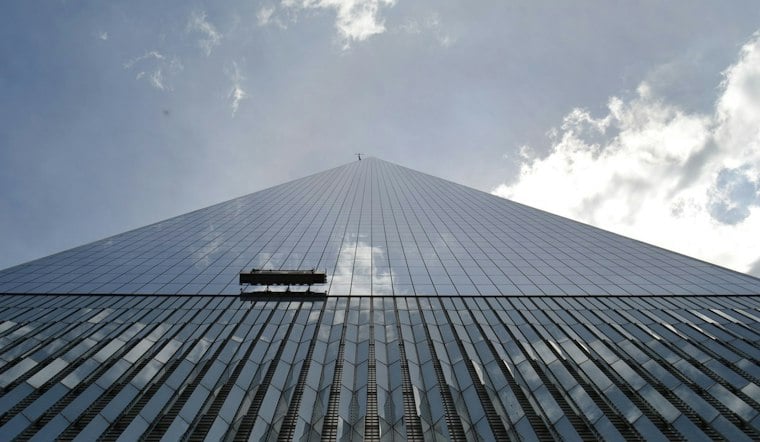
Columbia Engineering and Infosys have opened a new enterprise AI research center inside the tech giant's office at One World Trade Center, pairing university researchers with the company's Topaz AI platform to tackle the thorniest problems facing corporate AI adoption: regulation, energy use, and getting the technology to actually work at scale.
The Infosys Topaz-Columbia University Enterprise AI Center launched at Infosys's One World Trade Center office in New York City, according to Sahi. Garud Iyengar, the Avanessians Director of the Columbia Data Science Institute and a professor of industrial engineering and operations research, was named founding director of the center, which is being jointly overseen by Columbia Engineering and Infosys leadership including Executive Vice President Satish HC, as reported by Infosys. Iyengar also co-leads Columbia's university-wide AI Initiative alongside his role at the Data Science Institute, per the same release.
The center's work is organized around three pillars: AI-First Experiences and Processes aimed at streamlining workflows, Responsible and Sustainable AI meant to navigate regulatory and energy hurdles, and AI for Marketing focused on hyper-personalized customer engagement, according to Unite.AI. Those pillars are designed to line up academic research with the adoption headaches enterprises face in heavily regulated industries, the outlet notes. The arrangement aims to accelerate enterprise adoption of generative and agentic AI models by pairing Columbia faculty and student researchers directly with Infosys's Topaz platform, bridging the gap between theoretical AI models and corporate execution, Infosys says.
Building on a Decade-Old Talent Pipeline
This is not Infosys's first academic entanglement with Columbia Engineering. The two have worked together through Infosys's global InStep internship program, which gives engineering students hands-on experience inside the company's corporate R&D operations, according to ANI News. InStep has been recognized among the top corporate global internship programs, the outlet reported back in 2022. The new center adds a research partnership to the existing connection.
Columbia, for its part, is pursuing corporate AI collaboration through its new Infosys partnership, which includes the Enterprise AI center.
Topaz's Rapid Buildout
The platform at the center of the new lab, Infosys Topaz, is an AI-first set of services, solutions, and platforms. Responsible AI is also among the topics associated with the center's research agenda.
That commercialization push has continued this year. In April, Infosys partnered with software delivery platform Harness in a strategic collaboration to accelerate software delivery and DevOps modernization, according to Harness. The collaboration is intended to accelerate software delivery and DevOps modernization. Infosys's One World Trade Center office is also the site of the new Enterprise AI center.
Why Energy and Regulation Are Front and Center
The center's emphasis on sustainable AI reflects a broader industry reckoning with how much power generative models actually consume. AI data center power demand has become a major regulatory and environmental challenge as companies scale up deployments, according to PSU Connect. Corporate adoption of generative and agentic AI is increasingly constrained by regulatory compliance, data privacy risks, and rising energy consumption, Unite.AI reports — pressures the new center's research agenda is explicitly built to address.
Infosys had more than 300,000 employees in 2022, according to ANI. Reporting on the launch, Sahi noted that while Infosys brings commercial scale and client access through its AI revenue line, Columbia brings institutional academic credibility and technical rigor to the arrangement. Sahi also flagged commercial-conversion latency as a risk, including how quickly research breakthroughs might translate into client billings.





