

























































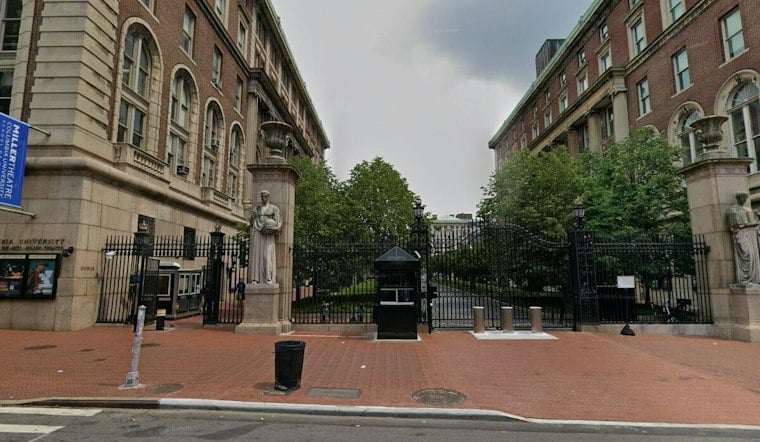
Students streamed out of classrooms at Columbia University and gathered at Broadway and W. 116th St. this week, walking out to demand stronger college responses to sexual assault and to show support for the former Cornell University student known in court documents as Jane Doe. The demonstration was part of a coordinated, nationwide day of protests on college campuses, and organizers have scheduled a second rally for Thursday evening at Foley Square in Lower Manhattan.
The New York walkout followed weeks of escalating fallout from Jane Doe's case, which New York Daily News reports has become a flashpoint for student activists well beyond Ithaca. Jane Doe sued Cornell, seven fraternity members and the Chi Phi fraternity last month, alleging the men supplied her with ketamine and alcohol and sexually assaulted her on campus over several hours, and that Cornell administrators failed to protect her, according to the Daily News. One student organizer, Marisol Bonifaz, told the outlet that Jane Doe's case is not one standalone incident, reflecting a sentiment organizers say is driving the broader protest movement.
Hoodline previously reported that Tompkins County reopened its probe into the seven fraternity brothers after the civil suit was filed. Tompkins County District Attorney Matthew Van Houten has said no criminal charges were brought in late 2024 because Jane Doe's initial sworn statement described consensual drug and sexual activity, though he agreed to reopen the case and present evidence to a grand jury once the civil lawsuit was filed, according to a statement from the Tompkins County District Attorney. The case has since been taken out of his hands entirely: New York Governor Kathy Hochul issued an executive order on October 1 appointing state Attorney General Letitia James as a special prosecutor, saying she had lost faith in local prosecutors, per the Cornell Daily Sun.
What Columbia Protesters Are Demanding
At the Manhattan rally, students demanded expanded resources for survivors of sexual violence at Columbia, the defense and expansion of rape crisis centers, and more funding and expansion for women's and LGBTQ+ departments and majors, per the Daily News. Demonstrators also pressed Columbia and Barnard to remove faculty and administrators associated with Jeffrey Epstein and to rename buildings honoring donors tied to him.
A Columbia spokesperson declined to comment on the protest itself but said the university's campus-based sexual violence response program is among the most comprehensive in New York, according to the Daily News. The university pointed to a crisis center certified by the Department of Health and trained advocates available around the clock, and said Columbia students complete Title IX training against sexual misconduct every year.
Jennifer Hirsch, cited in the same report, said college campuses need more effective sex education and that prevention is what's needed to reduce future cases involving Jane Does. She added bluntly that Title IX trainings have never prevented a rape.
Cornell's Internal Discipline Under Scrutiny
Part of what has fueled the protests is the gap between the allegations and the consequences meted out on Cornell's campus. Internal university disciplinary summaries reviewed by The Cornell Daily Sun show a Cornell Title IX panel found two fraternity members responsible for sexual assault and expelled them, while five other defendants received lesser penalties such as reflection papers, educational modules or no-contact orders. The panel concluded Jane Doe was assaulted by two of the accused men while intoxicated, the Sun reported. The Daily News separately reported that Cornell students in the case faced disciplinary actions ranging from reflection papers to suspensions and expulsions, as reported by the New York Times, and that one student was reportedly barred from campus after graduating during the investigation.
Those uneven sanctions sit against a wider backdrop. State educational data analyzed in October 2026 found that out of 1,216 reported incidents of sexual misconduct at Cornell between 2018 and 2024, only seven resulted in student expulsions or employee dismissals, according to the Washington Post, with fourteen other cases during that period resulting in suspensions. A 2025 campus survey conducted by Cornell found that 35 percent of female undergraduate respondents reported experiencing nonconsensual sexual contact during their time at the university, up from 23 percent in 2023, per USA Today.
Cornell has permanently barred the Xi chapter of Chi Phi from campus following its internal investigation into the October 2024 incident, the university said. Separately, the Board of Trustees' Special Committee appointed former U.S. Deputy Attorney General Sally Yates on October 6 to head an independent review of how the university handles campus sexual misconduct and safety policies, a review expected to examine Title IX compliance and fraternity oversight.
Civil Suit Details and Legal Hurdles
Jane Doe's civil complaint, filed September 16 in New York Supreme Court, alleges one defendant sent a Snapchat message to a fraternity group chat at 1:42 a.m. offering “Free p---y” upstairs, after which multiple men subjected her to nonconsensual sexual acts until 5:45 a.m., according to court documents cited by Courthouse News. The lawsuit also names the owners of Moonies Bar & Nightclub in Ithaca under New York's Dram Shop Act, alleging employees unlawfully served her alcohol while she was 20 years old and visibly intoxicated before the incident.
Legal experts told The Guardian that under current New York Penal Law, victims who voluntarily consume drugs or alcohol cannot establish lack of consent unless they are proven “physically helpless,” a steep evidentiary hurdle in drug-facilitated sexual assault cases. Jane Doe dropped out of Cornell and has not returned to college, according to her lawyer, as reported by the Daily News.
A Movement Spreading Beyond Ithaca
For some Columbia demonstrators, the walkout tapped into activism they'd already been doing. Addie Turek, who organized advocacy work after Roe v. Wade was overturned and supports reproductive justice, said the Cornell case made her feel scared and angry about Columbia's past handling of cases for survivors. She said the national day of action gave her more energy to continue fighting, according to the Daily News.
The Columbia walkout is one piece of a larger pattern of campus unrest this fall. Hoodline has reported that Brown University students are planning their own rally over campus sexual violence, while UW-Madison has confirmed two separate fraternity drugging and sexual assault reports amid the national attention on Cornell's case. California lawmakers have also acted, with Governor Gavin Newsom signing a bill forcing the state's colleges to train staff on trafficking as the Cornell story has kept campus safety in the national spotlight.



