

























































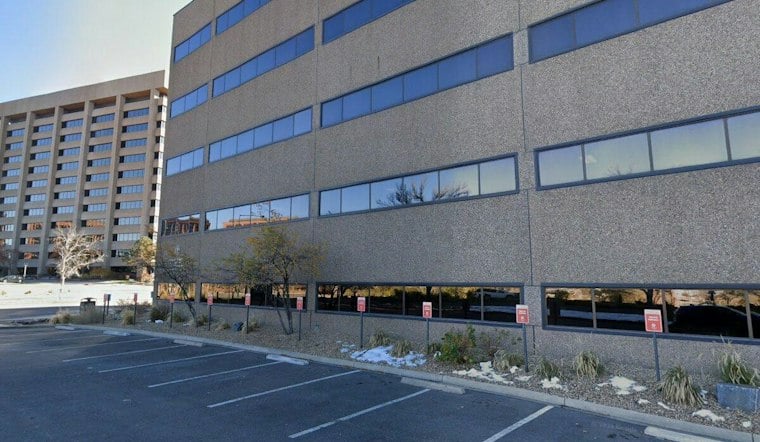
Colorado's air quality regulators are opening the floor to the public Wednesday on a set of proposed rules aimed squarely at the state's only petroleum refinery, the Suncor facility in Commerce City. The in-person session runs from 1 to 3 p.m. at the Colorado Department of Public Health and Environment headquarters at 4300 Cherry Creek Drive South in Denver, and registration is required to attend.
The session marks a key step in a rulemaking process that, as reported by the Denver Gazette, could result in Colorado's first facility-specific emissions rules ever adopted for a single refinery. Spanish translation will be available at the session, and people with disabilities can request auxiliary aids by contacting the Air Pollution Control Division at least a week ahead of time, according to the same report. Written comments on the proposal will be accepted through October 30 via the division's public comment portal.
Suncor's three interconnected plants in Commerce City have operated since the 1930s, processing sweet and sour crude delivered by pipeline and truck from Colorado, Wyoming, Montana, North Dakota, and Canada, per the Colorado Department of Public Health and Environment. The refinery processes roughly 98,000 barrels of crude oil daily, supplying about one-third of Colorado's gasoline, half its diesel fuel, and a third of the jet fuel used at Denver International Airport, according to a report from TSS Colorado, which also notes the site employs roughly 500 workers. Suncor is Colorado's only petroleum refinery and produces gasoline, diesel, jet fuel and asphalt, the Denver Gazette reports.
A Decade of Enforcement Actions
The refinery has faced repeated state enforcement for excess emissions and malfunctions in recent years, the Gazette's reporting notes. In February 2024, the state finalized a $10.5 million settlement package with Suncor, the largest air pollution enforcement action against a single facility in Colorado history, according to the Colorado Sun. That package included $2.5 million in civil penalties and $8 million directed toward electrical grid reliability projects meant to prevent power-outage-related emissions, addressing permit exceedances from July 2019 through June 2021.
That same settlement required Suncor to double its fenceline air monitoring network and achieve continuous monitoring across its entire facility boundary by December 2024, resolving a lawsuit over expanded monitoring coverage, according to Earthjustice. A separate 2020 settlement had mandated a root-cause investigation, per the Gazette. The federal government weighed in too: in July 2024, the U.S. Environmental Protection Agency issued a Notice of Violation against Suncor, finding the Commerce City plant had faced state air enforcement actions annually for at least ten consecutive years, with violations tied to fluid catalytic cracking units, sulfur recovery units, and toxic air pollutant limits.
What the Refinery Report Found
Much of the current push traces back to House Bill 24-1338, enacted in May 2024, which required state health officials to hire an independent refinery regulation expert, stand up a rapid-response air quality inspection team, and mandate near-real-time emissions monitoring data, according to the Colorado Department of Public Health and Environment. That contractor-prepared report, released May 1, 2026, compared nationwide refinery requirements and practices against those at the Commerce City plant and found areas where other jurisdictions apply more stringent limits, particularly for flares, fluid catalytic cracking units and sulfur recovery units, per the Gazette.
Michael Ogletree, senior director of state air quality programs at CDPHE, said at the time that Suncor had faced many new air-quality requirements and that the report identified further areas for study and evaluation, the Gazette reported. The report also found Suncor's actual reported emissions fell below its permitted potential to emit. Separately, the report revealed Suncor was the single largest emitter of volatile organic compounds among all 176 major permitted stationary sources statewide in 2022, placing the company in the top ten polluters for sulfur dioxide, nitrogen oxides, and carbon monoxide, according to 9NEWS. A 2023 federal analysis also found the facility experienced more air pollution incidents than many comparable refineries, the Gazette noted.
From Concept to Formal Proposal
The division released an initial rule concept on September 18 that would require refineries to operate and maintain equipment using best air quality practices, analyze the causes of emission events more thoroughly, and study flaring more often. It would also push facilities to capture gas for reuse rather than burn it off in flares, tighten notification requirements during nonroutine operations, and establish basic community outreach standards, according to the Gazette's report.
Officials expect to develop a formal rule proposal by the end of the year and will request a rulemaking hearing before the Air Quality Control Commission, which could occur in spring 2027 if the commission approves the request, the outlet reports. That timeline lines up with what the Colorado Sun reported in September: draft rules submitted to the commission in December 2026, with a formal vote targeted for May 2027 on mandatory equipment upgrades and stricter flaring controls. Because Suncor is the state's only refinery, the rules would represent an unprecedented company-specific regulatory framework.
Layers of New Toxic Air Rules
The refinery is already contending with other new layers of regulation. In April 2026, the Air Quality Control Commission adopted Regulations 24 and 30 under House Bill 22-1244, setting health-based benchmark limits on priority air toxics, including benzene emissions from petroleum refineries, according to CDPHE. Facilities must now implement new control technologies and modified work practices to meet those standards. Suncor is also subject to greenhouse gas requirements under the state's greenhouse gas emissions and energy management program for manufacturing, and its permitting now includes cumulative impacts considerations, the Gazette reports.
Visible smoke events and startup, shutdown and malfunction reports have repeatedly drawn community attention and additional state reviews, per the same reporting. Hoodline covered one such episode in April 2026, when an operational shutdown at Plant 2 sent heavy black smoke plumes over Commerce City and north Denver, prompting immediate CDPHE inspector deployments weeks before the refinery report's release; CDPHE's mobile monitoring during that incident showed no acute pollutant spikes in nearby residential areas.
The Air Pollution Control Division says it will consider all feedback received during Wednesday's session, or submitted in writing, as it prepares its formal proposal, and may revise the current rule concept based on that input, according to the Gazette. The advisory for Wednesday's session did not state whether online participation would be available.




