

























































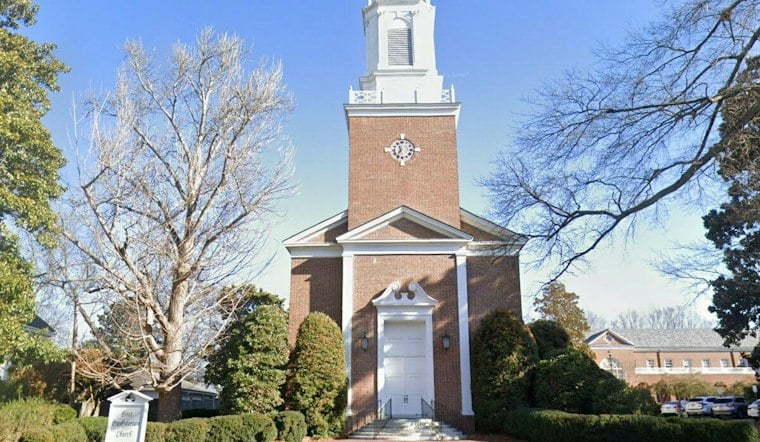
Twenty-two people received free high-tech vision aids and training at First Presbyterian Church in Concord: eight children and 14 adults, ranging in age from 6 to 86. Spectrum News reported that recipients had severe visual impairments that could not be corrected with glasses, contact lenses or surgery.
The distribution was organized by Sight Savers America. The equipment is intended for individual needs rather than as a one-size-fits-all solution; the nonprofit’s program information describes video magnifiers as well as handheld magnifiers and telescopes. Spectrum reported that most recipients at the Concord event received an Onyx video magnifier.
The scale of the need is broader than one distribution, but the figures describe different things. Spectrum cited an estimate of more than 290,000 North Carolinians with a vision disability. That statewide estimate is not a count of people eligible for this program, nor does it establish how many need a particular device.
Other North Carolina resources have different roles
The Concord event is one route to equipment, not the whole system of support. The North Carolina Division of Services for the Blind says it offers services to help people adjust to vision loss and live independently at home and in the community. Separately, the state’s Assistive Technology Program provides device demonstrations, short-term loans and assistive-technology reutilization statewide. Those services are distinct from Sight Savers America’s distribution of devices.
For students, the North Carolina Department of Public Instruction says public agencies must make assistive-technology devices or services available when required for a child’s special education, related services or supplementary aids and services. For reading access, the Library of Congress’s National Library Service for the Blind and Print Disabled offers free audiobook and braille materials to people who qualify. These options serve different needs and do not establish that any particular recipient is eligible for them.
Devices also require assessment and follow-up
A device distribution may involve more than handing someone equipment. In an account of its partnership with Sight Savers America on similar clinics, the UAB Center for Low Vision Rehabilitation describes specialists assessing patients before a device is provided and follow-up sessions afterward. Spectrum reported that recipients in Concord received on-site instruction in using and caring for their equipment.
The event report gives the number and ages of people served, but does not specify how many people sought help, how devices were allocated among recipients or what their longer-term outcomes will be. Those limits matter: the distribution documents a local intervention, not the full scale of unmet need or the effect of the equipment over time.





