

























































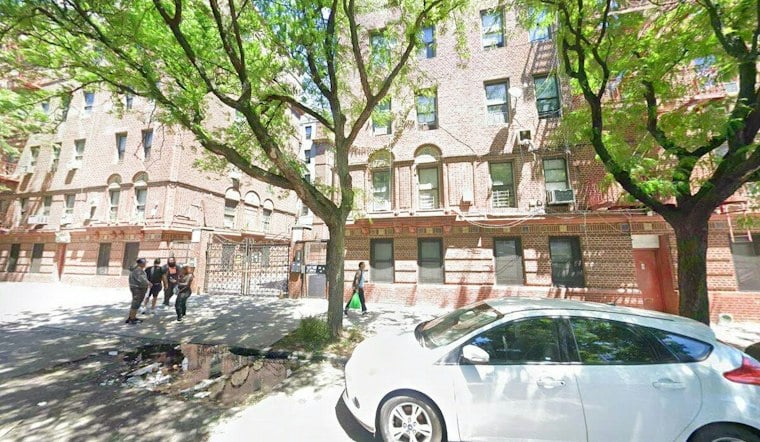
A portion of Carol George's kitchen ceiling came crashing down inside her apartment at 367 E. 163rd St. in Concourse Village, the latest chapter in what she describes as a decade of recurring water leaks that building management has repeatedly failed to fix. George says the water intrusion has worsened over the years, arriving roughly every three months without any lasting repair from the people responsible for maintaining the building.
George has called 311 multiple times over the leaks and has also complained directly to the management company overseeing her building, according to News 12 Bronx. It was only after a chunk of her kitchen ceiling finally gave way that she reached out to the station for help. George told News 12 she believes the leaks are coming from the apartment directly above hers, though that has not been confirmed by building staff.
In the bathroom, George has resorted to placing a bucket on her shower ledge to catch water dripping from the ceiling there as well, the station reports. She says she's worried about the health risks posed by standing water and falling debris, a concern that sits squarely within the legal definition of the hazard the city is supposed to be policing.
What the City Says About Ceiling Leaks Like This
Severe water leaks that cause ceiling damage or create structural risks are classified as Class C “immediately hazardous” violations under the NYC Housing Maintenance Code, which the Department of Housing Preservation and Development enforces. Owners are legally required to fix those conditions within 24 hours of being notified, according to the NYC Department of Housing Preservation and Development. Buildings with more than five units that miss that window face civil penalties of $50 to $150 per violation plus $125 for every day the problem remains open, a rule that has been in effect since legislation took hold in December 2023, per the same agency.
George's building is reportedly well past that threshold. Buildings in her complex carry more than 100 violations, according to city HPD records cited by News 12. That figure fits a pattern New York Focus found in its own review: an analysis of city inspection data from January 2016 through May 2026 showed a sharp citywide rise in health-threatening Class C violations, with a significant share staying open long after their legal repair deadlines, according to New York Focus.
A Building With a Documented History of Neglect
This is not the first time 367 E. 163rd St. has drawn scrutiny. The property was previously managed by landlord Manny Stein, who landed on the NYC Public Advocate's “Worst Landlord” list and owed the city more than $88,000 in emergency repair debts across two buildings on the same street, according to earlier reporting from the New York Daily News. In 2019, the Legal Aid Society represented 25 tenants at the address in a Housing Court lawsuit alleging chronic neglect, toxic mold, unaddressed water leaks, and delayed repairs following a fire, the Daily News also reported.
George said the building owner told her nothing could be done about her situation, even as the ceiling damage continued. Building management declined to comment when asked about the issue, and during the station's visit, the building superintendent knocked on the upstairs neighbor's door, but no one answered.
What Recourse Looks Like Under New York Law
Tenants facing this kind of unaddressed hazard aren't without options. Every residential lease in New York carries an unwaivable implied warranty of habitability under Real Property Law Section 235-b, which lets courts order rent abatements of 10% to 50% when ceiling leaks or collapses go unresolved, according to Legal Services NYC. Tenants can also file an HP Action in Housing Court, allowing a judge to issue a binding order forcing emergency repairs, per the same source.
If a landlord still refuses to act on a Class C violation, HPD's Emergency Repair Program authorizes the city to send its own contractors to make the fix and bill the full cost back to the owner as a tax lien on the property, the agency notes. Despite that safety net, the problem remains widespread in the borough: the Bronx led all five boroughs in 311 housing complaint density per residential building in 2025, according to a report from DoryAngel.
A maintenance crew did begin working on George's kitchen ceiling while the news crew was on site, the station reported. The repair comes amid a string of similar complaints across the borough; Hoodline previously reported on leaks at a Grand Concourse building.





