

























































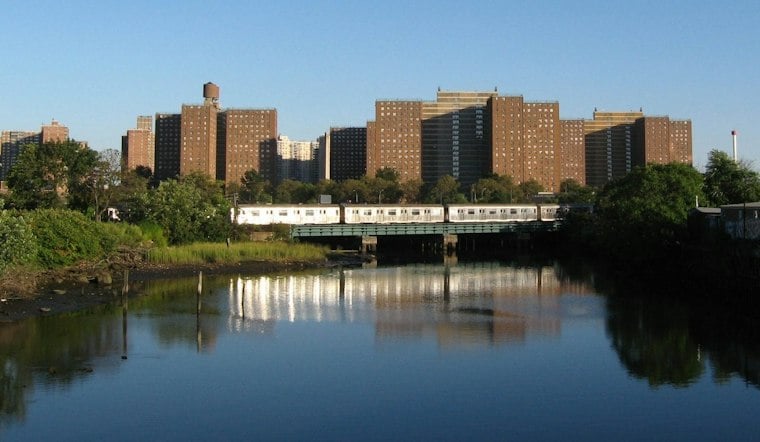
The MTA says a layered flood-protection system at Coney Island Yard is complete, 14 years after Superstorm Sandy flooded the Brooklyn facility with tens of millions of gallons of saltwater. The storm left the yard under roughly two feet of water, damaged tracks and signals, and corroded electrical equipment, halting operations at one of the MTA system’s largest and most critical facilities.
The project’s price tag varies by source: CBS News reported $500 million, an MTA oversight report listed a total budget of $520 million, and Engineering News-Record described a $524 million effort. The MTA says it has invested upwards of $7 billion in protecting its system from future storms.
What Sandy Did to the Yard
Sandy struck the New York area in October 2012, crippling public transit citywide and inundating Coney Island Yard with saltwater that flooded tracks, fried signals and corroded electrical systems. The surge overflowed Coney Island Creek, which connected directly with the ocean storm surge, and repeatedly battered the railroad bridge crossing the creek with debris. The storm forced the MTA to reconsider risks from rising seas and increasingly severe flooding to a subway system that began more than a century before Sandy ever arrived.
Robert Laga said the storm prompted the MTA to reassess its climate and flooding risks. He noted that the subway system’s original builders did not anticipate sea-level rise, coastal storm surge or flash flooding on this scale. The agency’s stated aim is to protect critical equipment and keep service running through a major storm, rather than simply repair damage afterward.
Walls, Gates and a Bridge in the Sky
The fix at Coney Island Yard, which covers roughly 100 acres and ranks among the largest rapid transit yards in North America, included a massive flood wall encircling the facility along with a reinforced concrete wall and a storm-activated flood door designed to seal the yard shut. The completed system includes about nine or ten protective gates, which Engineering News-Record described in more technical detail as eight large-scale swinging structural steel vehicular flood gates, stackable barriers at four railroad tracks, and two pedestrian access gates.
The perimeter defenses extend below ground to limit seepage. MTA planning documents reviewed in the reporting describe 60-foot steel sheets driven 35 to 40 feet below grade; a separate MTA filing describes a 12,000-linear-foot protection system with walls rising roughly 12 to 15 feet above grade and extending 30 feet below it. The MTA also reinforced the railroad bridge over Coney Island Creek, which was repeatedly struck by debris during Sandy.
A roughly 4,000-foot elevated bridge carries power, third-rail, return, communication and signal cables above flood levels across critical sections of the yard. Laga described the system’s objective as keeping water out even if the facility is surrounded by ocean water. The MTA also installed about 20,000 feet of drainage to direct rainwater toward Coney Island Creek while preventing it from flowing back into the yard.
A Storm That Redirected One Woman's Career
For Abby Jordan, the flood fight at Coney Island Yard is personal. She was a lifelong Brighton Beach resident and a Hunter College student when Sandy hit, and she traveled from her devastated neighborhood into Manhattan in the storm's aftermath. Jordan said the experience exposed stark differences between coastal and inland communities, with coastal areas absorbing far more damage and devastation than many neighborhoods farther from the water.
Jordan said the emergency cleanup, transformer fires and flooded buildings in her neighborhood brought inequities into focus. She said the storm shaped her decision to study climate science, environmental science and policies for climate-resilient communities. She now works as a climate education program manager at the National Wildlife Federation.
Part of a Bigger Resilience Push
The yard is one part of a systemwide effort. The MTA’s 2025-2029 Capital Plan includes more than $1.5 billion in climate-resilience investments, and the agency projects that the risk of storm-surge events will triple by the 2050s. The MTA says Sandy’s impacts catalyzed a $7.6 billion federal partnership to adapt its systems to coastal flood threats. It also created a Climate Adaptation Task Force after the storm, according to Gothamist.
Other recent projects show the same pattern playing out across the system. The MTA finished a $63 million resiliency project at the Long Island City Yard in December 2024, installing floodwalls, floodgates and pumping stations, and it completed coastal-surge protections on the Rockaway Line last summer as part of a $393 million effort. Engineering News-Record also noted that the multiyear Coney Island project logged 625,000 work hours without a single lost-time accident or recordable incident.
Rainfall Is a Different Flood Risk
Sandy’s damage at Coney Island Yard came from coastal storm surge; remnants of Ida brought a different hazard: extreme rainfall across the New York region on September 1–2, 2021. The New York State Ida After Action Report says Central Park recorded 3.15 inches in one hour, a one-hour rainfall record. That regional rainfall figure does not describe flooding at Coney Island Yard. The MTA separately projects that, by the 2050s, the likelihood of torrential rainfall events bringing at least 2 inches of rain will almost double, according to its Climate Resilience page. That rainfall risk sits alongside the agency’s storm-surge concerns and the systemwide investments and projects described above.





