

























































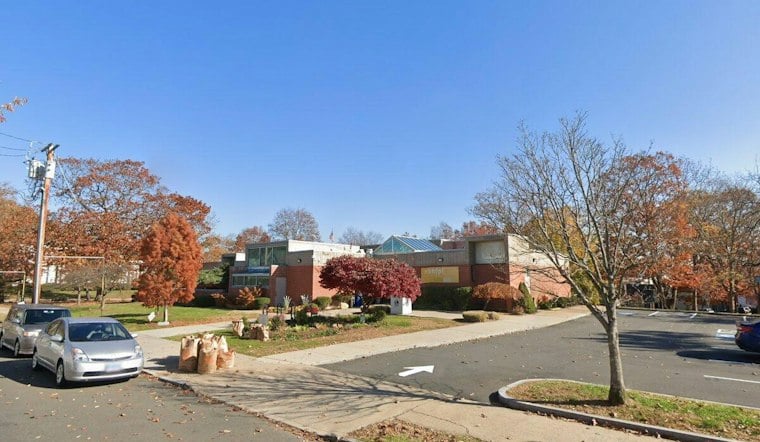
A patron at the New Haven Free Public Library's Mitchell branch complained in late April that a children's book read aloud at storytime promoted harmful gender ideology, threatened to go to the press, and filed an anonymous SeeClickFix complaint accusing staff of indoctrination. Children's librarian Sarah Quigley hadn't pulled the book, Raven's Ribbons, and says she hasn't changed her storytime choices or requested titles since. But the episode illustrates something Connecticut librarians say is increasingly common and far harder to count than a formal challenge: pressure applied quietly, without ever becoming official.
That dynamic has a name — soft censorship — which, as defined by librarians speaking to CT Mirror, refers to books that are not formally banned or challenged but have received complaints or informal pressure. It stands in contrast to a formal book challenge, in which an individual or group files paperwork asking that a title be relocated or removed. Librarians describe four distinct tactics that can constitute censorship short of an outright ban: redaction, restriction, relocation, and removal. Moving a book from the teen section to the adult section, for instance, can function as a challenge even without a single form being filed.
Quigley, who previously worked as a school librarian in Austin, Texas, read Raven's Ribbons — a book about a young Indigenous boy who wants to wear a ribbon skirt, with discussion of two-spirit people — during an April storytime at the Mitchell branch. The complaint that followed never became a formal challenge, but it is precisely the kind of friction that worries librarians statewide: pressure that leaves no paper trail and therefore never shows up in official counts.
What Connecticut's Official Numbers Show — and Don't
Connecticut recorded challenges to just seven unique titles in 2025, down from 17 in 2024, according to the state's reporting cited by CT Mirror. Titles challenged in Connecticut in 2025 included Gender Queer, Fred Gets Dressed, Mama's Nightingale, The Six, While Israel Slept, Apple Crush, and More Than Just a Pretty Face.
But librarians and the state's own data caution that the number is likely an undercount, since challenges are self-reported and some librarians decline to report them out of fear of retaliation from patrons, parents, or elected officials. Sam Lee, co-chair of the intellectual freedom committee at the Connecticut Library Association, has personally tracked three formal book challenges, two library program challenges, and one incident this year in which a person emptied a Pride month display and hid the books around the library. Per the same account, Lee said book challenges are happening in every corner of Connecticut, and that quiet censorship is what concerns them most. The Connecticut Library Association keeps the identities of people who report challenges confidential.
National Numbers Dwarf Connecticut's Totals
Connecticut's small numbers sit against a strikingly different national backdrop. The American Library Association's Office for Intellectual Freedom recorded challenges to 4,235 unique titles in 2025, documenting 713 attempts to censor library materials and services, 487 of which targeted books, according to the American Library Association. The ALA says 5,668 books were banned outright in 2025 — 66 percent of the total challenged — with another 920 censored through access restrictions, marking both the highest number of titles censored in a single year and the highest rate of challenges resulting in censorship the ALA has recorded since 1990. Using a different methodology, PEN America reported 11,982 school book bans during the 2025-2026 school year, the highest number of individual bans since it began tracking in 2021, as reported by Education Week. Florida and Texas alone accounted for 95 percent of PEN America's nearly 12,000 bans.
Both organizations caution that their figures capture only a portion of what's happening, since many challenges are never reported to either group or covered by the press. The education publication notes that only 4 percent of ALA-recorded challenges in 2025 came solely from parents or library patrons acting alone — the vast majority, 92 percent, were initiated by pressure groups, government officials, and decision makers, up from 72 percent in 2024. About 40 percent of individual titles challenged concerned the lives and experiences of LGBTQ+ people or people of color, and PEN America found 58 percent of removed books were aimed at young adult readers.
A New State Law, Unevenly Applied
Connecticut lawmakers passed S.B. 1271 in 2025, requiring both school and public libraries to adopt organization-wide policies covering collections, programming, displays, and material reconsideration. Testimony submitted to the Connecticut General Assembly said the law seeks to establish local review committees responsible for developing and executing those policies and for responding to formal reconsideration requests.
Implementation has been uneven. Some Connecticut school districts have no plan in place to carry out the new requirements. Jenny Lussier, a digital and media specialist in District 13 and a former CASL president, said she received only one direct reconsideration request during her entire career as a school librarian. Meanwhile, Bridgeport Public Schools cut all of its district librarians in 2025, citing a tight budget year — a staffing loss that leaves fewer trained professionals to apply any policy districts do adopt.
Librarians Describe Pressure to Self-Censor
Kym Powe, children and young adult consultant at the Connecticut State Library, is among those tracking how pressure shapes decisions before a challenge is ever filed. Library workers report being told not to purchase banned or challenged books or similar titles, and some library professionals preemptively remove books before anyone formally objects. Amelia Aldred, deputy director for state and local advocacy at the ALA, has highlighted that pattern as a core concern.
Nijija-Ife Waters, who runs the educational advocacy and consulting firm un1que2l3arn and opposes book bans, works with Florida clients fighting to retain books about Black history in schools. Waters believes libraries could do a better job categorizing sensitive and controversial books rather than removing them outright — a middle path that treats classification, not exclusion, as the answer to contested material.
No Challenges at Middletown's Russell Library — But Vigilance Remains
Not every Connecticut library is fielding complaints. Amy Slowik, head of youth and family learning at Russell Library in Middletown, said she has received no formal book challenges during her seven years there, even though the library maintains a formal review and reconsideration policy. After a staff review, Russell Library returned Pan Cooke's Puzzled, a title grouped for children ages 9 to 12, to its shelves. The library has also designed bookmarks promising to replace stolen books and offering help locating digital copies — an indirect response to the pattern of books disappearing rather than being formally challenged.
Russell Library once hosted a drag queen story hour with Middletown Pride but has not held one in several years.
A Tennessee Firing Looms Over the Debate
The stakes of refusing to comply with a challenge were underscored in Rutherford County, Tennessee, where library director Luanne James was fired in March after refusing to relocate children's books to the adult section. Accounts differ on the exact count: CT Mirror reported the dispute involved 132 children's books, while NBC News and WPLN News reported the library board voted 8-3 to fire her after she refused to move more than 100 LGBTQ-related titles. The books were part of a broader list of 2,712 titles flagged in a statewide collections review, according to The Tennessean. James has since filed a federal lawsuit over her firing. Her case echoes an earlier one in Wyoming, where a former library director won a $700,000 settlement after being fired amid controversy over books with sexual content and LGBTQ themes.
Marking Banned Books Week in New Haven
The American Library Association observed its 44th annual Banned Books Week this year, an observance it launched in 1982. In New Haven, the bookstore Possible Futures, which opened four years ago on Edgewood Avenue, opened its doors early for a banned-books reading group during the observance. Taken together, librarians say, the quiet complaints, the staffing cuts, and the uneven rollout of the state's new policy law paint a picture that official tallies alone cannot capture.





