

























































Francis Clifford Smith, a man Connecticut's Department of Correction listed as the longest-serving prisoner in U.S. history, died in June at age 101, closing out 76 total years under state sentence and supervision. He spent his final years at the 60 West nursing facility in Rocky Hill, a specialized home for elderly people tied to the justice system, after being granted supervised parole in 2020 following more than 70 continuous years behind bars.
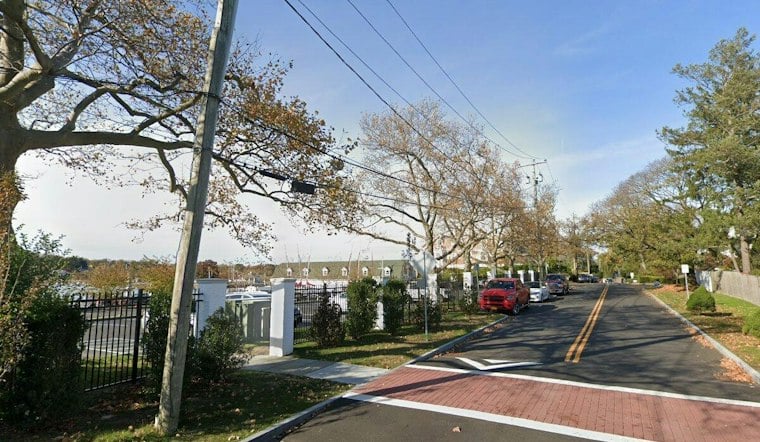
Smith's case traces back to July 1949, when nightwatchman Grover Hart was shot and killed during a robbery at the Indian Harbor Yacht Club in Greenwich, according to WFSB. Police arrested Smith in connection with the killing and, per the same report, found a getaway car containing stolen items, the murder weapon, and a shirt bearing Smith's name and address. Investigators had traced him after New York police located a gray Cadillac in Brewster, New York, holding stolen property from the yacht club manager along with a Colt automatic pistol that matched shell casings from the crime scene, as detailed in court records from Justia Law. No eyewitness ever placed Smith inside the yacht club during the robbery, per that same filing.
Eight Execution Dates and a Last-Minute Reprieve
Smith was convicted of Hart's murder in 1950 and sentenced to die in Connecticut's electric chair, with his execution scheduled eight separate times before each date was postponed because of legal appeals or new developments, WFSB reports. The closest call came in 1954, when Smith was within two hours of electrocution — his head already shaved for the procedure — before the state Board of Pardons commuted his sentence to life imprisonment, according to Dexerto. That reprieve was aided by Aaron Cohen, a West Hartford real estate agent and death penalty opponent who visited Smith in prison and organized a statewide petition and telegram campaign urging clemency, per a historical account shared by Brad Show Live.
Smith's co-defendant, George Lowden, took a plea deal and testified that Smith was his accomplice, according to historical reporting referenced on Medium. Lowden later claimed police had pressured his testimony, a detail that stands in sharp contrast to the 76 years Smith ultimately spent under state custody.
Decades Inside, Doubts That Never Faded
Smith escaped from prison for 12 days in 1967 and was eventually paroled in 1975 after 25 years behind bars, per WFSB. That freedom didn't last — he violated parole within 10 months after being arrested for petty larceny in 1976, sending him back to custody. He went on to spend more than 40 years inside Osborne Correctional in Somers, Connecticut, where he earned the nickname “the birdman of Osborne” for feeding local birds with slices of bread saved from his prison meals, according to the same report.
Even as he became eligible for release, Smith resisted leaving prison for years, a pattern parole officials attributed to extreme institutionalization after spending nearly his entire adult life behind bars, per Brad Show Live's reporting. He finally accepted supervised parole to 60 West in 2020, moving to the Rocky Hill facility that cares for elderly people tied to the justice system. David Skoczulek, vice president of business development and communications at iCare, which operates 60 West, told WFSB there were lingering questions about whether Smith was guilty, noting there was no forensic evidence available at the time of the original investigation.
Those doubts had surfaced publicly before. The Greenwich Times reported that key witnesses admitted they lied about the murder, and a state police investigator said, according to that outlet, that Smith did not kill Hart and might not have even been at the scene. Smith was known as a model prisoner throughout his decades of incarceration and maintained his innocence until his death, per WFSB.
A Specialized Facility Built for Aging, Justice-Involved Residents
The 60 West facility where Smith spent his final six years opened in 2013 under iCare Health Network and became the nation's first specialized nursing facility for justice-involved elderly individuals to secure federal CMS Medicaid approval in 2017, according to The Appeal. The facility was created under a 2011 Connecticut legislative mandate to house difficult-to-place state charges, reflecting a correctional system that evolved dramatically over the course of Smith's custody — from an era of electric-chair executions to one built around specialized geriatric care for aging former inmates.
That evolution includes Connecticut's broader retreat from capital punishment. The state formally abolished the death penalty prospectively through Public Act 12-5 in 2012, and the Connecticut Supreme Court ruled in the 2015 case State v. Santiago that capital punishment violated the state constitution for all remaining death row inmates, according to Justia Law. The state had carried out its last execution in 2005 before abolition became complete, per the Death Penalty Information Center.
Smith was cremated without a funeral and left behind no known relatives, WFSB reported. The Indian Harbor Yacht Club, where Hart was killed 76 years before Smith's death, has stood on the water in Greenwich for 105 years. Smith was never legally exonerated of the crime that defined nearly his entire life, but the questions raised by investigators, witnesses, and his own decades-long claim of innocence remain part of a case that outlived almost everyone connected to it.



