

























































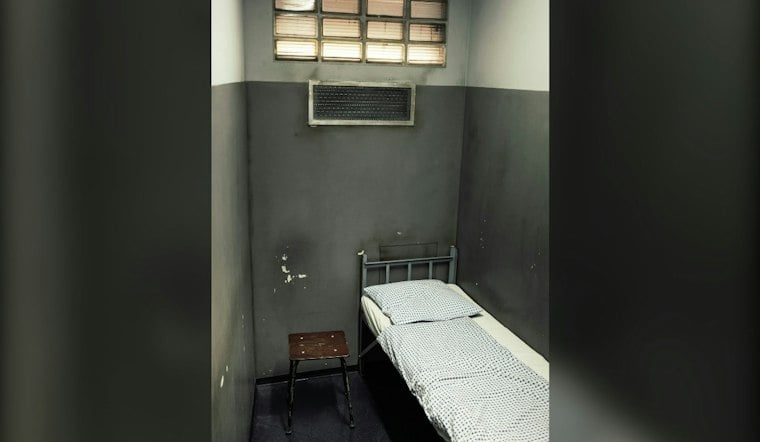
Connecticut has agreed to pay $1 million to the family of Kenneth Montaner-Buscampell, a 26-year-old Meriden man who was strangled to death by his cellmate inside MacDougall-Walker Correctional Institution in December 2024 while serving a two-year sentence. Montaner-Buscampell was halfway through that sentence when he was killed, and records show he had asked to be moved out of the cell he shared with Kyle McKinnon just one day before he died.
According to court records cited by CT Insider, the state agreed to the settlement with Montaner-Buscampell's family. Montaner-Buscampell had been convicted of fourth-degree sexual assault involving minors before his death. Connecticut will not pursue its cost-of-incarceration lien against the $1 million payout, according to the same report. An autopsy conducted by the Office of the Chief Medical Examiner found that Montaner-Buscampell died of neck compression, and his death was ruled a homicide, according to the Hartford Courant.
Warning Signs Before the Killing
McKinnon, who was serving a nine-year sentence for assault, had repeatedly told correction officials he should be housed alone because he had schizophrenia and depression and was not taking his medication, according to an arrest-warrant account reported by Greenwich Time. Montaner-Buscampell, for his part, asked a corrections lieutenant to be moved out of McKinnon's cell the day before he was killed, the outlet's account states.
Per the arrest warrant, McKinnon choked Montaner-Buscampell while he was sleeping on Dec. 12, 2024, then carried his body out of the cell and placed it on a table in a common area before returning to his cell. CT Insider's reporting on the case describes McKinnon as having confessed to hurting his cellmate, telling investigators he choked Montaner-Buscampell out, carried him out, checked whether he moved, and found him not moving. McKinnon also told investigators he strangled Montaner-Buscampell and tried to kill him, per that account.
Oversight Agency Declined to Act
State police obtained an arrest warrant charging McKinnon with murder and first-degree strangulation on Feb. 11, 2025, the Hartford Courant reported. Two months later, the Connecticut Office of Inspector General said it would not take any action against the Department of Correction, citing the pending criminal case against McKinnon. The same investigation documented that both men had raised housing concerns before the killing — McKinnon had told Department of Correction staff not to place him in a cell with anyone, citing his schizophrenia and depression diagnoses, the Courant's reporting notes.
A Connecticut prison ombudsman said he planned to issue recommendations after all investigations into the killing were completed, according to Greenwich Time's reporting from February 2025. Meeting minutes state that McKinnon was ultimately found not guilty by reason of insanity in the killing and was committed to the state's psychiatric review board.
Family Says Settlement Brings No Closure
Montaner-Buscampell's family was represented by Pattis & Paz of New Haven. The firm said the family deserved transparency, accountability and the truth about Kenneth's death in state custody, adding that the settlement does not bring Kenneth home or close the chapter for his family. In a settlement petition, attorney Vincenzo Gallo said the proposed compromise serves the estate's best interests by securing a substantial recovery and avoiding the costs of further litigation.
The case echoes another recent Connecticut settlement: CT Examiner reported last week that the state agreed to pay $1 million to the family of a man killed by his cellmate at a Suffield prison, a separate case highlighting ongoing scrutiny of how the Department of Correction houses inmates with mental illness. For the Montaner-Buscampell family, the settlement is described as a way of holding the state accountable and helping ensure Kenneth's story is not forgotten.





