

























































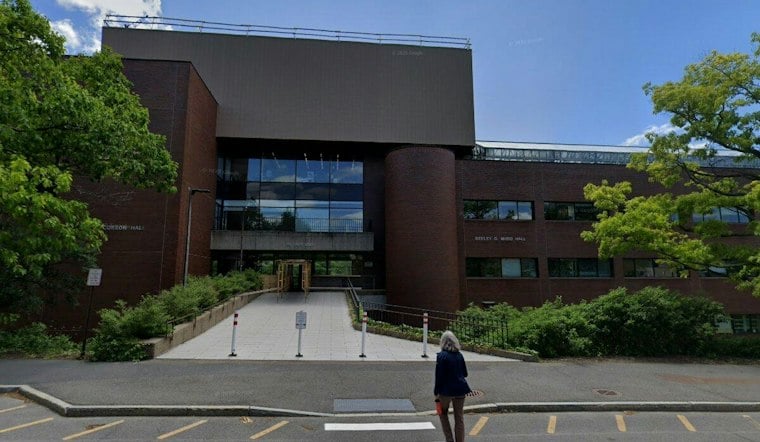
A federal judge in New York has thrown out a lawsuit accusing Cornell University of running a discriminatory, DEI-driven hiring process — not because the claims were found false, but because the man who filed suit was never actually applying for a job there to begin with. Biologist Colin Wright sued Cornell in January 2026, alleging the university's hiring approach for a tenure-track ecology and evolutionary biology position favored racially or ethnically diverse applicants over him. The case ended Monday with a dismissal that sidestepped the discrimination question entirely.
Judge Glenn Suddaby of the U.S. District Court for the Northern District of New York ruled that Wright lacked standing to sue because he was not applying for a job at Cornell at the time he filed the complaint, according to Bloomberg Law. Suddaby wrote that there was no evidence supporting Wright's claim that Cornell excluded him from consideration because of his race, the outlet reported. The lawsuit had centered on what Wright described as a confidential hiring process that prioritized racially or ethnically diverse applicants, per the same account.
Court records reviewed on CourtListener show Wright filed his jury-demanded complaint on January 26, 2026, launching the case that would become Wright v. Cornell University, docketed as 3:26-cv-00127 under the federal employment-discrimination classification 42:2000e. Cornell responded two months later, moving on March 30, 2026 to dismiss the case for lack of subject-matter jurisdiction and failure to state a claim, the docket shows.
What Cornell Submitted to the Court
Cornell's dismissal motion came packed with exhibits that reportedly became central to undercutting Wright's standing: his own social-media posts, a Daily Caller article and a Wall Street Journal article, according to the court docket. As reported by HR Dive, Suddaby found that Wright had made statements about leaving academia on social media, to the Daily Caller and in a Wall Street Journal editorial, and that those statements — along with comments expressing disinterest in applying to institutions requiring DEI statements — indicated he was not ready to apply to Cornell. HR Dive reported that the court explained a person unable to apply because of an allegedly discriminatory process can still establish standing by showing readiness and ability to apply on equal footing, but that Suddaby characterized Wright as perhaps able, yet not ready, to do so.
Because standing was lacking, Suddaby did not evaluate Wright's underlying DEI-based discrimination arguments, HR Dive reported. Richard Lawson, litigation vice-chair for the America First Policy Institute, told HR Dive that the institute was reviewing the order and remained dedicated to fighting unlawful discrimination on Wright's behalf. Cornell had not responded to HR Dive's request for comment by press time, the outlet reported.
Part of a Wider Wave of DEI Hiring Fights
Wright's case landed amid a broader surge of so-called reverse-discrimination lawsuits, which have gained increasing prominence in employment law in recent years, according to HR Dive. Just days before the Cornell ruling, a Florida federal judge allowed four current and former Danaher Corporation employees to proceed with claims that the company's DEI policies discriminated against White men, the outlet reported. Those plaintiffs alleged Danaher sought to have 50% of interviewees be underrepresented candidates, and Judge Anne Leigh Gaylord Moe wrote that under the alleged policy, “White men are effectively second-class candidates, even if they are more qualified.”
A separate class action accuses Danaher and four subsidiaries — Pall Corporation, Beckman Coulter, Cytiva and Sciex — of turning its DEI hiring program into an unlawful quota system targeting white male applicants, according to HCAMag. That suit seeks class certification on behalf of what could be thousands of job applicants, though Danaher had not responded to the allegations and no determination on the merits had been made at the time of that report. HR Dive separately noted that a Wells Fargo dispute over alleged diverse hiring slates was resolved with an $85 million settlement.
Federal Regulators Ramp Up Scrutiny
The Cornell and Danaher cases arrive as the U.S. Equal Employment Opportunity Commission sharpens its focus on alleged discriminatory impacts of diversity policies on hiring. The agency filed 97 merit lawsuits in fiscal year 2026, a 4% increase from the prior year, according to Bloomberg Law. Of the 11 racial-discrimination suits the EEOC filed in 2026, only one was brought on behalf of a White worker, the outlet reported, while religious-bias complaints climbed to 15 from 11 the year before.
Bloomberg Law also reported that the EEOC is investigating Nike, Northwestern Mutual, the City of San Francisco and Harvard University over potentially discriminatory diversity policies. Harvard's fight with the agency has already reached federal court: the EEOC sued the university on September 29, 2026 to enforce a subpoena in its DEI-related investigation, according to HR Dive, seeking documents the agency says are relevant to determining whether Harvard violated Title VII of the Civil Rights Act of 1964. Harvard has claimed it already gave the EEOC more than 9,000 pages of responsive information, the outlet reported.
The EEOC describes itself as the sole federal agency authorized to investigate and litigate against private-sector employers for violations of federal employment-discrimination law, according to the agency's own public guidance. Separately, the Department of Justice appears to be reexamining the effects of higher-education DEI programs on students and employees, including potential race-based admission and hiring practices, according to a report from the College and University Professional Association for Human Resources. For Wright, the dismissal closes this chapter without resolving the discrimination questions he raised — the court simply never reached them.





