

























































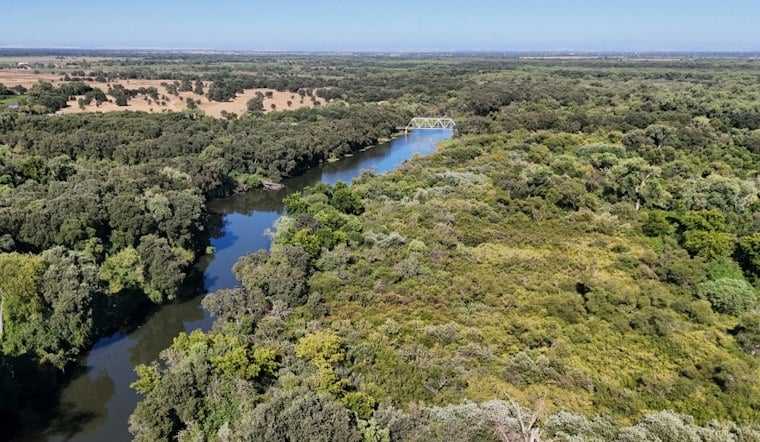
Along the Cosumnes River near Wilton, the levees that stand between homes and floodwater are mostly earthen, privately maintained, and built to handle only a 10-year flood event. With a very strong El Niño now intensifying in the Pacific, Sacramento County officials are urging residents in flood-prone areas to look into coverage before the next storm season tests those levees again.
Reclamation District 800 maintains and repairs 34 miles of those levees along the Cosumnes, according to River Valley Times, which reported that the system is funded through an assessment district generating just over $550,000 a year. That modest budget has been stretched thin since the January 2023 atmospheric river storms tore through the region, causing multiple levee breaches, widespread erosion and prolonged flooding along the river, the outlet reported.
The scale of that damage was staggering relative to the district's size. CBS Sacramento reported that the New Year's Eve storm resulted in multiple breaches and two breaks along the river, and that Reclamation District 800 was spending more than $1.5 million just to fill one hole that stretched over 2,000 feet wide — three times the district's annual budget, the station noted. Sacramento County officials separately confirmed a double levee breach near Wilton on January 1, 2023, according to KCRA, which also reported that the National Weather Service issued a flash flood warning for residents along the river because of an imminent risk of levee failure.
Borrowed Millions and a Scramble for Federal Aid
The repair bill forced the district to take on debt it is still carrying. The same River Valley Times report found that RD 800 borrowed about $6.5 million for emergency levee repairs after the 2023 storms and currently owes approximately $7.9 million to the Bank of Stockton. Relief has arrived in pieces: more than $4.37 million in FEMA funding was deposited into the district's Sacramento County levee fund in late December, followed by about $264,000 from California OES in early January, per the same report.
RD 800 has also moved to formalize its emergency planning, approving a not-to-exceed $30,000 contract with Wagner & Bonsignore to develop a formal Emergency Action Plan, the outlet reported. It is part of a broader push to shore up a system that, by the district's own numbers, was never designed to withstand much more than a once-a-decade flood.
A Strengthening El Niño Adds Pressure
The timing of these repairs coincides with a notable shift in the Pacific. The 2026 El Niño event continues to intensify across the central and eastern equatorial Pacific, according to the International Research Institute for Climate and Society, which reported that the weekly Niño 3.4 index climbed to +3.3°C on October 14. The institute also publishes probability forecasts for El Niño conditions.
Sacramento's flood-control challenges extend well beyond the Cosumnes levees.
Flood Risk and Insurance
Homeowners can consider their flood exposure before storm season arrives in earnest. A recent U.S. Government Accountability Office report examined flood-risk statistics for Sacramento County and found that mandatory purchase requirements for flood insurance do not reach most at-risk properties, underscoring a gap between official risk maps and who actually carries coverage.
With a very strong El Niño now confirmed by climate forecasters and a levee system still rated for only a 10-year flood, the margin for error along the Cosumnes remains thin. The repairs funded by FEMA and state emergency dollars, the new Emergency Action Plan under development, and the push for residents to check their flood risk all point to a region trying to close the gap between what its levees can handle and what the coming season might bring.





