

























































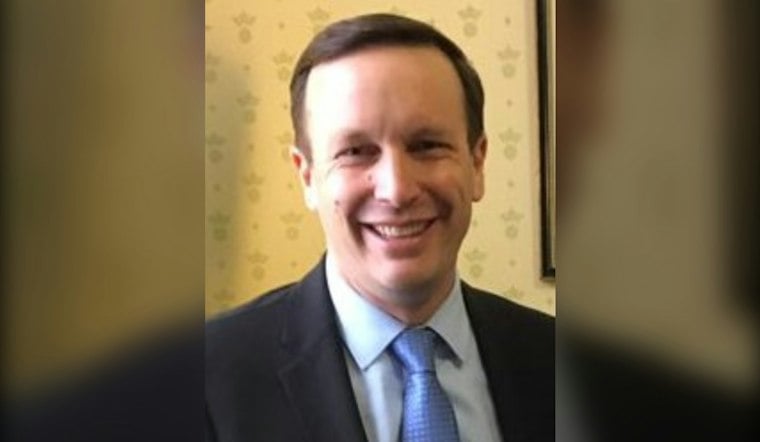
Connecticut Senator Chris Murphy says he was turned away from one of the U.S. military's most important installations in the Persian Gulf this month, accusing the Pentagon of deliberately hiding the extent of damage from the Iran war ahead of the midterm elections. The Hartford Democrat says he was blocked from entering Al Udeid Air Base in Qatar during an official congressional trip meant to let him see firsthand what seven months of bombing have done to the region.
Murphy, a member of the Senate Foreign Relations Committee, traveled to Riyadh and Doha and met with top leaders in Saudi Arabia and Qatar, according to the Hartford Courant. He had sent a letter to U.S. Central Command leadership seeking permission to access Al Udeid, which houses as many as 10,000 troops and has been repeatedly attacked by Iran during the war, which began February 28, 2026, per the Courant. Murphy said the administration was effectively giving Congress its middle finger by denying him entry.
Murphy said he had been to the Middle East at least a dozen times — including visits to active war zones in Iraq and Afghanistan — and had never before been denied access to a military facility, according to CT Mirror. He was the first Senate Democrat to visit the region since the war started, per the Courant.
A Pentagon Directive Signed Days Into the War
Senior Defense Department officials say the refusal was grounded in a regional travel restriction directive that Defense Secretary Pete Hegseth signed on March 3, 2026, three days after the U.S.-Israel war with Iran began, according to Military Times. The Pentagon maintains the guidance was communicated to Murphy's office in advance and applied uniformly to all legislative travel, the outlet reported. Murphy's office said it was informed he would not receive Department of War support to access the base, per the Courant.
Murphy had given weeks of advance notice and contacted CENTCOM Commander Adm. Brad Cooper directly, who indicated surprise upon learning that top Pentagon officials in Washington had prohibited local commanders from hosting or briefing the senator, according to The Guardian.
Embassy Damage and a State Department That Opened Doors
While the Pentagon shut him out of Al Udeid, Secretary of State Marco Rubio actively facilitated Murphy's itinerary, coordinating meetings with State Department personnel, Qatari Emir Sheikh Tamim bin Hamad Al Thani, and Saudi Crown Prince Mohammed bin Salman, the Guardian reported. The contrast highlighted a split within the executive branch over how to handle congressional oversight during the war, with Murphy publicly praising Rubio's assistance while criticizing Hegseth.
Murphy also personally inspected the U.S. Embassy in Riyadh, where he said a March 3, 2026 Iranian drone strike destroyed multiple floors and left part of the space uninhabitable and likely to remain so. He warned the attack would have been a mass-casualty event had it struck during working hours, per the Guardian. Saudi defense officials had originally characterized that March strike as causing only minor fire and material damage, a discrepancy the Guardian noted without resolving.
Putting a Price Tag on the Damage
A Department of Defense Inspector General report released in September 2026 found that Iranian missile and drone attacks damaged or destroyed hundreds of military structures across eight Middle Eastern countries, including Al Udeid, at a total cost of $33.4 billion in war expenses as of June 29, 2026. The report covered activity through June 30, according to Breaking Defense. Breaking Defense described it as the clearest accounting of materiel damage from the operation.
The economic fallout extends beyond the Pentagon's books. After discussions with Qatari energy officials, Murphy reported that maritime shipping insurance premiums in the Persian Gulf have surged from $100,000 per day before the war to more than $1 million per day because of ongoing conflict risks, according to the Jewish News Syndicate. The outlet also discussed constrained fuel exports and high oil prices.
Murphy's Next Move: Writing Access Into Law
Murphy plans to draft language requiring the Department of Defense to allow members of Congress to see military bases overseas, and expects it to be part of the discussion around an appropriations bill next year and the Defense Authorization Bill, per the Courant. He has acknowledged the proposal is unlikely to pass before the end of 2026.
The standoff lands amid a broader political calendar: President Donald Trump declared on October 8, 2026 that the U.S. would not launch renewed strikes against Iran before the November 3, 2026 midterm elections. Murphy's meetings with Mohammed bin Salman also touched on ending the Iran war, a pathway to Palestinian statehood, and Gulf countries' investments tied to the Trump family, while his stop in Doha included talks with business and academic leaders as well as the emir.



