

























































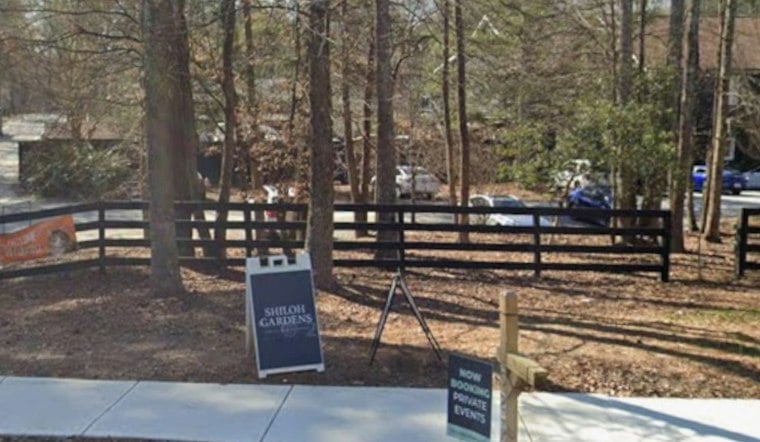
Couples getting married at a garden venue in Cumming can skip the usual flower-girl routine and instead have adoptable kittens or puppies mingle with guests at their reception. Shiloh Gardens is a non-profit wedding and event venue that operates as a division of Furkids Animal Rescue and Shelters, and it generates more than $500,000 annually that goes directly toward animal rescue and medical care.
The arrangement turns a traditional revenue stream — venue rentals — into a direct funding pipeline for shelter operations, according to CBS News. The property wasn't always a wedding destination. Furkids acquired the neglected 9-acre Wakoola Water Gardens site in 2018, renovated its grounds and main building, and reopened it in 2019 as its botanical headquarters and sanctuary. An old barn on the property was later converted into the 3,400-square-foot Giaquinto Event Center, dedicated in March 2023, as detailed by Furkids.
Today, events at the venue feature the 284-seat Giaquinto Event Center along with outdoor courtyards and garden lawns. Couples can optionally arrange for adoptable puppies or kittens from the adjacent shelter to interact with guests during their celebrations, per Shiloh Gardens. It's a model that doubles as a soft adoption pitch — wedding guests get face time with animals that might otherwise sit in a shelter kennel.
A Rescue Organization Built Over Two Decades
Furkids was founded in 2002 by CEO Samantha Shelton and has grown into Georgia's largest no-kill animal rescue organization. The nonprofit operates the Southeast's largest cage-free cat shelter alongside dog shelters and community clinics, according to the same CBS News report. In 2025 alone, the organization says it saved 4,601 animals, cared for 5,385 total animals, and completed 3,878 adoptions while maintaining a 97.6% live release rate across its shelter network, per Furkids' own statistics.
The Cumming campus has already shown it can serve as more than a wedding backdrop. Back in May, Furkids used its Cumming headquarters to take in 43 cats and kittens from Cobb County Animal Services during a feline panleukopenia outbreak, preventing shelter euthanasia during the crisis — a story Hoodline covered at the time. Furkids' emergency intervention during that same panleukopenia outbreak was later referenced again when a Cobb County shelter director received a bomb threat in September.
Georgia's Shelters Face Mounting Pressure
The venue's revenue model stands out against a backdrop of strain across the state's public shelter system. Best Friends Animal Society reported that Georgia animal shelters saved 148,800 dogs and cats in 2025, a 2.4% increase from 2024, though only 84 state shelters achieved no-kill status while public shelters continue to face capacity strains. Nationally, the picture is similarly tight: roughly 5.8 million dogs and cats entered U.S. shelters in 2025, with 4.2 million adopted, as shelters faced capacity challenges tied to longer average lengths of stay for animals, according to ASPCA and Shelter Animals Count data.
Closer to home, public animal welfare in Forsyth County runs through a separate system entirely. The Forsyth County Sheriff's Office Pet Adoption & Resource Center handles over 2,400 stray and surrendered animals annually, operating as the county's municipal shelter alongside — but independent from — Furkids' privately funded no-kill campus a few miles away.
Regulatory Oversight for Rescue Operations
Like every shelter and rescue group operating in Georgia, Furkids falls under state licensing rules. Under Georgia Department of Agriculture regulations, all animal shelters and rescue groups must hold an annual animal shelter license, maintain sanitation standards, and submit monthly intake and outcome reports. Those requirements apply regardless of whether an organization relies on public funding, donations, or — as in Shiloh Gardens' case — wedding bookings to keep its lights on.
Taken together, the numbers paint a picture of a nonprofit that built an unconventional funding engine out of an abandoned water garden. What started as a derelict 9-acre property in 2018 now hosts weddings, raises six figures annually, and occasionally doubles as emergency shelter space when nearby county systems hit their limits.




