

























































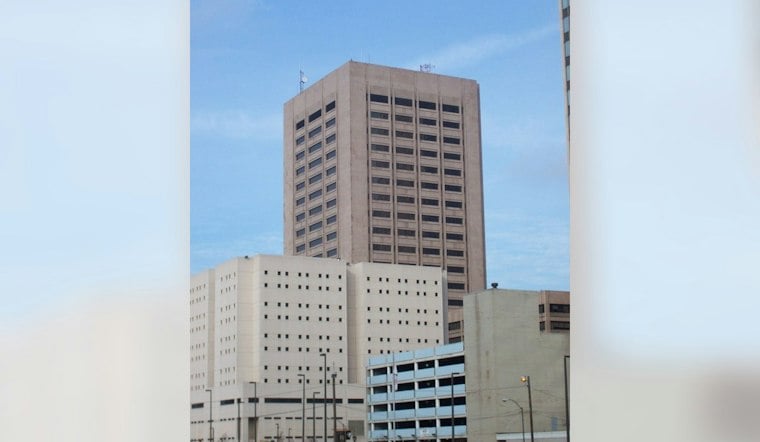
Cuyahoga County paid MetroHealth $1.13 million in employee parking stipends, signing bonuses and other incentive payments between July 2022 and July 2026, and the county employees responsible for overseeing the jail medical contract say they had no idea those charges were being reimbursed. Roughly $325,670 of that total landed in 2025 alone, according to findings from the county's own watchdog office.
The figures come from an investigation detailed by cleveland.com, which reported that county employees overseeing the jail and MetroHealth contract told investigators they did not know the county was reimbursing the health system for parking. That's notable because the county had specifically told MetroHealth in 2024 that it was unwilling to pay parking stipends and certain other costs, per the same report.
MetroHealth began offering the parking stipends in 2022, paying full-time employees $130 a month and part-time workers $50 a month. The amounts rose in 2023 to $180 and $90, respectively. In 2025 alone, MetroHealth billed the county $202,950 for parking stipends, and investigators found no evidence that MetroHealth ever discussed those payments with the county or sought approval before introducing or increasing them.
Invoices Buried the Charges in a Broader Line Item
Part of the confusion, according to the inspector general's findings, traces to how the costs were presented. MetroHealth invoices listed parking costs within a broader incentives and bonus line item rather than breaking them out separately, and the report noted that parking stipends were not separately identified for county council members during a May 2024 committee discussion of rising contract costs. MetroHealth did include parking stipends in cost presentations during negotiations over a 2024 contract amendment, the report found, even as the broader charges went unflagged elsewhere.
The jail medical contract requires the county to reimburse MetroHealth for staffing at actual costs invoiced monthly, and it requires the sheriff's department to provide reasonable parking accommodations to MetroHealth employees. But the contract also acknowledges that MetroHealth employees may have to pay a parking fee themselves, and it does not make the county responsible for reimbursing those fees — a distinction investigators say got lost. The contract, signed in 2019, has been amended ten times since.
A $20,000 Bonus and a Fired Doctor
Among the most striking line items: MetroHealth billed the county a $20,000 signing bonus in February 2025 for an employee who was terminated just 11 days after the payment went through. Under the bonus agreement, the employee became eligible for the payout after 90 days on the job and would have owed repayment only if they voluntarily resigned before completing a year of employment — a clause that didn't apply once the person was fired. MetroHealth did not seek repayment of the bonus because the termination, rather than a resignation, triggered no clawback.
The inspector general's office questioned why MetroHealth did not terminate the employee before the bonus became payable. Investigators also flagged $22,860 in moonlighting payments for employees who picked up extra shifts, saying documentation required under MetroHealth's own policy wasn't provided to substantiate the charges. Another $13,790 in 2025 incentive and bonus charges lacked supporting documentation altogether, and investigators said they could not even identify the purpose of a separate $54,070 in 2025 payments — together with other unexplained charges, the report categorized nearly $68,000 as unsupported or undetermined.
Investigators also questioned $14,130 of 2025 parking stipends paid for 14 employees, 11 of whom were not listed as working under the contract for all of 2025, and flagged a further $12,000 in incentives billed for providers working in the jail. On top of the disputed expenses themselves, the county paid MetroHealth a 10% administrative fee that added another $113,322 to the bill.
MetroHealth Pushes Back
MetroHealth rejected the inspector general report's conclusions and maintained that its invoicing practices were appropriate. James Wellons, speaking for the health system, said incentives were necessary to recruit and retain jail workers and that the charges were disclosed in monthly invoices and routinely reviewed and paid without objection. He said MetroHealth did not know of any objections to the incentive charges before the inspector general's review, and argued the county has no authority over how MetroHealth compensates its own employees.
Wellons said claims that MetroHealth's invoicing was improper or lacked integrity were unfounded, noting the health system disclosed its costs through monthly invoices and ten separate contract amendments. MetroHealth maintained it had no legal obligation to repay costs that were already invoiced and paid, and said its billing practices align with other contracts and with state- and federally funded programs, according to a statement issued Monday.
Dr. Donald Kern, who has monitored the county jail medical contract as an independent contractor following a lawsuit over inmate deaths, told investigators that while incentive payments are used elsewhere in medicine, he had never encountered such bonuses in correctional medicine. Kern said incentive payments could encourage more prescriptions, labs and testing, and he recommended the county better define incentive payments in future contracts. Inspector General Alexa Beeler approved and signed the report, which questioned the incentives and bonus category as a whole and recommended that county leaders consult the law department about whether the charges were allowed, work to recoup improper payments, and clarify expense terms going forward.
A New Contract Looms Amid a Tight Budget
The timing adds pressure to an already consequential vote. Cuyahoga County Council was weighing a new five-year, $161 million contract with MetroHealth for jail medical care, with discussion scheduled for the Committee of the Whole on Tuesday and the possibility of final council approval at its regular meeting the same day if it clears committee. The proposed agreement would shift to a flat-fee staffing model instead of reimbursing MetroHealth for individual staffing costs — a change Wellons said should improve budget predictability and reduce disputes over personnel expenses, though he said the new model does not acknowledge any wrongdoing in prior billing. MetroHealth said it had negotiated the restructured model specifically to avoid future misinterpretations.
County Executive Chris Ronayne had not taken a position on whether the disputed payments were allowable. Jennifer Ciaccia, a spokesperson for the county, said the executive's office had reviewed the report and was working with MetroHealth leadership, the sheriff's department and the county law department. She said the county remained proud to partner with MetroHealth to care for people at the Cuyahoga County Corrections Center and that officials sought to ensure continued quality care for people in the county's custody. Cuyahoga County officials have said they did not know the county was paying the disputed charges in the first place.
The dispute arrives as the county has faced one of its toughest budgets in memory over the preceding two years, and as jail medical costs have climbed well beyond original projections. When the contract was first signed in 2019, it envisioned about $14 million in annual medical expenses, but actual costs have run several million dollars higher, and onsite care alone now costs nearly $20 million a year with another $2 million for offsite care, according to a separate cleveland.com report. MetroHealth has attributed the rising costs to a jail population that grew after the pandemic, more serious medical needs than anticipated, and rising health care costs generally, as reported by ideastream.org. Council extended the contract for two years at $30 million back in 2022, and MetroHealth later sought a $25 million extension in 2024 to keep services running for nine months. The Cuyahoga County Agency of Inspector General, which is authorized to investigate fraud, corruption, waste and abuse across county government operations, noted in a separate first-half 2024 report that its automated analytics program had already identified more than $1.6 million in lost revenue or overpayments from 2020 through 2023.





