

























































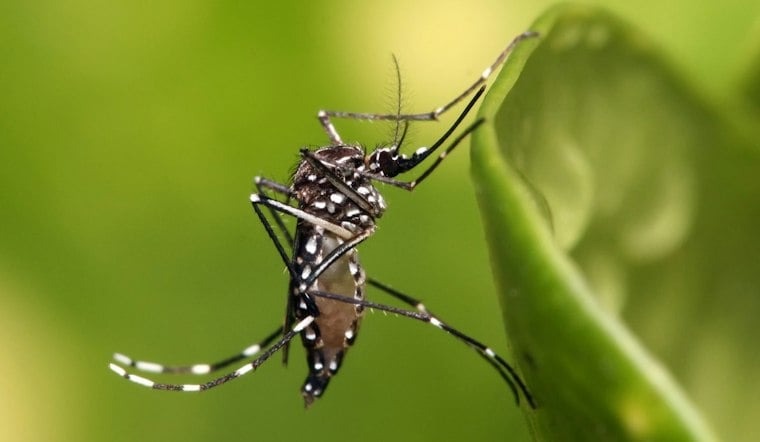
A man in his 60s has become Dallas County's first West Nile virus-related death of 2026, health officials announced, as the county grapples with nearly 200 positive mosquito traps even with autumn's cooler air settling in. The man had underlying medical conditions and was diagnosed with West Nile neuroinvasive disease, the most severe form of the illness, before he died.
Dallas County Health and Human Services withheld further details about the man to protect his identity, according to The Dallas Morning News. Dr. Philip Huang, the department's director, said the agency was saddened by the man's death and stressed that falling temperatures don't mean the threat has passed. “Cooler weather does not mean the West Nile threat is over,” Huang said, urging residents to protect themselves and their loved ones from mosquito bites and to prevent mosquito breeding around their homes.
The county has now confirmed at least six human cases of West Nile virus this year, alongside this fatality, while 192 mosquito traps across Dallas County have tested positive for the virus, the department's report notes. That trap count signals active viral circulation even though the 2026 human case total remains well below recent peaks.
How 2026 Compares to Recent Years
Last year, Dallas County recorded 10 human cases and a single fatality, per the Branch Herald. Statewide, the picture has been similarly volatile: the Texas Department of State Health Services confirmed the state's first 2026 case in Harris County on May 19, noting that Texas logged 976 total West Nile cases and 106 deaths over the prior five years, with 2024 marking the deadliest year in that stretch at 57 fatalities.
North Texas has seen far worse. During the 2012 national epidemic, Dallas County logged 398 human cases and 19 deaths — a crisis severe enough that officials resumed aerial insecticide spraying for the first time in 45 years, according to the National Institutes of Health. That outbreak remains the benchmark against which current numbers are measured, even as this year's totals stay comparatively moderate.
Why the Virus Keeps Circulating
Heat and drought can limit water sources, bringing birds and mosquitoes closer together. Separately, Community Impact reported 12 positive mosquito pools in Frisco by mid-September and 16 positive traps in Mesquite ZIP code 75149 back in June — the subject of earlier Mesquite spray coverage from Hoodline.
Dallas County Health and Human Services recommends residents use insect repellent, wear long and loose clothing, drain or treat standing water where mosquitoes could lay eggs, and limit outdoor time between dusk and dawn, when mosquitoes are most active.
No Vaccine Means Prevention Is the Only Defense
There is no approved human vaccine or specific antiviral treatment for West Nile virus, and severe neuroinvasive cases are managed mainly through hospitalization and supportive care like intravenous fluids. CDC surveillance cited by Neurology Today shows roughly 80 percent of infections cause no symptoms at all, but fewer than 1 percent — about 1 in 150 — progress to neuroinvasive disease, which carries an estimated 10 percent mortality rate.
Dallas County uses ground spraying in zones about a mile around positive traps, part of a broader integrated approach that combines surveillance, larviciding, and targeted spraying. Dallas County Health and Human Services will continue monitoring for West Nile virus through mid-November, when colder temperatures typically bring the mosquito season to a close.



