

























































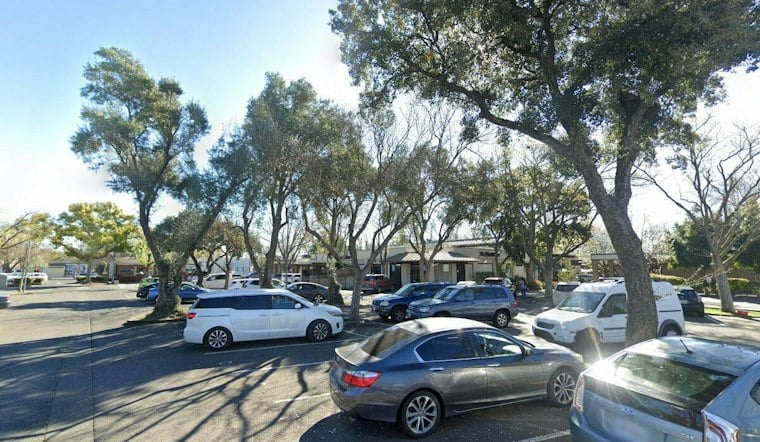
Free parking at three downtown Davis lots is about to disappear. Starting November 2, drivers at the North F Street, South G Street and Amtrak Train Depot lots will pay $1 per hour during enforcement hours, with a one-week educational period beginning Monday to warn drivers before the meters actually start charging.
From $3 Proposal to $1 Compromise
The move caps months of debate that began when city staff proposed converting the lots to metered parking at $3 per hour, a plan detailed in a June 16 staff report that called for charging 75 cents per 15-minute increment, the equivalent of $3 an hour, to increase turnover and space availability. The Davis City Council instead directed staff to start prices at $1 per hour at each of the four lots, according to the Davis Enterprise. Council members also asked staff to look into alternative smartphone payment apps for more convenience and ease of use, per the same report.
Brett Lee, executive director of the Downtown Davis Business Association, told the Sacramento Bee that moving straight from free parking to $3 per hour would be a very large jump. Lee said he supported a mix of free and paid parking that offers both short- and long-term stay options, according to the Sacramento Bee.
Which Lots, Which Hours
The lots are the E Street Plaza Lot, the F Street Lot between Third and Fourth streets, the G Street Lot between Second and Third streets, and the Amtrak Station Lot, the Bee reports. E Street Plaza is already a paid parking lot; the F Street, G Street and Amtrak lots are transitioning from free parking. At the E Street Plaza, F Street and G Street lots, paid parking will run 10 a.m. to 7 p.m. Monday through Saturday, while the Amtrak lot will charge 10 a.m. to 7 p.m. Monday through Friday only. Those same hours appear in the city's own ordinance language, which specifies enforcement every day between 10 a.m. and 7 p.m. except Sundays and holidays for the three downtown lots, and except Saturdays, Sundays and holidays for the Amtrak lot.
Parking will remain free outside those enforcement hours and on city holidays, the Bee notes. Drivers who park before the paid window begins will only be charged for time spent during enforcement hours — the Bee gives the example of a driver parking at the E Street lot from 7 a.m. to 11 a.m., who would pay just $1 for the 10 a.m. to 11 a.m. hour.
Paying the Meter
Drivers will be able to pay using credit card stations or Tez Park QR codes, with the QR codes allowing drivers to add parking time remotely when permitted, per the Bee's report. Motorists must use the specific QR code or payment station tied to the lot where they actually parked. The city's June ordinance separately described plans for physical kiosks supplemented by a mobile parking application as payment options, though it did not name a specific vendor.
Vehicles in the three lots transitioning from free parking will receive reminders before paid parking takes effect, and the city's one-week educational period is set to begin Monday, ahead of the November 2 start date, according to the Bee's reporting.
Counting Spaces and Dollars
Figures on exactly how many spaces are involved differ depending on the source. The Bee reports the four lots have 322 combined parking spaces, representing about 16% of downtown Davis public parking, with the remaining roughly 84% — including all on-street parking — staying free. The city's June staff report, however, put the number at 330 spaces, or about 16% of total downtown parking. The Davis Vanguard has separately described the arrangement as leaving on-street parking and roughly half of downtown's surface lots free, an account that diverges from the city's own figures.
Revenue estimates vary just as widely depending on the rate charged. City officials estimated that $3-an-hour parking could generate about $2.7 million annually, a figure also cited by the Davis Enterprise, while the Bee reports city officials separately estimated that $1-an-hour parking could bring in roughly $700,000 a year. The city's June staff report also projected the metered system could generate up to $50,000 per week at full capacity. Enforcement costs were estimated at approximately $1 million annually, according to the Bee. Officials have said that revenue could help cover those enforcement expenses along with installation costs.
Budget Pressure and a Nine-Month Review
The push for new parking revenue comes as the Davis City Council has sought additional funds amid a structural budget deficit, the Bee reports. City officials have said paid parking is also meant to encourage turnover in high-demand spots and help customers find open spaces nearby. Separately, the Abridged has reported that city officials plan to study occupancy at the lots and return with an updated fee recommendation in nine months, with the initial $1 rate carrying the potential for future increases.
The three lots beyond the Amtrak station were selected through the city's downtown parking management plan, which was developed with help from a council-appointed task force, the Bee notes. City officials say they will continue evaluating the program and adjusting it based on parking demand and community feedback going forward.
New Apartments Add Pressure Downtown
The timing of the parking changes overlaps with a wave of new downtown housing. The Davis Enterprise has reported that about 340 new apartments are planned along G Street, mostly without space for residents' cars, meaning the ultimate impact of the fee changes will hinge partly on how many renters in those buildings bring vehicles anyway, and on how willingly drivers accept the new charges in the first place.
Davis would not be the first Northern California city to test hourly paid parking as a turnover tool. Downtown Redding launched its own $1-per-hour paid parking program in January 2023, allowing payment by cash, coin, mobile app or text, according to the City of Redding.


