

























































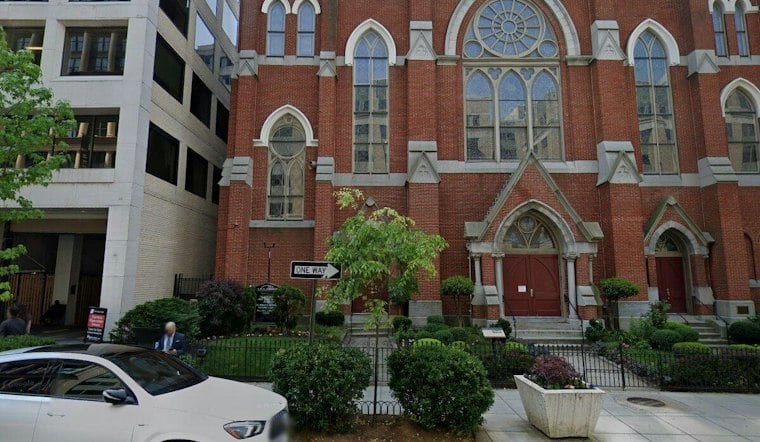
A coalition of civil rights leaders, faith organizers, and descendants of the original Freedom Riders set out from Washington, D.C. on Saturday, launching a two-week, eight-state bus journey to New Orleans designed to push voter turnout ahead of the November midterms. The trip retraces the 1961 bus route, which the original riders did not complete by bus before flying to New Orleans, and organizers are framing it as both a history lesson and a get-out-the-vote drive.
The kickoff took place at Metropolitan AME Church in Northwest Washington, D.C., and included a worship service and brunch before the bus pulled away, according to WJLA. The 12-day tour, dubbed The Ride, is organized by Vote Common Good in partnership with a coalition that includes Greater Things Foundation, Faith Out Loud, and Americans United for Separation of Church and State, as reported by Baptist News Global.
Doug Pagitt, executive director for Vote Common Good and Greater Things, was one of the journey's organizers. He said the 1961 challenge led to the Civil Rights Voting Act of 1965, and told WJLA there is a need to raise awareness about voting, access to the voting booth, and continuing the legacy of that earlier movement. The bus is set to pass through eight states over two weeks before reaching New Orleans, per the same WJLA account.
Finishing by Bus a Route Interrupted by Violence in 1961
The original Freedom Ride began on May 4, 1961, when 13 Black and white activists organized by the Congress of Racial Equality boarded interstate buses in Washington, D.C., to test compliance with federal desegregation rulings across the Deep South, according to the National Park Service. The riders did not complete the route by bus: mobs firebombed a Greyhound bus outside Anniston, Alabama, on May 14, 1961, and severely beat riders arriving in Birmingham, forcing organizers to cancel the remaining bus route and fly the activists to New Orleans instead, per the National Park Service's account.
That unfinished leg is part of why reaching New Orleans by bus carries symbolic weight for this year's tour. The 1961 rides ultimately pressured the federal Interstate Commerce Commission to issue a binding ruling on November 1, 1961, formally banning racial segregation in all interstate buses and transit terminals, according to Louder For Malchus. That order required interstate bus operators to post notices stating seating was available without regard to race or color.
A Church With Its Own Civil Rights History
Metropolitan AME Church, built in 1886 through nationwide congregation donations, has long served as a major civil rights sanctuary, hosting Frederick Douglass's funeral in 1895 and Rosa Parks's memorial in 2005, according to the National Trust for Historic Preservation. Known as the National Cathedral of African Methodism, the church was built near the Capitol and White House to press for Black civil rights. The congregation has stayed active in community work more recently too: in November 2025, it advanced plans for a 12-story, 110-foot rear addition to its downtown site that would create 27 micro-unit supportive apartments and a counseling center for homeless and at-risk military veterans, per Fox's Sell Faster, which attributes the proposal information to Ben Peters of the Washington Business Journal. That project still needs approval from the District's Historic Preservation Review Board and Board of Zoning Adjustment.
Voting Rights Backdrop Shapes the Tour's Urgency
Organizers are tying the trip to a legal landscape that has shifted sharply since the Voting Rights Act era the original riders helped usher in. In the 2013 decision Shelby County v. Holder, the U.S. Supreme Court struck down Section 4(b) of the Voting Rights Act of 1965, eliminating the federal preclearance formula that had required jurisdictions with histories of racial discrimination to get federal approval before changing election laws, according to the Brennan Center for Justice. That preclearance system had served for nearly 50 years as a mechanism to block discriminatory voting laws before they took effect.
The Brennan Center's 2023 analysis found the Shelby County ruling led to an immediate wave of restrictive state election laws, including Texas enacting a photo ID requirement within 24 hours of the decision. Civil rights groups contend these state-level voting restrictions disproportionately reduce ballot access for voters of color, the Brennan Center for Justice notes. Vote Common Good itself was founded in 2018 by pastor Doug Pagitt to mobilize religious voters against Christian nationalism through national bus tours, voter education campaigns, and candidate trainings, according to Wikipedia, and the group ran its first such tour during the 2018 midterms.
Stops Planned Across the South
Official event listings from Vote Common Good show the route includes scheduled stops and community convenings at historically Black colleges and universities, historic churches, and civil rights landmarks, including in Greensboro and Charlotte, North Carolina, and Anniston and Birmingham, Alabama. Organizers plan to hold community events along the way aimed specifically at encouraging voting in the upcoming midterm elections, per WJLA. The schedule was designed to engage voters across Southern states before the November 2026 midterms, according to Vote Common Good's own event materials.
The bus is expected to spend roughly two weeks on the road before organizers and descendants of the original riders arrive in New Orleans, completing by bus a route the 1961 riders ultimately made by plane.





