

























































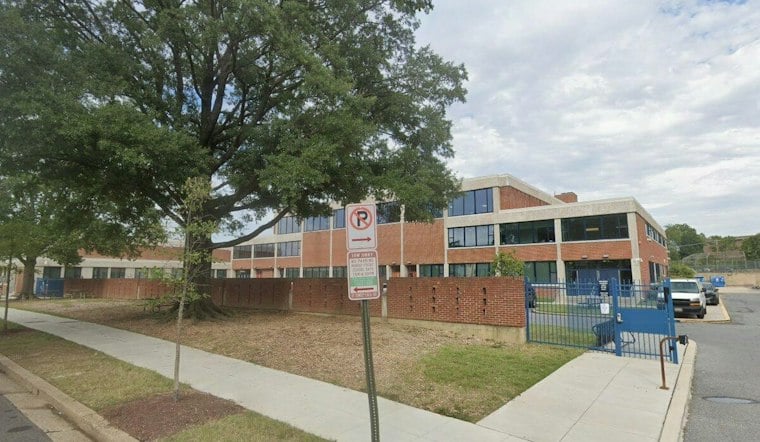
A federal court has cleared two Washington, DC charter schools of liability in a lawsuit brought by a former student who says a teacher groomed and sexually abused her for years, starting in seventh grade at one school and continuing after he moved to a second. The teacher, Alan Coleman, ultimately pleaded guilty to child sex abuse charges and was sentenced to three years in prison, but the civil case against the schools that employed him ended in their favor.
A Years-Long Pattern That Crossed Two Campuses
According to Human Resources Director, Coleman began grooming the student during her seventh-grade year at KIPP DC, giving her rides home and taking her on one-on-one outings to the movies before the abuse escalated by eighth grade. The former student sued KIPP DC and Capital City Public Charter School, alleging both institutions failed to investigate, report, or stop the abuse even as warning signs piled up. The U.S. District Court for the District of Columbia granted summary judgment to both schools, a decision also reflected in court filings reviewed on CourtListener.com.
Separate reporting from NBC Washington lays out the criminal side of the case: Coleman pleaded guilty in DC Superior Court, admitting to having sex with the girl multiple times over a five-year span that began during the 2004-2005 school year. He was later sentenced to three years in prison for sexually abusing the student. KIPP DC KEY Academy did not renew his contract after the 2004 school year, but Coleman then found work from 2005 to 2015 at Capital City Public Charter School, according to the station's reporting.
Warning Signs and an Imperfect Response
Per Human Resources Director's account of the case, a KIPP DC principal had already told police in 2004 that she suspected Coleman of having an inappropriate relationship with a student and asked him to stand down, a detail corroborated by the same NBC Washington report. KIPP DC administrators also called the student's mother after learning about a movie outing, and the mother reportedly said she was very pleased with how helpful the teacher had been. KIPP DC told Coleman directly that one-on-one outings should not be happening.
When confronted, Coleman denied the abuse allegations and told Capital City's executive director, who had questioned him, that the student had run away from a bad situation at home and he was simply helping her, per Human Resources Director. The court reportedly described that explanation as plausible at the time but false in hindsight. The court ultimately found that KIPP DC's response — calling a parent, issuing a directive, and maintaining training policies — was imperfect but kept the school on the right side of gross negligence under DC law, according to the outlet's account of the ruling.
Why Capital City Also Escaped Liability
Capital City avoided liability on different grounds: the student was never enrolled there, and the outlet reports that common law did not extend a duty of care to non-students. Separately, Capital City told NBC Washington that it contracted for and received a clean background check on Coleman and had no concerns about his work or interactions with students during his decade there. The school said it only learned in February 2015, from an individual not connected with Capital City, of allegations involving Coleman and a minor dating back to 2004 through 2007 — and maintained that the minor was never a student there.
Human Resources Director's reporting also notes that KIPP DC's former chief executive and the student's mother each contacted Capital City in 2007 to flag concerns, though the DC mandatory reporter statute — which covers children known to staff in their professional capacity — reportedly stopped applying to KIPP DC once the student left the school, since it did not cover children previously known to staff. KIPP DC said it has since implemented a new system of auditing staff background checks that includes periodically re-running FBI checks on staff, and added mandatory annual training for principals on appropriate staff-student interactions and mandatory-reporting obligations, the station reported.
Licensing Gaps Left Charter Teachers Off the Radar
Coleman's ability to move between charter schools points to a structural gap identified in a separate NBC Washington investigation: DC public charter school teachers are exempt from license revocation and formal listing on the national NASDTEC database because the District did not require them to be licensed. Because licenses expired instead of being revoked, DC education officials were not bound to add teachers' names to that database, which flags roughly 78,000 teachers nationwide and disqualifies them from obtaining licenses elsewhere in the future. The same investigation found that DC recorded zero license revocations since 2008, even after reviewing at least seven teachers for possible revocation or cancellation, and that rules giving the Office of the State Superintendent of Education authority to revoke licenses were not formally approved until 2016.
DC law does lay out reporting duties for professionals who learn of abuse. Under DC Code § 4-1321.02, a designated mandatory reporter who knows, in a professional capacity, that a child has been abused or is in immediate danger of abuse or neglect must report it to the Child and Family Services Agency or the Metropolitan Police Department, according to the D.C. Law Library. A related provision, DC Code § 22-3020.52, specifies that it should not be read as altering that special duty to report, per the D.C. Law Library.
A Familiar Pattern in Minneapolis
DC is not the only city where charter schools have faced scrutiny over how they handled abuse allegations against teachers. In Minneapolis, Best Academy faced civil lawsuits alleging that two former teachers sexually abused students, according to Fox 9. One former student sued Best Academy and former teacher Abdul Wright, who was named Minnesota's Teacher of the Year in 2016, alleging he sexually abused her for nearly a year. Her father said he reported concerns about Wright directly to Eric Mahmoud in 2017, but the concerns were dismissed completely, the station reported.
A related case involving Harvest Best Academy ended differently than the DC lawsuits. The school agreed to settle a lawsuit brought by a former student for $150,000 after the Minnesota Supreme Court ruled the school could be held liable for negligent hiring, according to Sahan Journal. That case centered on Aaron Hjermstad, who was convicted in 2021 of abusing four boys and sentenced to 12 years in prison; when he interviewed at the Mastery School, that school did not call his previous employer, Excell Academy, or any of his references, the outlet reported.



