

























































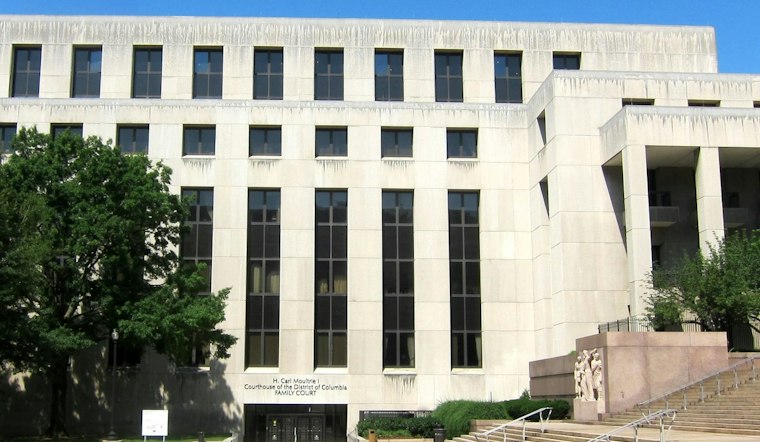
District of Columbia judges are sounding an alarm over a widening gap in legal representation that leaves thousands of residents facing evictions, custody battles, debt collection and domestic violence hearings completely on their own. Judges from D.C. Superior Court and the D.C. Court of Appeals are now directly appealing to the broader legal community, and especially to young attorneys hungry for courtroom experience, to pick up pro bono cases before the system buckles under the weight of unrepresented litigants.
According to FOX 5 DC, unrepresented parties make up as high as 97% of litigants in certain sensitive court areas, while nearly 90% of family court parties appear without legal counsel. Roughly 85% of D.C. tenants facing eviction lack representation, the outlet reports, even as approximately 95% of landlords show up with an attorney already in hand. D.C. Court of Appeals Judge J.P. Howard said the court system needs more resources and attorneys, and Superior Court Judge Ebony M. Scott said most people entering D.C. civil courts lack representation at all, despite the city having, in her words, the greatest concentration of lawyers in the country.
A System Stacked Against the Unrepresented
The imbalance is stark when one side has a lawyer and the other does not. Per FOX 5 DC's reporting, self-represented litigants can harm their own cases and slow down the judicial process, since unrepresented people may miss relevant information or cause court time to be spent sorting through irrelevant details. Jody Feldman, pro bono manager for the D.C. courts, said the legal system is difficult for individuals to navigate without representation, according to the same report.
Unlike criminal defendants, who have a constitutional right to court-appointed counsel, people in D.C. civil courts are guaranteed no such lawyer if they cannot afford one. That distinction matters because the disputes landing in civil court are not minor: they include evictions, child custody fights, debt collection actions and protection orders, the kinds of cases where losing without a lawyer can mean losing a home, a child's custody arrangement or safety from an abuser. Jenadee Nanini of the D.C. Bar Association said the supply of legal help simply does not meet demand in the District, FOX 5 DC reports, and the station notes the civil justice gap creates what amounts to a severely uneven playing field.
Judges Hold Open House, Target Young Lawyers
The call for help isn't just coming from press statements. Judges held an open house, putting out a direct call for attorneys to volunteer their time, according to WJLA, which reported that the D.C. court system is in dire need of pro bono lawyers. WJLA's reporting identified major gaps in representation specifically in probate, landlord-tenant disputes and domestic violence cases, echoing the same strained areas judges flagged at the open house.
Judges are focusing their appeal particularly on young attorneys seeking courtroom experience, since pro bono civil work offers early-career lawyers a chance to argue before a D.C. judge while helping residents who cannot afford counsel close the civil justice gap. Private law firms are not mandated to provide pro bono assistance, per FOX 5 DC, and the outlet reports that firms often choose charitable donations instead of dedicating attorney hours to free representation.
Family Court Numbers Paint a Grim Picture
The scale of the problem is clearest in family court. In divorce, custody and miscellaneous cases, 83% of plaintiffs and 93% of respondents appear pro se, according to the D.C. Bar's Family Law Assistance Network. In paternity and child-support matters, that figure climbs to 97% of respondents going unrepresented. The network offers free legal advice or representation in custody, child support, parentage and divorce cases, generally for households with income at or below 200% of the federal poverty guidelines.
These numbers aren't new to D.C.'s legal community. As far back as 2017, pro se participation in certain civil justice areas of Superior Court ranged from 75% to 97%, while the Court of Appeals saw rates between 50% and 90%, according to the D.C. Access to Justice Commission. The following year, the Family Court Self-Help Center served 8,601 individuals navigating custody, visitation, divorce and child support matters, and the Landlord Tenant Resource Center assisted 4,116 people, including 3,445 tenants and 661 landlords.
Programs Try to Close the Gap
The Commission says the urgent legal needs of indigent District residents chronically outstrip the supply of available services, a justice gap it attributes to an economic downturn that increased legal crises while shrinking the capacity of the legal-services network. To push back against that trend, the Commission works in close partnership with the D.C. Bar Pro Bono Program to increase volunteer service, and the two groups launched the Capital Pro Bono Honor Roll to recognize attorneys who hit benchmarked levels of pro bono work.
The courts themselves maintain additional support structures. The D.C. Court of Appeals runs a noncriminal appellate pro bono listserv and periodically circulates a case digest for matters meeting certain screening criteria, including whether an unrepresented litigant wants pro bono help and qualifies for a waiver of court fees, according to the District of Columbia Courts. Separately, the Landlord and Tenant Resource Center helps self-represented tenants understand court proceedings, prepare pleadings, present their cases, seek continuances, retain counsel and obtain referrals to legal-service providers.
Despite those efforts, judges say the gap remains wide enough that thousands of D.C. residents may still have to represent themselves in court simply because there aren't enough free attorneys to go around, per FOX 5 DC. For now, the appeal to the District's legal community, particularly its newest lawyers, stands as the clearest attempt to close that gap one case at a time.




