

























































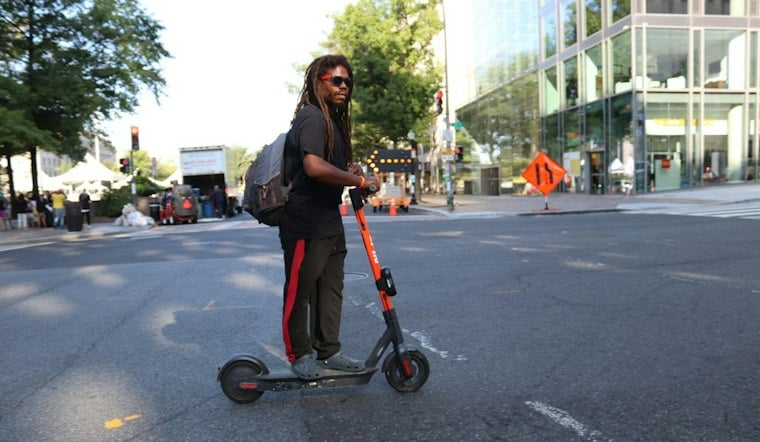
Washington, DC is rolling out new regulations for its shared e-scooter program, adding fines and accountability measures for the companies that operate thousands of devices across the District. The changes touch everything from how operators park their fleets to how low-income riders access the service, according to WUSA9.
The District Department of Transportation says its latest rulemaking is meant to tighten oversight of an industry that has grown rapidly since shared scooters first hit DC streets. Per DDOT, the rulemaking establishes fines for violations including improper device parking, failure to promptly relocate improperly parked devices, obstruction of pedestrian access routes and bike lanes, and failure to meet required fleet deployment standards. The agency frames the changes as a way to hold shared micromobility operators more accountable as the fleet expands.
That growth has already been substantial. The District currently has more than 12,000 scooters available across all eight wards, according to goDCgo, with riders logging an average of half a million scooter trips every month. The same source notes that DC law requires riders to lock electric scooters to bike racks, in-street corrals, parking signposts, or stop signs when a trip ends.
Rider Rules Riders Need to Know
Electric scooters are classified as personal mobility devices under DC law, per the same goDCgo account, which also lays out the baseline rules riders have had to follow in the District. Riders must be at least 16 years old to operate a personal mobility device, and the maximum speed limit for those devices is capped at 10 miles per hour citywide.
DDOT also requires scooter operators to provide a Low-Income Customer Plan, and eligible participants now receive a monthly credit of 300 non-cumulative minutes, followed by a 50% discount. Separately, Lime offers an adaptive vehicle program that lets riders with unique ability needs reserve a vehicle for up to 24 hours at no cost, the same page notes.
A History of Expansion Debates
This isn't the first time DC has wrestled with how big to let its scooter fleet grow or how many companies should be allowed to operate it. Back in 2022, eight transportation companies were vying for permits to operate shared scooters in the District, and officials at the time proposed allowing the deployment of up to 20,000 scooters citywide, according to the Washington Post. That would have marked a 40 percent increase from levels at the time, while limiting the number of authorized operating companies to five.
The Post reported that those proposed changes were aimed at improving oversight of personal-mobility services and allowing for growth in the number of scooters available, growth that had stalled during the pandemic. An even earlier 2020 proposal, detailed by The Hoya, suggested the scooter count could nearly double to 10,000 by January and potentially reach 20,000 by June, while limiting the number of operators to four. At that time, eight companies had scooters available in the District, each running roughly 600 to 700 devices.
Parking and Deployment Standards
Enforcement around improperly parked scooters isn't new either. Under the 2020 rules described by The Hoya, companies were required to move an incorrectly parked scooter within two hours of it being identified, and each operator was required to maintain its own low-income customer plan for riders meeting specified income thresholds.
Current deployment guidelines posted by DDOT's shared mobility office allow operators to stage up to three devices at once in the furniture zone of a sidewalk without using a locking mechanism, provided they maintain a 3-foot clear zone for pedestrians passing by. Under DC law, a shared fleet device is defined broadly as an electric mobility device, bicycle, or electrically powered motorized bicycle made available for short-term rental and permitted for use in public space, according to the District's official code library.
The full scope of what changes under the newest rulemaking, including which companies will ultimately be authorized to operate and how large the citywide fleet will grow, remains to be seen. For now, DC's basic rider rules, the 16-and-up age requirement, the 10-mph speed cap, and the mandate to lock scooters to designated fixtures, continue to apply across all eight wards as the District works through its latest round of micromobility oversight.





