

























































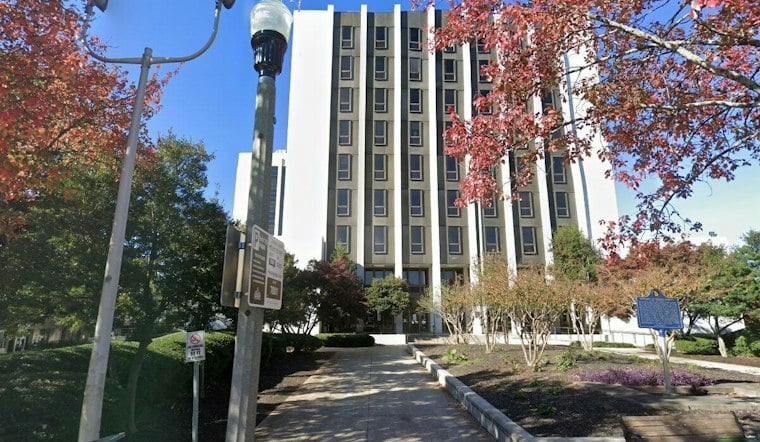
A Decatur attorney who spent nearly five decades practicing law in Georgia has lost his license for good, after the state's highest court found he used stolen police crash data worth more than $170,000 to drum up personal injury clients. William Taylor Payne, who ran the Law Office of William T. Payne P.C. near East Ponce de Leon Avenue, was unanimously disbarred by the Supreme Court of Georgia on October 14.
Payne had been licensed to practice law in Georgia since 1977, according to court records cited by FOX 5 Atlanta. The disbarment, issued under docket number S26Y1490, cited violations of Georgia Rules of Professional Conduct 8.4(a)(2), which covers felony convictions carrying a maximum penalty of disbarment, and 9.1(a)(2), which governs the mandatory 60-day window for notifying the State Bar of a felony conviction, per the Supreme Court of Georgia's own order.
The case traces back to September 2025, when Payne entered an Alford plea in DeKalb County Superior Court to one felony count of violating the Georgia RICO Act. An Alford plea allows a defendant to maintain innocence while acknowledging prosecutors have enough evidence to convict. Prosecutors said Payne and three co-conspirators used stolen data to solicit personal injury clients and make money, according to the station's report.
Stolen Crash Reports Fueled the Scheme
According to prosecutors, Payne and his co-conspirators used data valued at more than $170,000 pulled from the Georgia Electronic Accident Reporting System, which belongs to the DeKalb County Police Department, in 2015. The underlying criminal conduct spanned January 1, 2015, through August 13, 2015, and was charged under Georgia's RICO statute, O.C.G.A. § 16-14-4, according to the Supreme Court of Georgia.
Georgia law specifically bars this kind of conduct. O.C.G.A. § 33-24-53 criminalizes the use of so-called “runners” and the unauthorized purchase or solicitation of police crash reports to recruit personal injury clients, carrying penalties of up to 10 years in prison, according to Mabra Law. The law was passed by the Georgia General Assembly in 2014 specifically to curb unethical “ambulance chasing” schemes, per the same firm's analysis.
Crash reports stored in Georgia's GEARS database carry built-in safeguards for exactly this reason: requestors must sign sworn statements affirming a legitimate, non-commercial need before they can access the records, according to a December 2024 explainer from Elearning. DeKalb County police records have been targeted before in similar trafficking schemes, including past prosecutions of officers accused of selling thousands of crash reports to illegal runners, Mabra Law notes, adding that runners frequently buy stolen police data to flip client contact information to personal injury firms and clinics.
Special Master Found Two Separate Violations
The State Bar initiated disciplinary proceedings under Bar Rule 4-106 on April 6, 2026, after appointing Special Master Robert E. Wilson, with Payne acknowledging service of the petition on April 21, 2026, according to the Supreme Court of Georgia's order. Bar Rule 4-106 provides an expedited disciplinary framework specifically for attorneys convicted of felonies.
Wilson concluded that Payne violated rules against felony convictions and separately found that Payne failed to notify the State Bar of Georgia within the mandatory 60-day window required after a felony conviction. In his own defense, Payne cited his lack of prior disciplinary history and submitted expressions of regret, FOX 5 Atlanta reported.
The court was not swayed. The Supreme Court of Georgia found that Payne's dishonest motive and the serious harm done to both the legal profession and the DeKalb County Police Department warranted disbarment, and wrote that Payne had not clearly accepted responsibility or expressed remorse until his post-hearing submission.
How Courts Weighed the Alford Plea
In reviewing Payne's plea, the Georgia Supreme Court pointed to state precedent cautioning disciplinary panels against automatically treating a refusal to admit guilt as an aggravating factor when an attorney enters an Alford plea to preserve legal rights, according to the court's order. Even so, the justices determined that Payne's dishonest financial motive and the severe harm to law enforcement outweighed his otherwise clean disciplinary record, per Georgia Commons' review of the opinion.
Payne was disbarred alongside other Georgia attorneys disciplined the same day, including Stanley J. Kakol Jr. and Hakeem Bertrand Brock, according to the State Bar of Georgia, which publishes monthly rosters detailing disbarments, suspensions, and surrenders across the state.
Court records do not identify the three co-conspirators involved in the scheme, and it remains unspecified whether they face separate criminal charges. Officials also have not disclosed how Payne and his associates gained access to the police department's electronic accident reporting database in the first place.
A Competitive, Deadline-Driven Practice Area
Payne's firm marketed more than four decades of experience focused on auto accidents, DUI defense, and general criminal defense, according to the Law Office of William T. Payne P.C. website. Personal injury cases in Georgia move on tight clocks: claims are generally subject to a two-year statute of limitations under O.C.G.A. § 9-3-33, while claims against local governments require formal ante litem notices within six months for municipalities and 12 months for counties, according to Car Accident Lawyers in Atlanta, GA. Missing those ante litem deadlines can permanently bar a claim against a county or municipality, the same source notes — a pressure that fuels intense competition, and at times improper solicitation, among metro Atlanta personal injury practitioners.




