

























































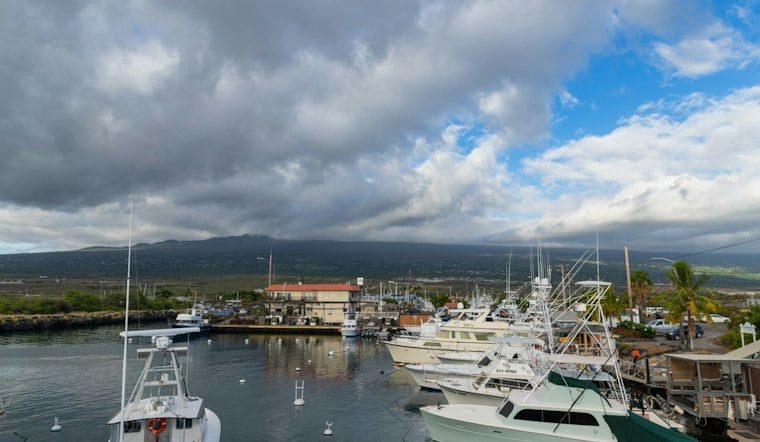
A decomposing sperm whale carcass that drifted along the Kona Coast drew sharks and swimmers dangerously close together before crews towed the remains out to sea from the mouth of Honokōhau Harbor. The carcass had been shedding pieces into the water, creating what state officials called hazardous conditions for boaters, fishers and beachgoers.
The carcass was first spotted drifting along the Kona Coast on October 27, according to Big Island Now. By the next evening, it was towed offshore by Hawaiʻi Department of Land and Natural Resources crews, a trained responder with the Hawaii Whale Entanglement Response Network, and other stakeholders, as reported by Hawaii News Now. According to Maui Now, the tow involved DLNR's Division of Conservation and Resources Enforcement, its Division of Boating and Ocean Recreation, and its Division of Aquatic Resources, along with Colin Cornforth, Captain Zodiac Kona's chief operating officer and a trained responder with the Hawaiʻi Whale Entanglement Response Network.
Sharks Fed as People Lingered Nearby
By the time crews reached the carcass, it was already in an advanced state of decomposition, and pieces had broken off before the tow, creating hazardous conditions for ocean users along the coast, per the same Hawaii News Now report. People were seen in the water next to the carcass, handling and taking pieces away even as a large number of sharks began to feed nearby, the station reported.
Maui Now reported that Kiaʻi Kanaloa cultural practitioners advised DLNR staff both on October 27 and during the October 28 tow. DLNR has not disclosed where the carcass currently sits in the water, stating plainly that the department is not releasing the carcass location, Hawaii News Now reported.
Health Warnings and a Reverence for Whale Remains
Officials warned that decomposing whales can carry zoonotic diseases that can spread from animals to people, and that wind and strong currents could push pieces of the carcass back toward shore, according to the same Hawaii News Now account. DLNR is advising the public to stay out of the water near any piece of whale carcass and not to approach it by boat, board or swimming.
Per Maui Now, Roxy Keliʻikipikāneokolohaka, who holds a doctorate in education and serves as executive director of Kiaʻi Kanaloa, said whales such as sperm whales are considered akua kanaloa and require the utmost reverence. She said people should leave whale remains, bones and teeth alone and not dive near or through them. Maui Now also reported that whale parts and remains are protected under state law and the federal Marine Mammal Protection Act and Endangered Species Act, and that removing whale body parts or bones is illegal.
A Pattern DLNR Has Seen Before
This is not the first time a whale carcass has unsettled waters off Kona this year. In February, wind and ocean conditions moved a different whale carcass onto a lava flat along the Kona coast, according to Big Island Video News, which reported that DLNR had been monitoring that carcass since February 6. DLNR warned at the time that the presence of large predators feeding on the remains posed a significant danger to people, and the outlet noted that some remnants had begun washing ashore, with DLNR urging people to leave any pieces where they found them so they could biodegrade naturally and support wildlife. The department had flagged waters from Makalawena to Honokōhau as an area of particular concern over the following weeks. It is not established whether that February carcass is connected to the one first reported drifting on October 27.
Cetacean strandings are not unheard of in Hawaiʻi waters; NOAA Fisheries notes that roughly 20 whale and dolphin strandings occur across the islands in an average year. DLNR said it will continue to monitor the current situation in close coordination with NOAA and Kiaʻi Kanaloa, per Hawaii News Now. Anyone who spots the carcass or pieces of it is asked to call the NOAA Marine Wildlife Hotline at 1-888-256-9840.





